
Reviewed · WALKING TOURS
Walking Tour “The Old Bazaar, Cfake, Dunavat, Ali Pasha Bridge”
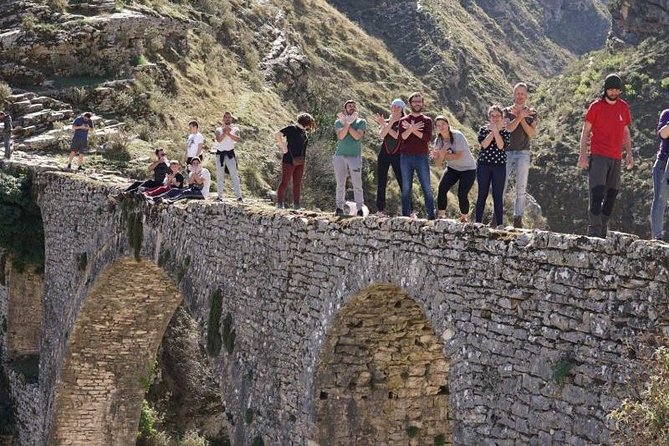
Gjirokaster has a quieter side. This three-hour walk leaves the usual castle route behind and follows old cobbles, historic homes, and hillside paths toward Ali Pasha Bridge. I like the focus on Cfaka and the Old Bazaar, two areas many visitors skip, and I like that local guides such as Arli, Viki, Marco, and Mario bring personal stories to the history. The main catch is the rough terrain, especially near the bridge, so this is not a stroll for dress shoes.
At $18.06 per person, the tour offers a useful amount of local context for the price. You get an English-speaking guide, a small taste of Gjirokaster beyond its headline sights, and a route that mixes architecture with countryside views. Still, the bridge may be easier to see from a viewpoint than to reach directly, and a maximum group of 30 can feel less personal on a full departure.
In This Review
- Key points to know
- Why this walk shows you more than Gjirokaster Castle
- Starting at Cerciz Topulli Square at 9:30 am
- The Old Bazaar, where the name outlasted the shops
- Crossing Zerzebili Bridge toward Cfaka
- The Bektashi tekke in Cfaka
- Following the aqueduct to Ali Pasha Bridge
- What the three hours feel like on foot
- The guides make the difference
- Is $18.06 a fair price?
- Who should book this Gjirokaster walk?
- Should you book it?
- FAQ
- Where does the walking tour begin?
- What time does the tour start?
- How long does the experience last?
- Is the tour offered in English?
- Does the tour include the guide?
- Does the tour return to its starting point?
- What happens if bad weather cancels the tour?
Key points to know
- The route leaves Cerciz Topulli Square and heads into the former Old Bazaar neighborhood below the castle.
- Cfaka brings old stone houses, a Bektashi tekke, sheep, and hill views into the walk.
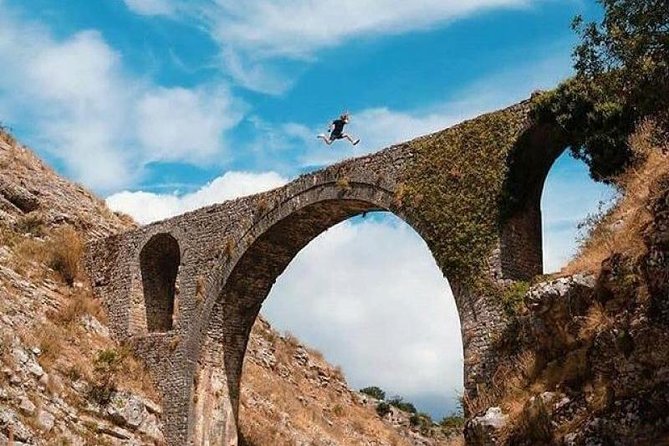
- Ali Pasha Bridge is part of an old aqueduct, built more than 200 years ago to carry water to the castle.
- Arli, Viki, Marco, and Mario have each been praised for lively English commentary and local insight.
- Wear sturdy sneakers, since some sections are uneven and the approach to the bridge can be difficult.
- The tour starts at 9:30 am and returns to the meeting point after about three hours.
Why this walk shows you more than Gjirokaster Castle
Gjirokaster is often reduced to its enormous castle, steep stone lanes, and Ottoman-era houses. Those sights deserve attention, but the town makes more sense when you see how its neighborhoods spread below and beyond the fortress.
This walk gives you that wider picture. Rather than spending the whole morning inside the main historic center, you follow a route from Cerciz Topulli Square through the Old Bazaar area, across the Zerzebili Bridge, into Cfaka, and onward toward the remains of Ali Pasha’s aqueduct.
I like the route because it is not built around a long list of major monuments. Much of its appeal comes from the spaces between them: rough paving, old homes, hillside paths, and views into a quieter part of town. You get a better sense of Gjirokaster as a lived-in place, not only as a preserved attraction.
The guide is important here. Arli has been praised for explaining the neighborhoods and adjusting the route when the direct approach to Ali Pasha Bridge proves too hard. Viki is from Gjirokaster and has been noted for shaping the walk around personal interests. Marco and Mario have also been praised for making the outing feel like time spent with well-informed local friends rather than a formal lecture.
That personal approach matters on a route where the setting can speak softly. A house, bridge, or small religious building may not explain itself. Your guide helps connect it to the town’s past and to life in Gjirokaster today.
A few more ways to spend a day out of Albania
- Walking Tour of Tirana
★ 5.0 · 646 reviews - Local food experience & walking tour of Tirana
★ 5.0 · 192 reviews - Berat Walking Tour
★ 5.0 · 86 reviews
Starting at Cerciz Topulli Square at 9:30 am
The meeting point is listed at Experience Gjirokastra on Rruga Gjin Zenebisi. The start time is 9:30 am, which is useful for anyone who wants to walk before the strongest heat of the day.
You begin near Cerciz Topulli Square, one of the natural reference points in the old town. From here, the route heads toward the former Old Bazaar. Since the tour returns to the same meeting point, you do not need to arrange a ride back from a distant finish.
The experience uses a mobile ticket and is offered in English. Confirmation arrives when you book. The maximum group size is 30 people, so the walk may be intimate with a small turnout but more crowded when the group is full.
I would arrive a little early. The walk depends on finding the guide at the stated meeting point, and the opening explanation helps set the pace for the three hours ahead. Bring water, wear shoes with a firm sole, and avoid carrying anything you do not want to manage on uneven ground.
The Old Bazaar, where the name outlasted the shops
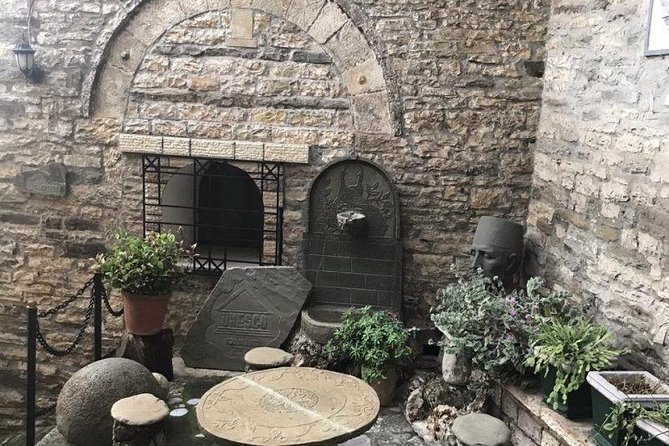
The first neighborhood is called the Old Bazaar, although it is no longer a bazaar in the usual sense. That detail gives the area a particular interest. You are not walking into a busy market filled with stalls. Instead, you are seeing a historic neighborhood that once served as the first settlement outside the castle walls.
The area lies below the fortress, with the castle walls shaping the view and the route. Cobblestones and old houses are the main visual draw. These details can be easy to miss if you rush from the square to the castle entrance, but a guide gives them time and meaning.
Expect a walk through a neighborhood rather than a formal museum stop. The reward is the texture of the place: stone underfoot, old building fronts, and the relationship between the homes and the castle above. You might find this section especially useful if you want photographs or a closer look at Gjirokaster’s traditional architecture without spending every minute inside the busiest part of the old town.
The drawback is that the phrase Old Bazaar may create the wrong expectation. If you want active market shopping, this is not that experience. Think of it as a historic quarter with a former commercial identity.
Crossing Zerzebili Bridge toward Cfaka
After the Old Bazaar, the walk passes over the Zerzebili Bridge and continues toward Cfaka, another ancient neighborhood. This transition is one of the route’s strengths. You move from the area directly beneath the castle into a district with a different feel, while still surrounded by old stone construction and hillside scenery.
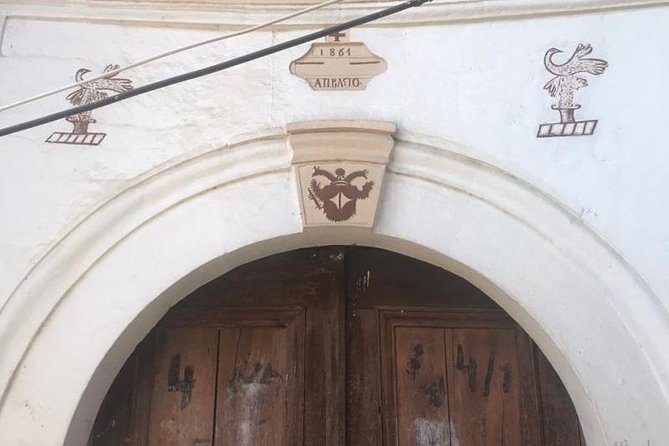
Cfaka is where the walk becomes less predictable. Instead of a single major sight, you encounter old houses, a religious building, and views across the surrounding hills. Some homes are described as first-category monuments, which signals their importance under Albania’s heritage system.
The guide’s role becomes even more useful here. Architecture can look beautiful without being easy to interpret. Your guide can point out why a house matters, how the neighborhood fits into Gjirokaster’s development, and what remains distinctive about the area.
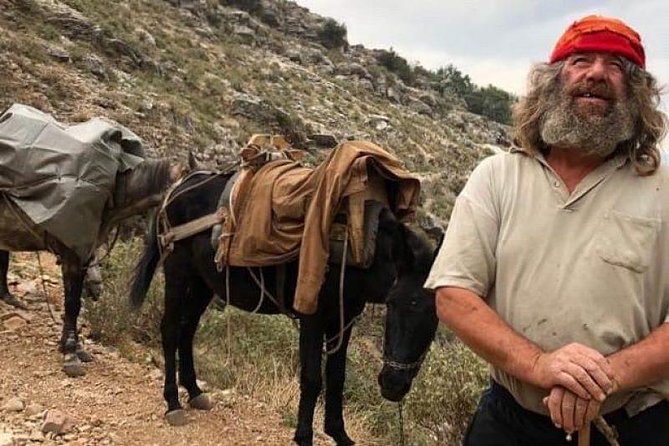
The route also brings you closer to nature. Sheep on the hills are part of the scenery, and the combination of pasture, stone houses, and old paths gives the walk a rural edge. That contrast is a welcome change from the tight lanes of the central old town.
Do not expect every section to be polished. The point is to see a less formal side of Gjirokaster, and the ground reflects that. Good footwear is not a minor suggestion here.
A completely different kind of day out of Albania:
- Hike Gamti Mountain with Bovilla lake view & canyon- From Tirana
★ 5.0 · 1,280 reviews - Day Trip to Saranda and Butrint National Park from Corfu
★ 4.2 · 847 reviews - Berat city UNESCO tour, the Castle & Belshi lake- From Tirana
★ 5.0 · 804 reviews - Kruja castle, the old Bazaar & Sarisalltik- Departure from Tirana
★ 5.0 · 592 reviews
The Bektashi tekke in Cfaka
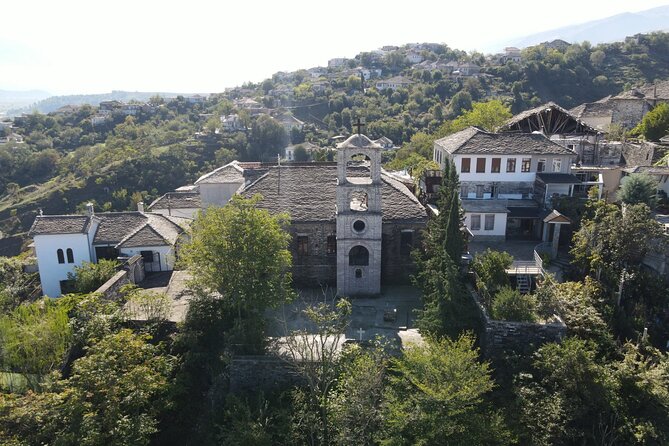
A tekke belonging to the Bektashi Order is one of the notable stops in Cfaka. Bektashism is an important religious tradition in Albania, and this building adds a cultural layer to the route that you would miss on a simple architecture walk.
The tekke is valuable because it connects the neighborhood to religious life, not only to houses and defensive walls. Your guide can provide the needed context and explain why this site belongs in the story of Gjirokaster.
The supplied details do not promise an extended interior visit or a ceremony, so you should treat the tekke as a stop for explanation and observation. The exact amount of time spent there may depend on the group and guide.
This is also a good moment to ask questions. The guides have been praised for lively storytelling, humor, and personal experience. That style suits a site where a short explanation can be more useful than a long block of dates.
Following the aqueduct to Ali Pasha Bridge
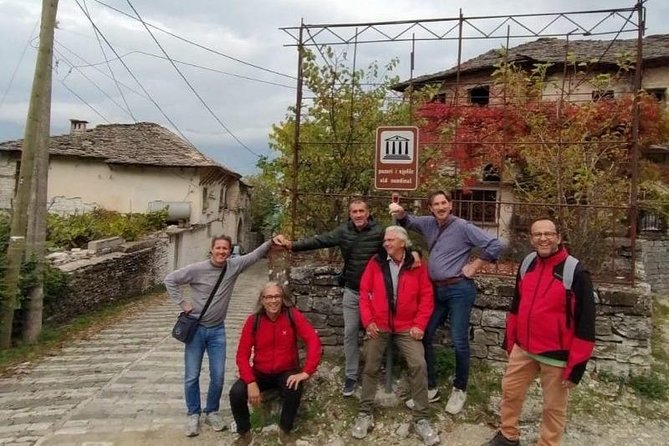
The final destination is Ali Pasha Bridge, a surviving section of an aqueduct built more than 200 years ago by Ali Pasha Tepelena. Its purpose was practical: to bring water to the castle.
That function makes the bridge more than a pretty stone crossing. It shows the work needed to support life inside the fortress and reminds you that Gjirokaster’s castle depended on systems beyond its walls.
The approach is the toughest part of the walk. The ground can be uncomfortable, and reaching the bridge itself may be difficult. Arli has been praised for taking the group through nearby neighborhoods to a spectacular view when the terrain made a direct approach impractical.
This is an important point when deciding to book. You should not assume that the experience guarantees an easy walk directly onto the bridge. Depending on conditions and the group, the guide may show you the structure from a better viewpoint instead.
That adjustment is a good sign rather than a failure. A guide who puts safety and a worthwhile view ahead of forcing a difficult route is making a sensible choice. Still, if touching the bridge or standing directly on it is your main reason for booking, ask about current access before setting out.
What the three hours feel like on foot
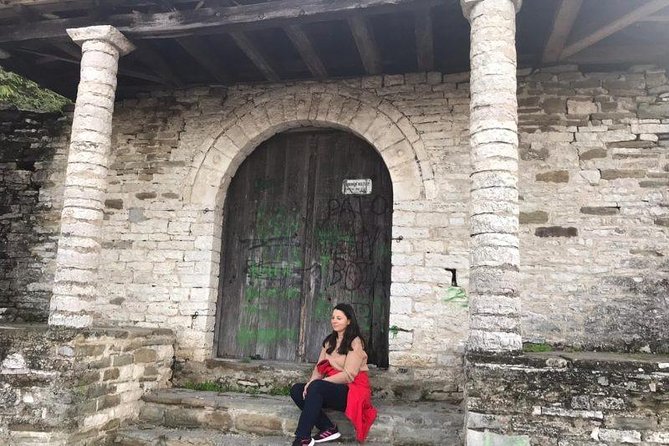
The route is described as approximately three hours, with the time spread across several neighborhoods and the bridge area. It is not simply a series of quick photo stops. The experience works best when you give the guide room to explain the setting and answer questions.
You should expect a mixture of paved or cobbled town streets and less comfortable terrain. The route is not presented as a technical hike, and most people can participate, but the footwear warning should be taken seriously.
I would choose sneakers or walking shoes with grip. Sandals with thin soles, smooth fashion shoes, and anything that makes you cautious on stones will make the outing less pleasant.
The pace may vary. A guide can spend extra time at a view, explain a house, or adjust the route around the bridge. Marco has even been praised for adding other sights when time allowed, though you should not count on an extended itinerary every time.
The morning timing is another advantage. Starting at 9:30 am gives you a clear block of sightseeing before lunch and leaves the rest of the day open for the castle, museums, or a slower look at the central streets.
The guides make the difference
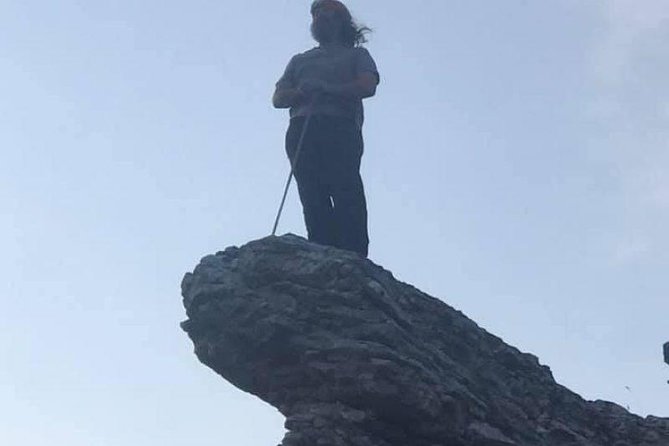
This tour relies heavily on the person leading it. The route is not packed with famous monuments that can carry the experience by themselves. The guide must explain why the Old Bazaar matters, identify important homes in Cfaka, introduce the Bektashi connection, and make sense of the aqueduct.
Arli has been praised for his history explanations and for handling the difficult approach to Ali Pasha Bridge. Viki, a local from Gjirokaster, has been praised for courtesy, strong subject knowledge, and tailoring the schedule to individual interests. Marco and Mario have been praised for their friendly, conversational style and for explaining both the town’s past and present.
The strongest pattern is clear: the walk works best with a guide who tells stories rather than recites facts. The English commentary has also been praised as clear and lively.
There is still a practical limit. You cannot choose a specific guide from the information provided, and a group of up to 30 may affect how much individual attention you receive. If you care about a highly personal walk, go with realistic expectations and ask questions early.
Is $18.06 a fair price?
At $18.06 per person, this is a solid-value walking tour if you want context beyond the main sights. The fee covers the guide, and the route occupies about three hours. You are paying less for admission to a major monument and more for interpretation, route planning, and access to parts of town you may not find as easily on your own.
The value rises if you are short on time or unsure how to reach Cfaka and the bridge area. A local guide can make the old houses, tekke, and aqueduct easier to understand, while also choosing a safer or more scenic route near the bridge.
The value is lower if you want a relaxed, fully paved walk or a shopping-focused bazaar visit. The route is not designed as a market tour, and the difficult terrain may be a serious concern for some people.
Gratuities are not included, so plan for that separately if you choose to tip the guide. The activity also needs good weather and a minimum number of participants. If poor weather or insufficient bookings cancel it, you are offered another date, another experience, or a full refund.
Free cancellation is available up to 24 hours before the 9:30 am start. Changes or cancellations made inside that window are not refunded.
Who should book this Gjirokaster walk?
I would choose this experience if you have already seen, or plan to see, the castle and want a different view of town. It suits anyone who enjoys old neighborhoods, religious history, traditional houses, and walks where the guide’s stories matter as much as the monuments.
It is also a good fit if you prefer a small-town setting to a checklist of major attractions. The sheep on the hills and the quiet homes in Cfaka may be more memorable to you than another grand interior.
You should think twice if you have trouble with uneven ground, need step-free access, or want a short, easy stroll. Service animals are allowed, public transportation is nearby, and most people can participate, but the rough terrain remains the main physical consideration.
Should you book it?
Book this tour if you want to see Gjirokaster beyond the castle and central lanes. For $18.06, you get three hours of local interpretation, a route through the Old Bazaar and Cfaka, a Bektashi site, and the chance to view an important piece of Ali Pasha’s water system.
The best reason to go is the combination of lesser-seen neighborhoods and strong local guiding. The main reason to hesitate is the walk itself. Wear proper shoes, keep your expectations flexible about reaching the bridge directly, and choose this experience for the wider story of Gjirokaster, not for one guaranteed photo at the final stop.
FAQ
Where does the walking tour begin?
It begins at Experience Gjirokastra on Rruga Gjin Zenebisi in Gjirokastër, Albania.
What time does the tour start?
The tour starts at 9:30 am.
How long does the experience last?
The walk takes approximately three hours.
Is the tour offered in English?
Yes. The experience is offered in English.
Does the tour include the guide?
Yes. A guide is included in the price.
Does the tour return to its starting point?
Yes. The activity ends back at the meeting point.
What happens if bad weather cancels the tour?
You are offered a different date or a full refund if poor weather causes cancellation.
More Shopping Tours
- Kruja, Old Bazaar, Museum,Sari Saltik tour from Tirana
★ 4.5 · 33 reviews - Guided Tour to Kruja, Holy Mountain & Old Bazaar from Durres
★ 5.0 · 29 reviews - 5-hour Tour Kruja Castle and Old Bazaar from Tirana
★ 4.5 · 16 reviews - From Tirana and Durres, Kruja Old Bazaar and Castle Day Tour
★ 4.0 · 7 reviews
Recently added around Albania
- Apollonia and Berat UNESCO tour from Tirana★ 5.0 · 3 reviews
- Berat 4×4 Off-Road and Vineyard Wine Tasting★ 5.0 · 3 reviews
- Llogara Caesar’s Path,Orikum Park & Marmiroi Church Guided Tour★ 5.0 · 3 reviews
- Vlora Airport Transfers – Via Transfer Albania★ 5.0 · 3 reviews
- Tirana’s Communist Past: A Tasting Tour with Traditional Lunch★ 5.0 · 3 reviews
- Daily tour★ 4.5 · 3 reviews
- Apollonia and Ardenica Monastery – full day tour★ 4.5 · 3 reviews
- Cultural Tour in Tirana including House of Leaves★ 5.0 · 3 reviews
Walking Tours, compared.
Tirana Walking Tour: History, Culture &Gems by a Passionate Guide
Read our review →
Premium Walking Tour of Berat with Expert Guides
Read our review →
Private Walking Tour Visit to Durrës with Licensed Guide
Read our review →
Walking Tour Baazar – The Argjiro Castle – Zekate house
Read our review →Browse the lists this tour appears in