
Reviewed · WALKING TOURS
Private Walking Tour Visit to Durrës with Licensed Guide
Ancient Durrës rewards a closer look. This private walking tour links Roman, Byzantine, Ottoman, Italian, communist, and modern Albania in a compact 2 to 3 hour walk. I like the way it connects famous ruins with ordinary streets, old homes, city offices, religious buildings, and local refreshment stops. I also like the personal focus: guides such as Artan and Joana explain why Durrës changed, rather than simply naming monuments.
The main drawback is pace. With 14 stops, most visits last about 10 minutes, so you will get a well-organized introduction instead of long, quiet time at each site. The tour costs $24.10 per person, a strong value for a private guide, though the projection and upper balcony at the Venetian Tower require an extra fee.
In This Review
- Key points at a glance
- Why this Durrës walk is worth your time
- Starting at the Venetian Tower
- Churches, an Ottoman bath, and Bulevardi Epidamn
- Aleksandër Moisiu and the city’s religious past
- The Roman amphitheater beneath modern Durrës
- Freedom Square and the public face of the city
- From the Palace of Culture to the Byzantine Forum
- Pace, group size, and practical value
- Who should book this private walk?
- Should you book the Durrës walking tour?
- FAQ
- Where does the tour begin?
- Where does the tour end?
- How long does the walking tour last?
- Is the tour private?
- Is the tour offered in English?
- Is entry to the Venetian Tower included?
- Can I cancel for a full refund?
Key points at a glance
- Fourteen stops trace several eras: Roman, Byzantine, Ottoman, Italian, communist, and present-day Durrës all appear in one route.
- The Venetian Tower begins the story: You can enter the tower, while the multimedia projection and raised balcony cost extra.
- The amphitheater is a major highlight: Your guide explains how a Roman arena was found beneath the modern city.
- Local breaks are built in: Expect pauses for coffee, water, burek, ice cream, or orange juice along Bulevardi Epidamn.
- The route ends at Freedom Square: The finish near Sheshi Liria makes it easy to continue exploring central Durrës.
- It is private and English-language: Only your group takes part, with confirmation at booking and free cancellation up to 24 hours before the start.
Why this Durrës walk is worth your time
Durrës can look like a seaside resort at first glance, with modern streets and busy traffic hiding older layers below. This tour helps you read the city. A wall may contain Byzantine building material, a mosque may rest against an earlier fortification, and a twentieth-century public building may reveal how Albania looked toward Italy before World War II.
That layered approach is the tour’s greatest strength. You are not simply taken from one isolated monument to another. The guide uses old maps, photographs, and locations to explain how neighborhoods formed, how roads shifted, and how different governments changed the city.
The private format matters. You can ask about a church, a period of Albanian history, or a building that catches your eye. The tour is offered in English, and the available feedback gives particular credit to Artan’s enthusiasm for Durrës and Joana’s clear explanations. The provider is Artan, but guide assignment may depend on the booking.
At $24.10 per person, the price is reasonable if you want context rather than a self-guided walk. You are paying for a private explanation across 14 points, not for admission to a string of paid attractions. Almost every stop is listed with free admission. The one clear extra is at the Venetian Tower, where the multimedia presentation and balcony are not included.
More Walking Tours in Tirana
- Walking Tour of Tirana
★ 5.0 · 646 reviews - Local food experience & walking tour of Tirana
★ 5.0 · 192 reviews - Berat Walking Tour
★ 5.0 · 86 reviews
Starting at the Venetian Tower
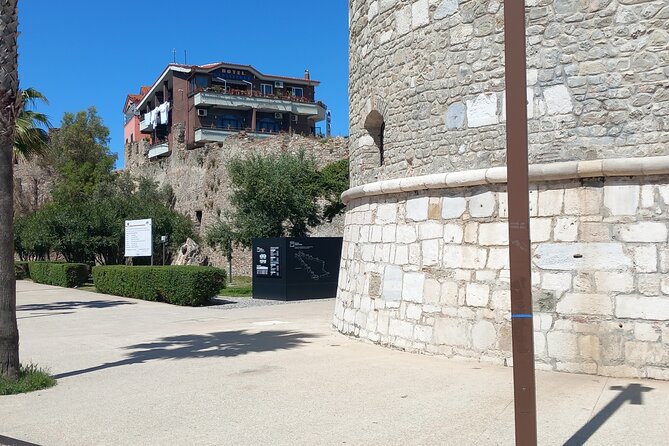
The tour begins at the Venetian Tower of Durrës, at 8C5W+VQC. This is a useful starting point because the tower opens the larger story of the city’s defenses and its position along the Adriatic.
Your guide explains the urban neighborhood through maps, photographs, and surviving structures. You will hear about the second-century amphitheater, Byzantine and Norman defenses, Venetian works, Ottoman fortifications, and later industrial-era planning. The discussion then reaches today’s urban changes, giving you a sense of Durrës as a city still being reshaped.
A second segment focuses closely on the tower itself. You will learn about its construction methods and its resemblance to other Adriatic towers. The guide also follows its changing purpose through Ottoman rule, the early years of World War II, the communist period, and the last three decades.
You can enter the tower without paying an admission charge as part of the walk. If you want to see the projected multimedia presentation or reach the upper balcony, plan on an additional fee. That distinction is worth knowing before you arrive, especially if the view or digital display is important to you.
Churches, an Ottoman bath, and Bulevardi Epidamn
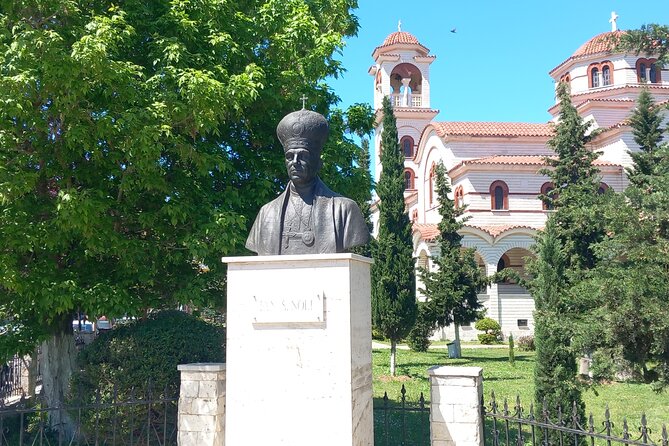
The Church of Apostle Paul and Saint Asti provides a quieter stop among the city streets. Here you learn about the two saints connected with Durrës and hear about traces of the former Church of Saint Spiridon, which was demolished during the communist period.
That pattern repeats throughout the route: the guide points out what survives, then explains what disappeared. For anyone interested in Albania’s religious past, this is more useful than simply photographing a church facade.
The seventeenth-century Ottoman Hamam follows. The bath may once have been privately owned or connected with government buildings along the seaside promenade. Its remains also help identify the old road leading toward Durrës Castle. Your guide explains the steam and heating systems used in the building, making this a short but concrete lesson in Ottoman public architecture.
Next comes Bulevardi Epidamn, where the walk slows for about 10 minutes. The subject here is not one monument but the early residential buildings shaped by the first urban regulatory plan of 1928. Look for the way the street’s buildings reflect investment and planning in the years before World War II.
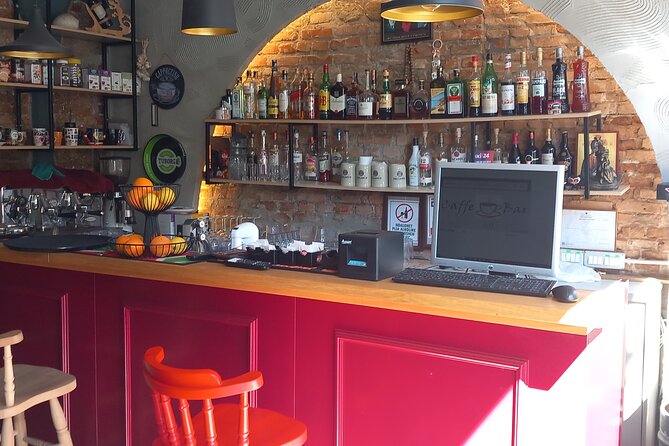
This is also the tour’s built-in refreshment break. You may stop at two or three local places for coffee, water, burek, ice cream, or orange juice. These purchases are not described as included, so carry a little spending money. The pause also gives you a chance to rest, since the route contains many short stops in succession.
Aleksandër Moisiu and the city’s religious past
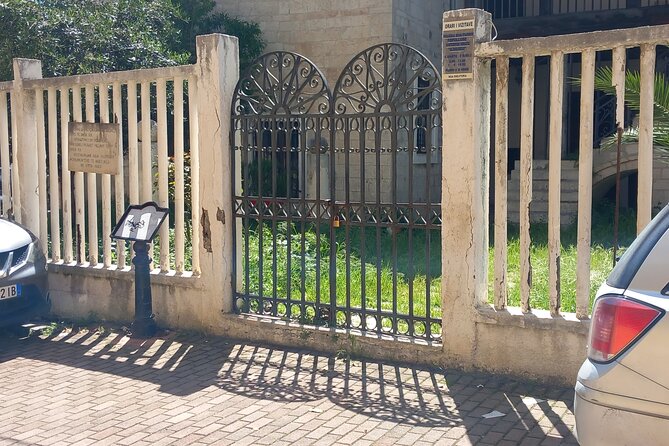
The Aleksandër Moisiu Museum introduces both traditional Albanian building styles and the local architecture of Durrës. The house once served as the English consulate when Durrës became the national capital after independence. It is also tied to Aleksandër Moisiu, one of the city’s best-known international theater artists.
The building was damaged by the 2019 earthquake and awaits further investment. The nearby Byzantine tower was damaged as well. That present condition is part of the story, and it gives you a realistic view of how preservation works in a city with many old structures and limited resources.
The next stop, Fatih Mosque, dates to 1501 and is one of Albania’s three oldest mosques. It was built at the base of a Byzantine wall, between two outer towers. The wall helped protect the minaret from the sea and possible attacks, while its existing materials and supports helped shape the mosque’s broad lower structure.
This is a good example of why a local guide adds value. The building is not presented as a separate Ottoman object. You learn how it used earlier Byzantine construction and how the city’s defensive needs affected its design.
More day trips out of Durrës:
- Berat-Durres and Belsh Lake, day tour from Tirana
★ 4.5 · 274 reviews - Gjirokastra UNESCO & Ksamil Beach – From Tirana/Durres/Golem
★ 5.0 · 117 reviews - Ohrid – North Macedonia Full Day Tour from Tirana & Durres/Golem
★ 4.0 · 84 reviews - Private Ohrid Day Tour and Authentic Village from Tirana & Durres
★ 5.0 · 71 reviews
The Roman amphitheater beneath modern Durrës
The Durrës Amphitheater is the route’s biggest archaeological stop. The key idea is coexistence: an ancient urban structure sits below and among the modern city rather than in an isolated archaeological park.
Your guide explains the amphitheater’s past and its excavation in 1966 by archaeologist Vangjel Toci. You will also hear about the government project intended to restore the full structure and protect its many historical layers.
The visit is scheduled for roughly 10 minutes, so keep your expectations in check. This is an introduction, not a lengthy archaeological examination. If the amphitheater is your main reason for visiting Durrës, you may want to return later with extra time. Still, the guide’s explanation helps you understand why the site can be easy to miss when surrounded by modern construction.
The Church of Saint Lucy, also identified as Kisha Katolike Shën Dominiku, brings the conversation back to religious life and city government. You will hear about the church’s construction, important local governing figures, and its condition today compared with the communist period, when religious activity was legally banned.
Together, these stops show how Durrës moved through periods of Roman rule, medieval change, Ottoman administration, Italian influence, communist control, and religious reopening. The route does not treat any one period as the whole story.
Freedom Square and the public face of the city
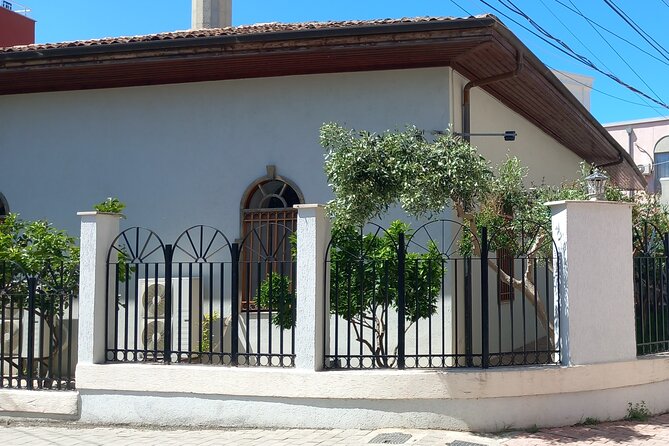
The walk continues to Freedom Square, or Sheshi Liria. It was first planned as a flower garden in the 1928 urban regulatory plan and later became one of the city’s early public squares.
The guide explains its development from the Ottoman period through the years before World War II and into the present. This is where the earlier discussion of streets and neighborhoods comes together. You can see how the city expanded toward the former Varosh neighborhoods and how public space shaped that growth.
Durrës City Hall, built in 1931, adds a clear Italian influence. Its large central balcony was designed for public speeches in the square. After the 1926 earthquake destroyed the earlier clock tower, a public clock was placed on top of the new municipal building.
The details are small, but they make the city easier to read. A balcony becomes evidence of public life. A clock becomes a response to an earthquake. Architecture becomes a record of politics, planning, and civic identity.
The Great Mosque of Durrës follows. Local merchants financed its construction in 1939, during Italy’s economic dominance in the country. The mosque was closed and altered under the communist regime, then restored after the 1990s. Its continued religious role gives the building particular importance in the city.
From the Palace of Culture to the Byzantine Forum
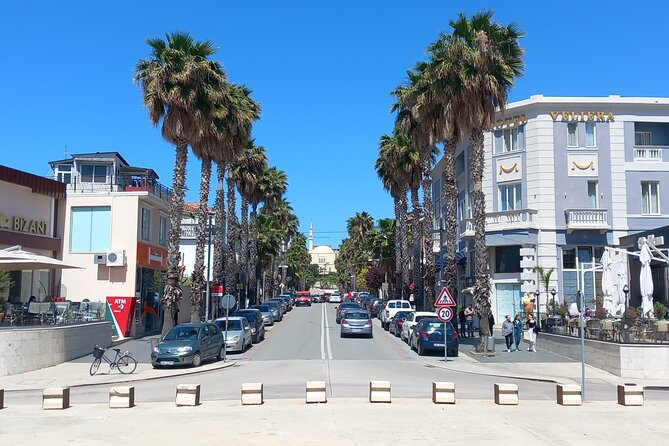
The Palace of Culture, home to the Aleksandër Moisiu Theatre, marks the beginning of the downtown section. Built in 1960, it was the first structure of its type in the Republic of Albania.
Here the subject shifts to Albanian architecture of the 1960s. You will consider how that style appeared in Durrës and elsewhere in Albania. This is a useful counterpoint to the Roman, Byzantine, Ottoman, and Italian buildings earlier in the route. The tour gives twentieth-century architecture a place in the city’s story instead of treating it as visual clutter.
The final stop is the Rotonda and Byzantine Forum. Archaeologist Vangjel Toci discovered the forum, which helps explain the city’s shift from Late Antiquity into the Middle Ages. The open archaeological area includes artifacts that offer clues about daily life in the Byzantine period.
The walk ends at Sheshi Liria. From there, you can head in any direction through the main city center. Ending in a central square is practical, especially if you want to continue independently after the guide’s formal route is finished.
Pace, group size, and practical value
The tour is private, so only your group participates. That makes the short 10-minute stops more flexible than they would be in a large group. You can ask for more explanation at a place that interests you, though the 14-stop schedule still requires the guide to keep moving.
The advertised duration is about two to three hours. The itinerary lists most stops at 10 minutes, with the opening urban overview at 15 minutes. The exact length may depend on walking speed, questions, and refreshment pauses.
Wear comfortable shoes. This is a walking experience through central Durrës, with repeated stops at old walls, churches, public squares, and archaeological sites. The tour is near public transportation, and most people can take part. Service animals are allowed.
You receive confirmation at booking, and free cancellation is available if you cancel at least 24 hours before the local start time. Changes or cancellations inside that 24-hour window are not accepted for a refund.
The 100 percent recommendation rate and five-star score from 26 ratings point to a consistent strength: the guides explain the city with warmth and clear historical purpose. Artan’s love for Durrës was especially noted, while Joana was praised for being clear and competent. Those qualities matter here because the tour depends less on spectacle than on explanation.
Who should book this private walk?
I would choose this tour if you are visiting Durrës for the first time and want a broad orientation before exploring alone. It suits history-minded visitors, architecture fans, families who prefer a private guide, and anyone curious about how several religions and political eras shaped one city.
It is also a smart option if you are staying in Tirana and have limited time for Durrës. The route gives you a structured look at the major historical points without requiring a full-day commitment.
I would hesitate only if you want long visits inside monuments, extensive museum time, or a slow photography walk. Fourteen stops in two to three hours means short explanations and frequent transitions. The amphitheater and Venetian Tower may deserve separate return visits if you want to study them closely.
Should you book the Durrës walking tour?
Book it if you value a personal guide, strong historical context, and a compact route through central Durrës. At $24.10 per person, it offers good value for a private English-language experience, especially when you consider the number of sites covered and the chance to ask questions.
Go with realistic expectations. The tour is a city introduction, not a series of lengthy monument visits, and the Venetian Tower’s multimedia projection and balcony cost extra. For a first look at Durrës, though, the mix of ruins, mosques, churches, civic buildings, local snacks, and modern urban change makes this an unusually useful walk.
FAQ
Where does the tour begin?
The meeting point is the Venetian Tower of Durrës at 8C5W+VQC, Durrës, Albania.
Where does the tour end?
The tour ends at Sheshi Liria, also called Freedom Square, in Durrës.
How long does the walking tour last?
The approximate duration is two to three hours.
Is the tour private?
Yes. Only your group participates in the activity.
Is the tour offered in English?
Yes. English is one of the available languages.
Is entry to the Venetian Tower included?
Interior access to view the tower is included. The multimedia projection and elevated balcony require an additional fee.
Can I cancel for a full refund?
Yes, if you cancel at least 24 hours before the experience start time. Cancellations or changes made less than 24 hours in advance are not accepted for a refund.
More Walking Tours
- Tirana Walking Tour: History, Culture &Gems by a Passionate Guide
★ 5.0 · 52 reviews - Premium Walking Tour of Berat with Expert Guides
★ 5.0 · 43 reviews - Walking tour of Tirana; History & Culture
★ 5.0 · 37 reviews - Walking Tour Historic Jewels in Tirana
★ 5.0 · 17 reviews
Recently added around Tirana
- Apollonia and Berat UNESCO tour from Tirana★ 5.0 · 3 reviews
- Berat 4×4 Off-Road and Vineyard Wine Tasting★ 5.0 · 3 reviews
- Tirana’s Communist Past: A Tasting Tour with Traditional Lunch★ 5.0 · 3 reviews
- Cultural Tour in Tirana including House of Leaves★ 5.0 · 3 reviews
- Apollonia and Ardenica Monastery – full day tour★ 4.5 · 3 reviews
- 3 Hour Pub Crawl Tour in Tirana★ 3.5 · 3 reviews
- Tirana to Ksamil and Saranda Bus★ 4.5 · 3 reviews
- SOTIRA WATERFALL HIKING/TREKKING from Berat by 1001 Albanian Adventures★ 5.0 · 3 reviews
Walking Tours, compared.
Tirana Walking Tour: History, Culture &Gems by a Passionate Guide
Read our review →
Premium Walking Tour of Berat with Expert Guides
Read our review →
Walking Tour Baazar – The Argjiro Castle – Zekate house
Read our review →
Browse the lists this tour appears in