
Reviewed · HISTORICAL TOURS
Tirana Walking Tour: History, Culture &Gems by a Passionate Guide
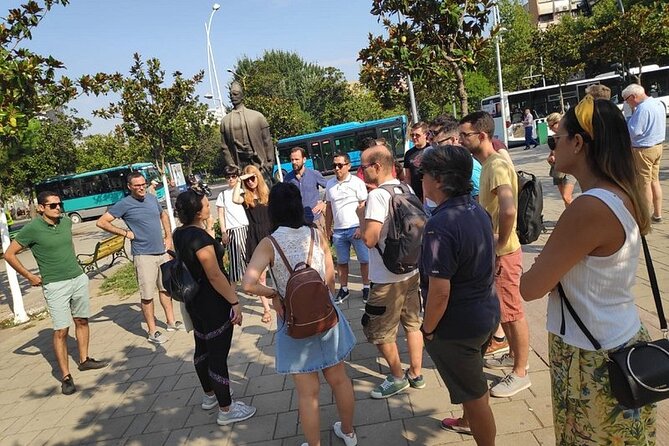
Tirana makes more sense on foot. This 3 to 4-hour walk links the city’s Ottoman landmarks, communist memories, religious sites, markets, and modern neighborhoods with the help of guide Albiona. I like the small maximum of 11 people, which should leave room for questions, and I like the complimentary rakia tasting, a simple local touch that turns a standard city walk into something more personal. The main consideration is pace: 21 stops in several hours means some places receive only a quick look.
I also like that the tour begins at Skanderbeg Square and returns there, making it useful on your first day. Albiona’s strength is her ability to explain Albania’s painful recent past while also showing the warmth, humor, and resilience of the country today. If you want museum interiors and long visits at each site, this is not the right format. If you want context, orientation, and a guide who can answer questions beyond a standard script, it offers strong value at $36.20 per person.
In This Review
- Five useful things to know before you book
- Why this Tirana walk works well on arrival
- Skanderbeg Square, the mosque, and Tirana’s Ottoman beginnings
- The New Bazaar and Bektashi tradition
- Old houses, bunkers, and streets with changing identities
- The Pyramid, Postbllok, and the difficult communist past
- Religious revival at the Orthodox Cathedral
- House of Leaves and the Bank of Albania
- Is $36.20 good value?
- Who should book this experience?
- Should you book the Tirana Walking Tour?
- FAQ
- Where does the Tirana walking tour begin?
- Where does the tour end?
- How long does the walking tour last?
- How much does the tour cost?
- Is the tour offered in English?
- How many people can join the tour?
- Is rakia included?
- Is admission to the House of Leaves included?
- Are other personal expenses included?
- What happens if bad weather cancels the tour?
Five useful things to know before you book

- Albiona leads with history and feeling: Her talks connect Albania’s dictatorship, religious restrictions, family memories, and present-day life.
- The route covers old and new Tirana: You move from Ottoman-era monuments and the New Bazaar to Blloku cafés, the Pyramid, and modern public spaces.
- The group is capped at 11 people: That is small enough for a more personal walk without paying private-tour prices.
- Rakia is included: You receive one complimentary shot of Albania’s traditional spirit.
- Several stops are quick exterior visits: The route is broad, so expect orientation and explanation rather than long sightseeing at every address.
- One important museum ticket costs extra: Admission to the House of Leaves is not included, and other personal expenses are also your responsibility.
Why this Tirana walk works well on arrival
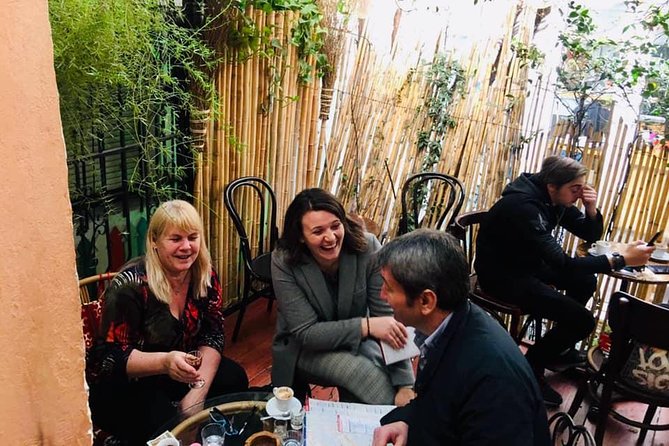
Tirana can feel like several cities placed on top of one another. Ottoman traces sit beside socialist buildings, new cafés, religious monuments, public art, and recently rebuilt squares. A first walk with a local guide helps you understand those changes before you start exploring alone.
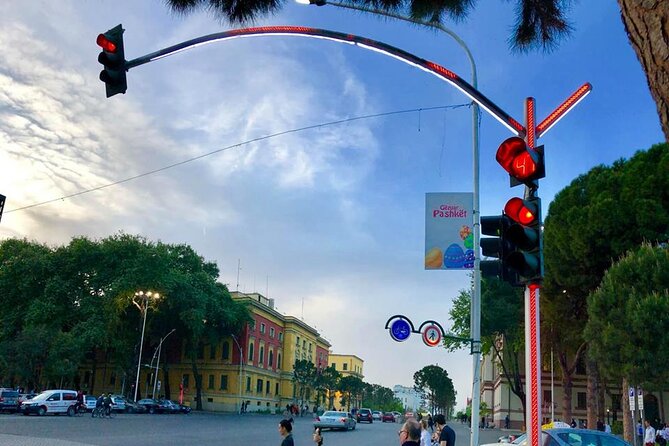
The tour begins at Skanderbeg Square, the natural center of the city. It also ends there, which makes the route easy to fit into a first day or a short stay. Several people who took the walk found that the orientation helped them move around Tirana with more confidence afterward.
Albiona’s approach is a major part of the experience. She gives a short overview of Albania’s past near the start, then adds detail as the route moves through places connected to Ottoman rule, communism, religion, commerce, and modern life. That structure matters. Without it, Tirana’s monuments can seem unrelated. With it, the city’s sharp changes begin to connect.
The tour is offered in English. Most people can participate, service animals are allowed, and the route is near public transportation. Since this is a walking experience lasting several hours, wear comfortable shoes and plan for an outdoor activity that depends on good weather.
More Walking Tours in Tirana
- Walking Tour of Tirana
★ 5.0 · 646 reviews - Local food experience & walking tour of Tirana
★ 5.0 · 192 reviews - Berat Walking Tour
★ 5.0 · 86 reviews
Skanderbeg Square, the mosque, and Tirana’s Ottoman beginnings
Skanderbeg Square is a good place to begin because it gives you a sense of Tirana’s scale and civic life. Named for Albania’s national hero, the square is the city’s main public space and a useful reference point for the rest of your visit.
From here, the route moves to Et’hem Bey Mosque. The mosque’s exterior is fairly modest, but its interior is the reason to pay attention. Frescoes show trees, waterfalls, bridges, and floral designs, which are unusual and visually striking within Islamic religious art.
The visit here is scheduled for about 10 minutes, so do not expect a long, quiet period inside. Still, Albiona’s explanation can help you notice details you might otherwise pass by. The mosque is also a useful reminder that Albania’s religious story is more varied than a quick look at the country’s recent secular period might suggest.
Nearby, the 35-meter Clock Tower adds another layer. Built in the 19th century, it combines Ottoman and Venetian influences. The stop lasts about five minutes, so it is mainly a chance to see the tower, hear its place in the city, and continue.
Sulejman Bargjini Square receives another short stop. It honors the founder of Tirana and is smaller than Skanderbeg Square, but its importance is historical. These early stops set up the city’s beginnings before the walk moves into everyday commercial life.
The New Bazaar and Bektashi tradition
Pazari i Ri, or the New Bazaar, is one of the more enjoyable parts of the route for anyone interested in daily life. The area combines a renewed market setting with stalls and shops selling produce, spices, local crafts, and Albanian food.
You have about 20 minutes here. That is enough to look around, take photographs, and get a sense of the market’s role, though it may not be enough for an extended meal or serious shopping. Personal expenses are not included, so bring a payment method if you want to buy something.
The next stop, Teqja Pazari, introduces the Bektashi tradition. The teqe is connected with the Bektashi Order, a Sufi Muslim movement known for its mystical and progressive values. This is a valuable stop because it adds nuance to the religious picture presented by the mosque and later cathedrals.
Kapllan Pasha’s Tomb follows. This octagonal tomb, built in the early 19th century, is a first-category Cultural Monument in Albania. Its carved stone columns, bases, capitals, and plant decoration are easy to miss if you hurry past.
The former ruler of Tirana was buried here before his remains were later returned to Istanbul. The stop takes about 10 minutes, giving Albiona time to explain both the monument and the person connected with it.
Old houses, bunkers, and streets with changing identities
The Ethnographic Museum, also called the Toptani Sarajet Old Typical House, offers a glimpse of traditional Albanian domestic life. The planned visit is only five minutes, so treat it as a brief look at the building rather than a full museum session.
Bunk’Art 2 is another short stop, listed at about five minutes. It occupies a former communist-era bunker and points toward one of the central subjects of the walk: how Albania remembers dictatorship. The brief timing means you may see the entrance or hear an introduction rather than spend enough time for a full museum visit.
Rruga Murat Toptani shifts the mood again. This street blends older city character with modern activity and gives you a chance to observe how Tirana has been reshaped for present-day social life. Tirana Castle continues that theme. The site includes older remains alongside modern attractions, so it is less a preserved medieval fortress than a place where past and present meet.
Saint Paul’s Cathedral provides a quiet religious counterpoint. The stop is about five minutes and focuses on architecture, spiritual life, and cultural context. It is especially useful when considered beside Et’hem Bey Mosque and the Orthodox Cathedral later in the walk.
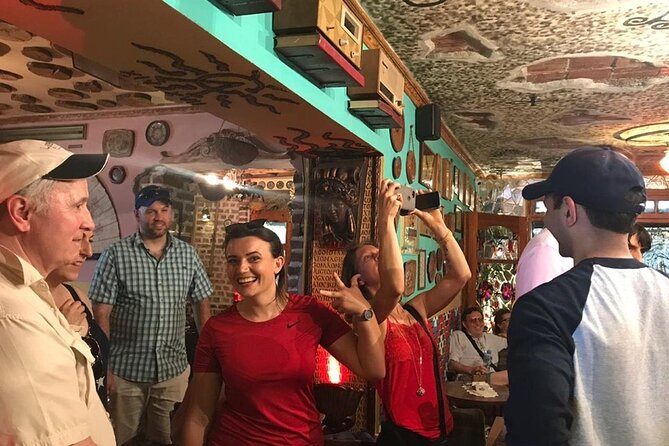
Komiteti Kafe Museum, also called Komiteti Bar, is scheduled for about 20 minutes. This café and museum setting evokes socialist-era Albania while also reflecting traditional hospitality. It is one of the more atmospheric pauses on the route, and a good place to connect political history with ordinary habits, design, food, and social life.
Some versions of the experience may include a café stop or gelato, but the confirmed inclusion is a complimentary rakia shot. Do not confuse that included tasting with a full meal or a general drinks allowance.
More history and heritage:
- Semi – Private Tour at Cape of Rodon; Hidden Beaches & History
★ 5.0 · 46 reviews - Walking tour of Tirana; History & Culture
★ 5.0 · 37 reviews - Berat Cultural Tour by 1001 Albanian Adventures
★ 5.0 · 26 reviews - Day Trip To Berat,UNESCO Heritage with Tirana Day Trips
★ 5.0 · 19 reviews
The Pyramid, Postbllok, and the difficult communist past
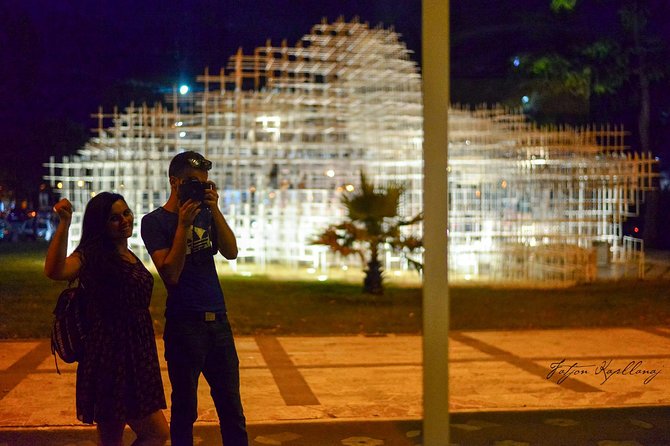
The Pyramid of Tirana is one of the city’s most recognizable modern landmarks. It carries the weight of Albania’s communist past but has also become part of the city’s changing public identity.
You only spend about five minutes here, so the guide’s explanation matters more than a long visit. The Pyramid works best as a visual marker of how Tirana is rethinking its past rather than as a stop for an extended interior tour.
At Postbllok, or the Checkpoint Memorial, the subject becomes more direct. This open-air installation near Blloku recalls the surveillance and oppression of the communist period. It is a compact memorial, but its position near a fashionable neighborhood makes the contrast especially clear.
The former villa of Enver Hoxha is next. Hoxha ruled Albania for decades, and his home in Blloku was located inside a district once reserved for the communist elite. Ordinary citizens could not freely enter this area during the dictatorship.
The stop lasts around five minutes. You will not receive a full house tour from that timing, but you will get the essential context: political power was not only expressed through government buildings and prisons. It also shaped where people lived, walked, and belonged.
Blloku now serves as one of Tirana’s main social districts. Cafés, restaurants, and nightlife have replaced much of its former secrecy. That change is one of the clearest examples of Albania’s rapid shift since the fall of communism.
The route also passes through Shallvaret, an area with older roots and a modern urban setting. This part of the walk helps fill in the spaces between major monuments. It is less about one spectacular sight and more about seeing how Tirana’s neighborhoods fit together.
Religious revival at the Orthodox Cathedral
The Resurrection of Christ Orthodox Cathedral is one of the most important religious buildings in modern Tirana. Built from 2001 to 2012 and consecrated on June 24, 2012, it represents the return of open religious practice after decades of state atheism.
In 1967, Albania declared itself the world’s first atheist state. Religious practice was banned, and many churches, mosques, and other religious sites were destroyed or put to different uses. The cathedral’s construction after the collapse of communism therefore carries political and emotional meaning beyond its architecture.
You have about 10 minutes here. That is enough for an introduction and a look at the building, but not necessarily a long period of reflection. I would pay close attention to the contrast between this cathedral, Saint Paul’s Cathedral, the mosque, and the Bektashi teqe. Together, they show a country where religious identity was suppressed, then reappeared in public life.
House of Leaves and the Bank of Albania
The House of Leaves, now the Museum of Secret Surveillance, is the one stop where admission is specifically not included. It occupies a building tied to Albania’s communist surveillance system and offers a more focused look at secret policing and state control.
The scheduled stop is about 10 minutes. That is a very short time for a museum devoted to such a serious subject, so you should check the timing with Albiona if entering the museum is important to you. The ticket cost is extra, and the tour price does not cover it.
The final listed stop is the Bank of Albania. Founded in 1925 as the National Bank of Albania, it is one of the country’s oldest financial institutions. The stop lasts about five minutes and adds an economic angle to a walk otherwise centered on power, religion, culture, and daily life.
By the end, the route has covered a great deal of ground. You have seen central squares, religious buildings, markets, memorials, former elite spaces, museums, and streets where Tirana’s present identity is still taking shape.
Is $36.20 good value?
At $36.20 per person, this is fairly priced for a 3 to 4-hour guided walk with a maximum of 11 people and a rakia tasting included. The value comes less from entry tickets, since most listed stops are free, and more from Albiona’s interpretation and the number of subjects covered.
The tour gives you an organized introduction to Tirana without requiring separate research for each site. It also takes you to places you might not connect on your own, especially the Bektashi teqe, Kapllan Pasha’s Tomb, Postbllok, the former Hoxha villa, and the House of Leaves.
The tradeoff is clear. The route is ambitious, and many stops last only five or 10 minutes. You are paying for a broad city story, not detailed access to every building. If you prefer to spend an hour inside one museum, the tour may feel rushed. If you have only a short stay, the coverage is useful.
The walk is often booked well ahead, with an average booking time of about 33 days. That suggests you should reserve early for a preferred date, though same-day reservations have also been possible.
Who should book this experience?
I would choose this tour for a first day in Tirana, especially if Albania is new to you. It suits anyone who wants a clear explanation of the country’s Ottoman, religious, communist, and post-communist chapters without sitting through a formal lecture.
It is also a good match for curious couples, families, and small groups who like asking questions. Albiona’s English is described as excellent, and her style leaves space for personal stories and conversation.
You may want a different option if you have limited walking ability, dislike outdoor sightseeing, or want long interior visits. The route is near public transportation, and most people can participate, but the supplied information does not specify a reduced route, hotel pickup, or a fully accessible path.
Free cancellation is available up to 24 hours before the start time. Changes or cancellations made later are not refunded, and poor weather can lead to a new date or a full refund.
Should you book the Tirana Walking Tour?
Yes, if you want to understand Tirana rather than simply photograph it. The strongest reason to book is Albiona’s personal way of explaining Albania, especially the difficult communist period and its lasting effect on families and public life.
Book it early in your stay, wear good shoes, and think of the itinerary as a guided introduction. You will see many important places, but you will not linger at all of them. For $36.20, the combination of local perspective, small-group attention, broad coverage, and rakia makes this a strong choice for a first look at Tirana.
FAQ
Where does the Tirana walking tour begin?
The tour begins at Skanderbeg Square, Plaza Tirana, Sheshi Skender Beu, Tirana 1001, Albania.
Where does the tour end?
The experience ends back at the meeting point at Skanderbeg Square.
How long does the walking tour last?
The tour lasts approximately 3 to 4 hours.
How much does the tour cost?
The listed price is $36.20 per person.
Is the tour offered in English?
Yes. The tour is offered in English.
How many people can join the tour?
The group has a maximum of 11 travelers.
Is rakia included?
Yes. A complimentary shot of rakia, a traditional Albanian spirit, is included.
Is admission to the House of Leaves included?
No. Admission to the Museum of Secret Surveillance, also known as the House of Leaves, is not included.
Are other personal expenses included?
No. Personal expenses beyond the included rakia tasting are not covered.
What happens if bad weather cancels the tour?
If poor weather causes a cancellation, you will be offered a different date or a full refund.
More Walking Tours
- Premium Walking Tour of Berat with Expert Guides
★ 5.0 · 43 reviews - Private Walking Tour Visit to Durrës with Licensed Guide
★ 5.0 · 26 reviews - Walking Tour Historic Jewels in Tirana
★ 5.0 · 17 reviews - TIRANA Walking Tour: Discover the ever-changing capital city
★ 5.0 · 13 reviews
Recently added around Tirana
- Berat 4×4 Off-Road and Vineyard Wine Tasting★ 5.0 · 3 reviews
- Apollonia and Berat UNESCO tour from Tirana★ 5.0 · 3 reviews
- Tirana’s Communist Past: A Tasting Tour with Traditional Lunch★ 5.0 · 3 reviews
- Apollonia and Ardenica Monastery – full day tour★ 4.5 · 3 reviews
- Cultural Tour in Tirana including House of Leaves★ 5.0 · 3 reviews
- 3 Hour Pub Crawl Tour in Tirana★ 3.5 · 3 reviews
- Tirana to Ksamil and Saranda Bus★ 4.5 · 3 reviews
- Day Tour in Berat, Unesco Heritage★ 5.0 · 3 reviews
Historical Tours, compared.
Semi – Private Tour at Cape of Rodon; Hidden Beaches & History
Read our review →
Ancient City of Butrint, UNESCO World Heritage site – A Must
Read our review →
Day Trip To Berat,UNESCO Heritage with Tirana Day Trips
Read our review →
Private Full-Day Historical Day Tour in North Macedonia and Albania
Read our review →
Browse the lists this tour appears in