
Reviewed · WALKING TOURS
Walking Tour of Tirana
Tirana reveals itself one square at a time. This $18.14 English walking tour links the capital’s major sights with the stories that explain them, from Ottoman rule and wartime occupation to Enver Hoxha’s long communist regime. I like the compact route and the chance to hear local perspectives from guides such as Clint, Eri, Arber, Ariola, Aurora, and Kedri. The main drawback is that the meeting point can be hard to find, and the tour moves on schedule, so a late taxi arrival can mean missing it.
I also like that the walk finishes near the city center at the Orthodox Cathedral, leaving you well placed to continue exploring. The pace is manageable, with frequent stops for photos and questions, but summer heat can be intense. An early start is the sensible choice, especially after reports of temperatures reaching 42°C.
In This Review
- Key points at a glance
- Why this is a smart first walk in Tirana
- Starting beside Skanderbeg Square
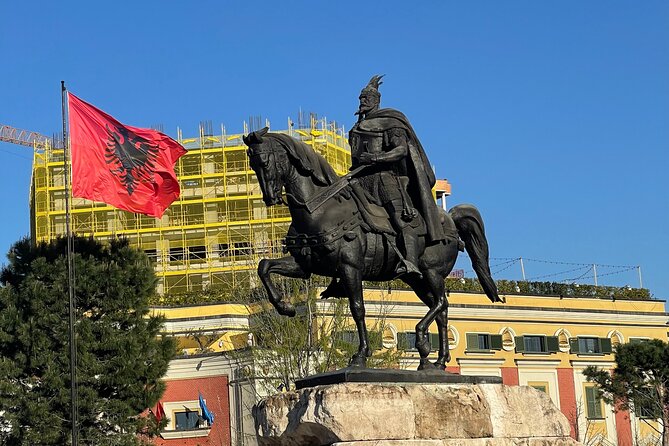
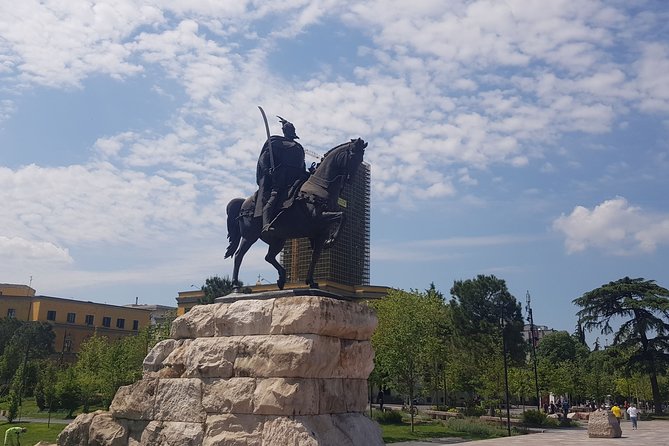
- Skanderbeg Square and the shape of modern Tirana
- Et’hem Bej Mosque and the Clock Tower
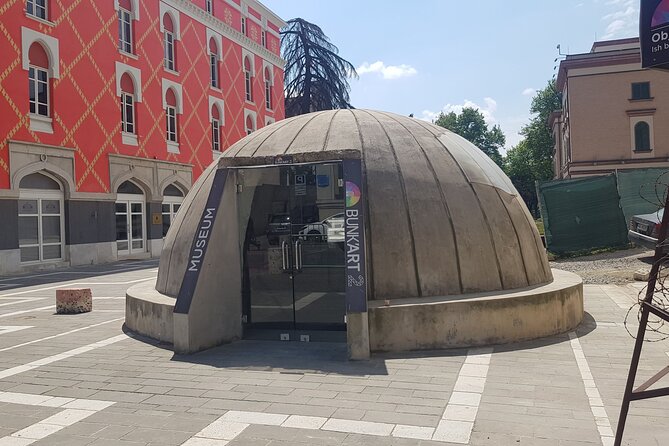
- Bunk’Art 2 and the difficult communist years
- National Gallery of Art and communist-era culture
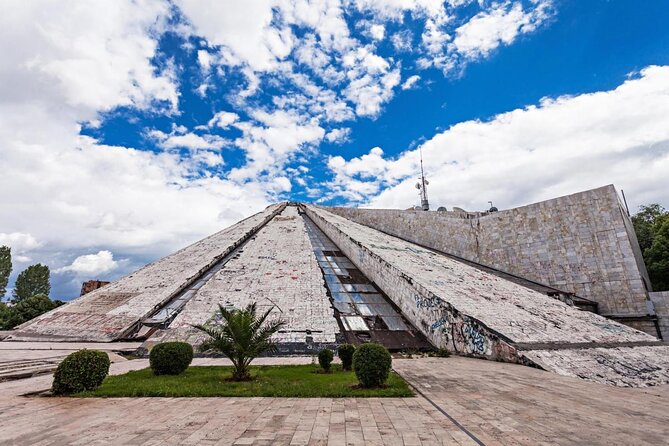
- The Pyramid of Enver Hoxha
- Blloku and the former dictator’s villa
- Postbllok and the memory of repression
- Finishing at the Resurrection of Christ Cathedral
- What the $18.14 price really buys
- Heat, pace, and practical comfort
- Who should book this Tirana walk?
- Should you book it?
- FAQ
- How long does the Walking Tour of Tirana last?
- How much does the tour cost?
- What language is the tour offered in?
- Where does the tour start?
- Where does the tour finish?
- What sights are included?
- How many people can join the tour?
- Can I cancel for a full refund?
Key points at a glance
- A sharp introduction to Tirana: In just over two hours, you see the capital’s central landmarks and learn how Albania changed after communism.
- Personal local storytelling: Guides including Clint, Eri, Arber, Klint, Kedri, and Aurora are praised for humor, passion, and family stories about life under communism.
- A route through several eras: The walk moves from the Ottoman mosque and clock tower to communist memorials, Bunk’Art 2, Blloku, and the modern Orthodox Cathedral.
- Good value for the price: At $18.14, your payment covers the reservation and guide compensation, rather than relying only on a tip.
- Small-group format: The maximum group size is 15, which can make questions and conversation easier.
- Plan carefully for the start: The tour begins at the National Theatre of Opera, Ballet and Folk Ensemble beside Skanderbeg Square, and late arrivals may not catch up.
Why this is a smart first walk in Tirana
Tirana is easy to walk around in the central area, but its landmarks do not always explain themselves. A mosque, a concrete bunker, a former dictator’s villa, and a grand cathedral can seem like unrelated sights until someone connects them.
That is where this tour earns its keep. You get a quick map of the city, but you also get a framework for understanding Albania. The guides explain the country’s periods of foreign rule, the effects of fascism and communism, and the changes that followed independence from the communist system in 1992.
I would take this walk near the beginning of a Tirana visit. You can mark places that deserve a longer return visit, ask for practical suggestions, and get your bearings before spending time on museums, cafés, or neighborhoods. Several guides also provide recommendations, and Klint has been praised for giving out a useful leaflet at the end.
The route lasts about 2 hours and 15 minutes. That is long enough to cover the central sights, but short enough to fit into a morning or afternoon without taking over your day.
More Walking Tours in Tirana
- Local food experience & walking tour of Tirana
★ 5.0 · 192 reviews - Berat Walking Tour
★ 5.0 · 86 reviews - Tirana Walking Tour: History, Culture &Gems by a Passionate Guide
★ 5.0 · 52 reviews
Starting beside Skanderbeg Square
The meeting point is the National Theatre of Opera, Ballet and Folk Ensemble, in the Palace of Culture at Skanderbeg Square. This is central, but you should not treat the meeting instructions casually. Two people specifically had trouble locating the group, and one missed the walk after traffic delayed a taxi and left the passenger far from the start.
Give yourself extra time. The guide starts at the appointed hour for the whole group, and the tour does not appear to wait for late arrivals. The experience is offered in English and uses a mobile ticket, so keep your booking details easy to open.
The first few minutes serve as an introduction and gathering point. Then the group begins across the broad central square.
Skanderbeg Square and the shape of modern Tirana
Skanderbeg Square is Tirana’s main public space and the natural place to begin. It gives you an immediate sense of the capital’s scale and helps you understand how the central district is arranged.
The stop lasts about 10 minutes. Expect an orientation rather than a long lesson or a formal visit inside a building. You will have time to take pictures and ask questions before moving on.
This is also a useful moment to listen for the guide’s approach. The strongest guides on this walk are not simply reciting dates. They use humor, family memories, and stories about daily life to make Albania’s difficult 20th-century past easier to grasp.
Et’hem Bej Mosque and the Clock Tower
The Et’hem Bej Mosque offers a glimpse of Tirana’s older Ottoman-era center. It sits close to the square and is one of the city’s best-known historic religious buildings.
The planned stop is brief, about five minutes. That means you should expect an outside explanation and a short look rather than a lengthy architectural visit. If the mosque is a priority for you, note the location so you can return later with more time.
Nearby, the Clock Tower receives another five-minute stop. Together, the mosque and tower show how much of Tirana’s central identity grew around older civic and religious buildings before the 20th century transformed the city.
The quick timing is both useful and limiting. You see the important landmarks without getting bogged down, but anyone wanting detailed architectural study will need to come back independently.
A few more ways to spend a day out of Tirana
- Premium Walking Tour of Berat with Expert Guides
★ 5.0 · 43 reviews - Walking tour of Tirana; History & Culture
★ 5.0 · 37 reviews - Private Walking Tour Visit to Durrës with Licensed Guide
★ 5.0 · 26 reviews - Walking Tour Historic Jewels in Tirana
★ 5.0 · 17 reviews
Bunk’Art 2 and the difficult communist years
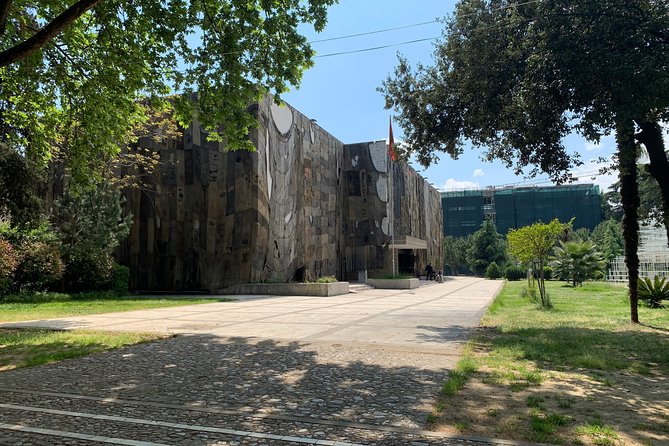
Bunk’Art 2 is one of the most memorable points on the route. Located near the city center, this museum occupies a bunker and focuses attention on Albania’s communist period and the security system that shaped everyday life.
The official stop is only about five minutes. You should not assume that the short stop includes a full museum visit. Instead, the guide uses the location as a doorway into the subject, giving you context and helping you decide if you want to return for a longer visit.
This is where the tour’s local voice matters most. Clint, Arber, Klint, and other guides have been praised for explaining the old system through personal or family memories. Klint, in particular, has shared family experiences connected to people affected by the regime. Those details can turn a political chapter into something human and understandable.
The tour also addresses fascism and foreign invasions, subjects that help explain why Albania’s modern story is more complicated than a simple shift from monarchy to communism and then democracy.
National Gallery of Art and communist-era culture
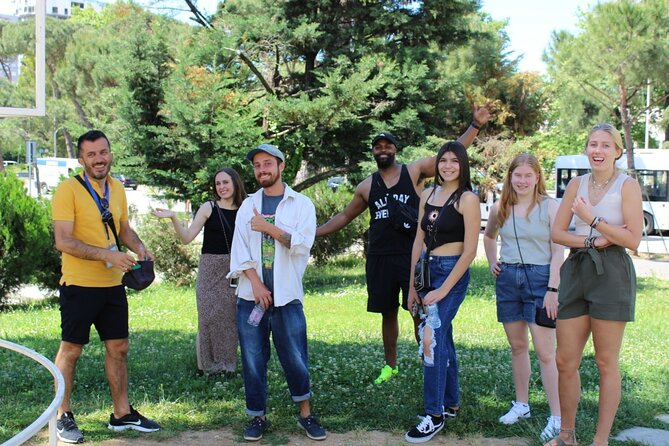
The National Gallery of Art receives a 10-minute stop. Here, the focus turns from political control to artistic expression during the communist era.
This is a valuable change of pace. You are not only hearing about laws, leaders, and repression. You are also considering how culture and art operated under a tightly controlled system.
Again, the short stop works best as an introduction. If you enjoy museums, make a note to return. The walking tour gives you the background needed to look at Albanian art with more questions in mind, especially around official style, public messaging, and the limits placed on artists.
The Pyramid of Enver Hoxha
The Enver Hoxha Pyramid is one of Tirana’s most recognizable landmarks and a clear symbol of how the country has reconsidered its past. The building is linked to Albania’s former dictator, and its presence in the center creates a natural point for discussing Hoxha’s rule and the way Tirana has changed since then.
The scheduled stop is about 10 minutes. That allows the guide to explain why the structure matters and gives you time for photographs. It is not designed as a full building visit.
This is one of the best moments to ask questions. The guides are praised for making the subject clear without turning the walk into a dry political lecture. Eri is often described as a strong storyteller with a good sense of humor, while Aurora is praised for speaking with enthusiasm about both Albania’s past and its future.
Blloku and the former dictator’s villa
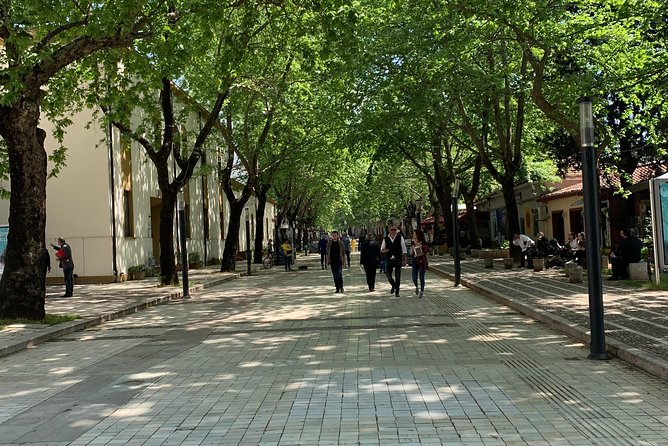
Blloku offers a different view of the communist period. Once associated with the political elite, the area includes the villa of Albania’s former dictator.
The stop lasts about five minutes, so the guide’s explanation is the main attraction. You get a sense of how sharply life could differ between those inside the ruling circle and ordinary people outside it.
Blloku is also a useful neighborhood to understand in present-day Tirana. The tour does not promise a long food or nightlife visit, but it points you toward an area worth exploring on your own later. This is a good example of the tour’s purpose: show you the key places, explain why they matter, then let you decide where to spend more time.
Postbllok and the memory of repression
Near Blloku, the Postbllok, or Checkpoint Monument, continues the theme of communist memory. The five-minute stop is short, but the location helps connect the former elite district with the wider experience of surveillance and political control.
I appreciate this part of the walk because it avoids treating communism as an abstract political label. The route places memorials and former power centers within the same neighborhood, helping you picture how the system worked spatially as well as politically.
The subject can be serious, but the guides’ style is generally warm and accessible. Their humor does not erase the painful parts. It gives the group a way to stay engaged during a difficult section of the tour.
Finishing at the Resurrection of Christ Cathedral
The walk ends at the Resurrection of Christ Orthodox Cathedral on Rruga Ibrahim Rugova. The final stop lasts about five minutes, and the cathedral is very close to the city center.
This is a practical finish. You are not left on the edge of town, and you can continue walking from here after saying goodbye to the guide. The route also ends on a note of religious and civic change, after taking you through Ottoman, communist, and post-communist chapters.
The cathedral is not presented as a long interior visit. Think of it as the final landmark and a convenient place to continue your day.
What the $18.14 price really buys
At $18.14 per person, this is strong value if you want orientation and context rather than an intimate private tour. The payment covers both the reservation fee and the guide’s compensation directly, even though the tour is connected to the general free walking tour model. You may still offer a gratuity if you wish, but it is not the only source of payment for the guide.
The group limit of 15 helps. You may not have a private experience, but a group of this size is small enough for questions, especially when the guide pauses in the shade or gathers everyone around a landmark.
The value is highest for a first visit. You get a city overview, historical background, neighborhood pointers, and recommendations for further exploring. It is less suitable if you want long museum visits, detailed architecture, or a slow photographic walk.
Heat, pace, and practical comfort
The walking is described as easy, with plenty of stops. Still, Tirana can be extremely hot in summer. Reports from one tour describe afternoon temperatures of 42°C, with evening temperatures still around 37 or 38°C.
Book an early tour if you can. Wear light clothing, bring water, and dress for the forecast. Guides have been praised for finding shade during stops, but shade cannot remove the heat from a long central-city walk.
The tour is listed as operating in all weather conditions, while the cancellation terms also say that poor weather can lead to a new date or a full refund. In practice, check the day’s conditions and follow the provider’s instructions. Children must be accompanied by an adult, service animals are allowed, and most people can take part.
Who should book this Tirana walk?
I would recommend it to first-time visitors, solo visitors who want a quick orientation, couples, families with older children, and anyone curious about Albania’s modern political story.
It suits you especially well if you enjoy history explained through personal stories. The strongest praise is directed at guides who combine facts with humor, family memories, and clear answers to questions. Clint, Eri, Arber, Klint, Kedri, Ariola, Aurora, Rie, and Buli are among the guides singled out for warmth, storytelling, language skills, and passion.
You may want a different tour if you need a fully private format, extensive time inside each museum, or transport between sights. This is a walking overview, not a museum tour or a private car excursion.
Should you book it?
Yes, if you want an affordable and well-paced introduction to Tirana. The 4.9 rating from 646 reviews and 98 percent recommendation fit the main strengths: strong guides, engaging stories, a useful route, and good value.
Book it early in your stay, arrive well before the meeting time, and avoid the hottest part of the day when possible. You will see some places only briefly, but you will leave with a clear sense of where to return and a much better understanding of Albania’s complicated past.
FAQ
How long does the Walking Tour of Tirana last?
The tour lasts approximately 2 hours and 15 minutes.
How much does the tour cost?
The listed price is $18.14 per person.
What language is the tour offered in?
The tour is offered in English and includes an English-speaking licensed guide.
Where does the tour start?
It starts at the National Theatre of Opera, Ballet and Folk Ensemble, in the Palace of Culture at Skanderbeg Square in Tirana.
Where does the tour finish?
The tour finishes at the Resurrection of Christ Orthodox Cathedral, near Tirana’s city center.
What sights are included?
The route includes Skanderbeg Square, Et’hem Bej Mosque, the Clock Tower, Bunk’Art 2, the National Gallery of Art, the Enver Hoxha Pyramid, Blloku, the Postbllok Checkpoint Monument, and the Resurrection of Christ Orthodox Cathedral.
How many people can join the tour?
The maximum group size is 15 people.
Can I cancel for a full refund?
Yes. You can cancel at least 24 hours before the start time for a full refund. Changes or cancellations made less than 24 hours before the start time are not accepted for a refund.
Recently added around Tirana
- Apollonia and Berat UNESCO tour from Tirana★ 5.0 · 3 reviews
- Berat 4×4 Off-Road and Vineyard Wine Tasting★ 5.0 · 3 reviews
- Tirana’s Communist Past: A Tasting Tour with Traditional Lunch★ 5.0 · 3 reviews
- Apollonia and Ardenica Monastery – full day tour★ 4.5 · 3 reviews
- Cultural Tour in Tirana including House of Leaves★ 5.0 · 3 reviews
- 3 Hour Pub Crawl Tour in Tirana★ 3.5 · 3 reviews
- Tirana to Ksamil and Saranda Bus★ 4.5 · 3 reviews
- Day Tour in Berat, Unesco Heritage★ 5.0 · 3 reviews
Walking Tours, compared.
Tirana Walking Tour: History, Culture &Gems by a Passionate Guide
Read our review →
Premium Walking Tour of Berat with Expert Guides
Read our review →
Private Walking Tour Visit to Durrës with Licensed Guide
Read our review →
Walking Tour Baazar – The Argjiro Castle – Zekate house
Read our review →
Browse the lists this tour appears in