
Reviewed · WALKING TOURS
Gjirokaster walking Tour The Old Baazar, Cfake, Dunavat, Ali Pasha Bridge
Gjirokaster has a quieter side. This three-hour walk leaves Çerçiz Topulli Square for the Old Bazaar, Cfake, Dunavat, and Ali Pasha Bridge, following cobbled lanes and old neighborhoods that many visitors pass by. I like the focus on everyday Gjirokaster rather than only its famous castle, and I like that a local guide can explain the town’s past while you walk through it.
The price is reasonable at $18.08 per person, especially for a small group capped at 15 people. The main consideration is physical: this is a walking route through old quarters and hills, not a flat city stroll. You also need at least two people for the tour to operate.
In This Review
- Key points at a glance
- Why this Gjirokaster walk is worth considering
- Starting at Çerçiz Topulli Square
- The Old Bazaar beneath the castle
- Crossing the Zerzebili Bridge toward Cfake
- Cfake’s old houses and Bektashi tekke
- Dunavat and the changing view of Gjirokaster
- Reaching the Ali Pasha Bridge
- What $18.08 gets you
- Who will enjoy this walk most
- Practical advice before you book
- Should you book the Old Bazaar to Ali Pasha Bridge walk?
- FAQ
- Where does the Gjirokaster walking tour begin?
- Where does the tour end?
- How long does the walking tour last?
- What places does the tour visit?
- Is the Old Bazaar still a traditional bazaar?
- Is a guide included?
- Is there a minimum number of people?
- How large can the group be?
- Is the tour available with a mobile ticket?
- Can I cancel for a full refund?
Key points at a glance
- A walk beyond the castle walls: You see the Old Bazaar area, Cfake, Dunavat, and the Ali Pasha Bridge rather than spending the whole visit around the main square and castle.
- A local guide adds context: Guide Besi is praised for being warm, cultured, passionate, and easy to listen to.
- Old stone neighborhoods: Expect cobblestones, historic houses, bridges, and a Bektashi tekke along the route.
- A small maximum group: The tour accepts no more than 15 people, which should make questions and conversation easier.
- Good value for three hours: At $18.08 per person, the tour offers a low-cost way to see parts of Gjirokaster that are easy to miss.
- Plan for a hill walk: Cfake and Dunavat sit beyond the central visitor zone, and the route ends at the Ali Pasha Bridge before returning to the meeting point.
Why this Gjirokaster walk is worth considering
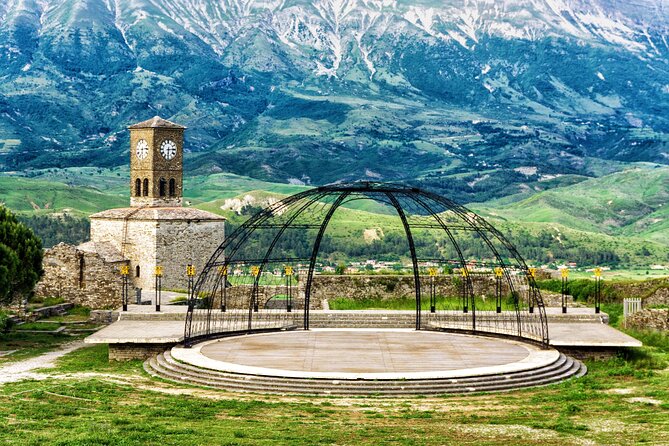
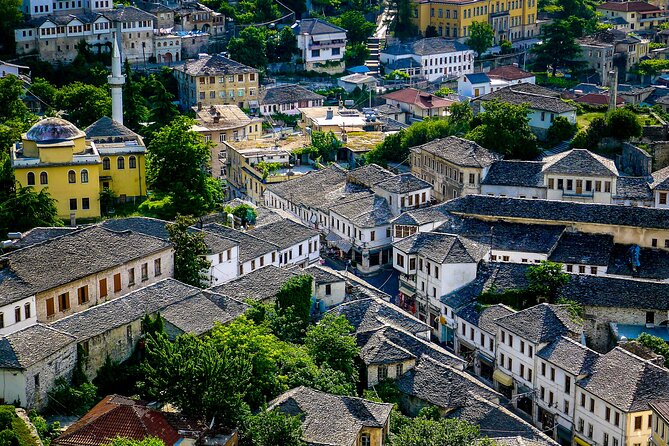
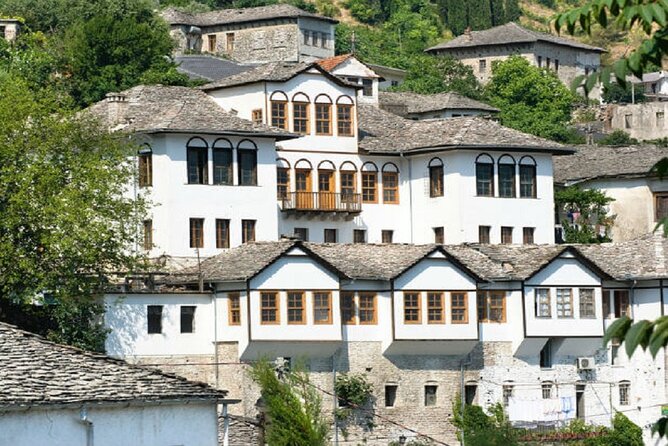
Gjirokaster is best understood on foot. Its gray stone roofs, steep lanes, old houses, and castle walls are not arranged for a quick drive-by visit. The central square and castle receive most of the attention, but the town’s character continues downhill and outward into older residential quarters.
That is the main appeal here. You begin at Çerçiz Topulli Square, a convenient point in the old town, then move into the Old Bazaar area. Despite its name, this is no longer a functioning bazaar in the traditional sense. Its value lies in its position beneath the castle walls, its stone paving, and its old houses.
I like tours that show how a place works as a town rather than treating it as a collection of sights. This route gives you that chance. You pass from a central public space into neighborhoods where architecture, terrain, religious buildings, and rural views meet.
The tour lasts about three hours. That is long enough for a proper walk and conversation, but short enough to fit beside a castle visit, a meal, or an overnight stay in Gjirokaster. The route is not designed as a major sightseeing checklist. It is a slower look at the town’s edges and older quarters.
More Gjirokastër stone-town trips:
- Rafting Vjosa River Gjirokastër Albania ARG
★ 5.0 · 199 reviews - Gjirokastra- The Stone City & Blue Eye- The monument of Nature.
★ 4.5 · 180 reviews - Gjirokastra UNESCO & Ksamil Beach – From Tirana/Durres/Golem
★ 5.0 · 117 reviews
Starting at Çerçiz Topulli Square
The walk begins at Çerçiz Topulli Square, written locally as Sheshi Çerçiz Topulli. This is the most practical meeting point because it sits in the old town and is near public transportation.
Starting here gives the route a clear rhythm. You first meet the guide in a central place, then leave the more familiar visitor area behind. The activity also ends back at the same meeting point, so you do not need to arrange a separate ride from the final stop.
A mobile ticket is provided, and confirmation arrives at booking. You should still check the exact meeting instructions before setting out, especially if you are staying in the wider city rather than near the old town.
The guide is an important part of this experience. Feedback about the guiding is especially strong. One guide, Besi, is praised for warmth, curiosity, passion, and broad cultural knowledge. Another comment highlights how clearly the guide explained the town’s past and how much he seemed to care about Gjirokaster.
That matters on a walk like this. The route includes old houses, a bridge, a tekke, and village-like views, but these places can be easy to pass without explanation. A good local guide helps connect the buildings and lanes to the town’s identity.
The Old Bazaar beneath the castle
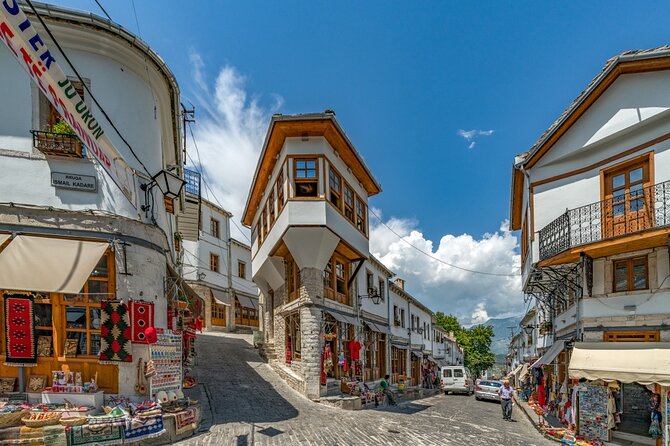
The first neighborhood is the Old Bazaar, located below the castle walls. The name can create the wrong expectation. You are not heading into a large working market filled with stalls. Instead, this is an old quarter whose character comes from its setting and architecture.
The cobbled streets are one of the first details to notice. Gjirokaster’s stone construction can feel severe and practical, but here it also creates a strong sense of place. The lanes lead beneath the castle, where the massive fortification forms a backdrop above the houses.
The oldest homes are another reason to pay attention. The tour description specifically points to some of the oldest houses in this neighborhood, and the guide can help you notice details that are easy to miss at walking pace. This is a good section for travelers who care about traditional town planning and domestic architecture, not only grand monuments.
There is also a useful contrast between the Old Bazaar and the castle. The castle represents power and defense. The quarter below shows the town as a place of trade, residence, movement, and daily life. You get a better feel for Gjirokaster when you see both sides.
One small drawback is that the bazaar may disappoint anyone expecting a busy shopping area. Go for the old streets and setting, not for a market experience. The listed stop time is 15 minutes, though the overall activity lasts about three hours. Since the route description includes several neighborhoods and the bridge, treat that 15-minute figure as a short itinerary label rather than the full walking time, and confirm the timing with the operator if it matters to your plans.
Crossing the Zerzebili Bridge toward Cfake
After the Old Bazaar, the route passes over the Zerzebili Bridge and continues toward Cfake. The bridge is part of the transition from the central old town to a quieter historic neighborhood.
This is where the walk begins to feel less like a standard city tour. Instead of moving between a few headline monuments, you follow the old connections between neighborhoods. The bridge provides a physical marker, but it also helps you understand how Gjirokaster’s quarters are linked across uneven ground.
Cfake contains old houses designated as first-category monuments. That label signals a high level of historic importance, though the experience is still primarily an exterior walking visit based on the information provided. You should not expect automatic entry into every house or monument.
This section is valuable because it puts historic architecture in its original setting. A preserved house can seem like an isolated object when viewed from a road or museum courtyard. Here, you see it among lanes, slopes, bridges, and neighboring homes.
The route’s changing ground is also worth considering. Gjirokaster is known for stone paving and steep terrain, and this walk moves through older quarters rather than broad modern streets. Comfortable shoes are a sensible choice. The tour information does not give a detailed accessibility assessment, so anyone with mobility concerns should ask the operator about the exact route before booking.
A few more ways to spend a day out of Albania
- Walking Tour of Tirana
★ 5.0 · 646 reviews - Local food experience & walking tour of Tirana
★ 5.0 · 192 reviews - Berat Walking Tour
★ 5.0 · 86 reviews - Tirana Walking Tour: History, Culture &Gems by a Passionate Guide
★ 5.0 · 52 reviews
Cfake’s old houses and Bektashi tekke
Cfake adds another layer to the walk with its first-category historic houses and a tekke belonging to the Bektashi Order. The combination makes this more than an architecture tour.
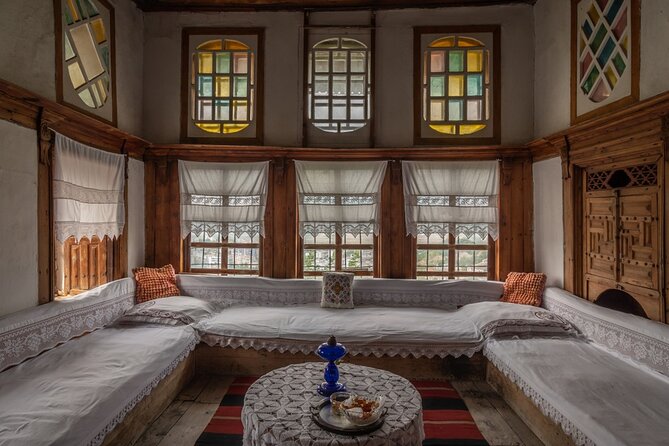
The houses show the domestic side of Gjirokaster. The tekke points to the town’s religious and cultural life. The Bektashi Order is part of Albania’s religious heritage, and seeing a place connected to that tradition gives the walk a wider frame than stone buildings alone.
A guide is particularly useful here. Religious sites can be easy to misread if you only look at the exterior. The guide can explain the role of the tekke and place it within the town’s cultural setting, though the supplied details do not promise an interior visit or a formal religious presentation.
I would approach this stop with respectful curiosity. It is not described as a long museum visit, and there are no listed entrance fees or special admissions. Its value comes from seeing an important part of the neighborhood in context.
Cfake also appears to be where the route begins to blend town and countryside. You may find old houses close to hills, open views, and grazing sheep. That contrast is one of the most appealing features of the tour. Gjirokaster does not end neatly at a city boundary. Its historic quarters meet the surrounding hills in a gradual, sometimes surprising way.
Dunavat and the changing view of Gjirokaster
The route continues through Dunavat, another old neighborhood. The supplied information gives fewer specific monuments here, but that does not make this part unimportant. Dunavat helps fill in the picture between the central town and the final bridge.
As you walk, the emphasis shifts from individual sights to the feel of the area. Old homes, stone lanes, slopes, and views toward the hills create a more local experience than a short loop around the main square. The mention of sheep on the hilltops is telling. This is not a polished historic center separated from rural life. The older neighborhoods sit close to open ground and working countryside.
I like this kind of route because it gives you a better sense of scale. From the center, Gjirokaster can seem like a compact old town arranged around the castle. From Dunavat, you begin to see how far the built-up area spreads and how the hills shape movement, views, and settlement.
The downside is that the route may feel less predictable than a standard sightseeing walk. You are not guaranteed a long list of named attractions at every turn. If you want a guide to spend most of the time inside museums or formal monuments, this is not the right choice. If you want to understand the town through its streets and surroundings, Dunavat should be a strong part of the experience.
Reaching the Ali Pasha Bridge
The Ali Pasha Bridge is the final destination. It gives the walk a clear goal and rewards you with one of the area’s most distinctive historic structures.
The bridge is reached after passing through old neighborhoods, hills, and the area around Cfake. That approach matters. The bridge is not presented as an isolated photo stop reached by a quick vehicle transfer. It is the last stage of a walk that gradually takes you away from the center.
The setting is part of the appeal. You combine old masonry with open hills and a quieter atmosphere. The tour description highlights nature, sheep on the hilltops, and historic homes along the way, so the bridge works as both a built landmark and a countryside viewpoint.
You should keep your expectations realistic. The information does not specify the bridge’s exact dimensions, access conditions, or the amount of time spent there. It also does not promise a separate admission or an extended guided visit. Think of it as the endpoint of a neighborhood walk, not a full archaeological excursion.
After reaching the bridge, the activity ends back at Çerçiz Topulli Square. That return arrangement is useful because you finish where you started and can continue with your own plans in the old town.
What $18.08 gets you
At $18.08 per person, this is priced as an affordable guided walk. The fee includes the guide, while anything not specifically listed is excluded. There are no stated entrance fees for the route, and the tour appears to focus on outdoor neighborhoods, streets, bridges, and views.
The value depends on what you want from a guide. If you only need directions, you could walk around parts of Gjirokaster independently. But a local guide can make the old houses, the tekke, and the less familiar neighborhoods easier to understand.
The strongest praise focuses on the guiding. The guide is described as pleasant, entertaining, flexible, and strongly connected to the town. Another assessment gives the guide credit for explaining the town’s past clearly. That combination is important: information is useful, but a flexible and personable guide can also adjust the pace and answer the questions you actually have.
The group limit is 15 people. That is not a private tour, but it is small enough to avoid the feel of a huge procession. If only a few people book, the conversation may feel more personal. The minimum of two people means solo visitors should check availability before relying on this activity.
The average booking lead time is 42 days. That does not guarantee that you must book six weeks ahead, but it suggests you should reserve early during busy periods if this walk is important to your schedule.
Who will enjoy this walk most
I would recommend this experience to you if you want to see Gjirokaster beyond its main attractions. It suits people who enjoy local neighborhoods, old houses, religious heritage, stone lanes, and walks with a clear sense of place.
It is also a good match if you prefer a guide who can explain the town as a resident rather than simply recite dates. The positive feedback about Besi and the other guide suggests that the human side of the tour is one of its main strengths.
You should also be comfortable with a three-hour walk over old streets and uneven ground. The route information does not provide an accessibility rating, so you should ask before booking if hills, cobbles, or bridges could be difficult.
This may not suit you if you have only a short stop in Gjirokaster and want to see the castle interior, since the castle is not listed as a stop. It may also disappoint you if you expect a working bazaar, extensive shopping, or entrance to historic homes. The focus is on seeing the neighborhoods from the outside and understanding them through the guide.
Practical advice before you book
Meet at Çerçiz Topulli Square and allow enough time to find the exact spot. The activity returns there, so you can leave luggage and later plans organized around the same central location, provided your accommodation or transport arrangements allow it.
Wear shoes suited to cobbled streets. The tour lasts approximately three hours, and the route includes old neighborhoods, a bridge, hill areas, and the Ali Pasha Bridge. The information does not state that food, drinks, transport, or admissions are included, so budget separately for anything beyond the guide.
The activity is confirmed at booking and uses a mobile ticket. Free cancellation is available if you cancel at least 24 hours before the local start time. Changes or cancellations inside that period are not accepted for a refund.
Should you book the Old Bazaar to Ali Pasha Bridge walk?
Book it if you want a low-cost, guide-led look at the parts of Gjirokaster that are easy to skip. The Old Bazaar, Cfake, Dunavat, and Ali Pasha Bridge create a satisfying route, and the strongest reason to go is the quality of the local storytelling.
Skip it if you want a flat walk, a formal museum tour, or a busy shopping bazaar. For most visitors with enough time and a willingness to walk uphill and over cobbles, this is a smart addition to a castle visit. The $18.08 price makes it an especially easy choice for seeing more of Gjirokaster without committing to a full-day excursion.
FAQ
Where does the Gjirokaster walking tour begin?
It begins at Çerçiz Topulli Square, also written as Sheshi Çerçiz Topulli, in Gjirokaster, Albania.
Where does the tour end?
The activity ends back at the meeting point at Çerçiz Topulli Square.
How long does the walking tour last?
The tour lasts approximately three hours.
What places does the tour visit?
The route includes the Old Bazaar area, Cfake, Dunavat, and the Ali Pasha Bridge. It also passes the Zerzebili Bridge and a Bektashi tekke in Cfake.
Is the Old Bazaar still a traditional bazaar?
The area is called the Old Bazaar, but it is described as no longer functioning as a bazaar. Its old houses, cobbled streets, and position beneath the castle walls are the main attractions.
Is a guide included?
Yes. A guide is included in the tour price.
Is there a minimum number of people?
Yes. At least two people are required for the tour to take place.
How large can the group be?
The maximum group size is 15 people.
Is the tour available with a mobile ticket?
Yes. The activity provides a mobile ticket, and confirmation is received when you book.
Can I cancel for a full refund?
Yes, if you cancel at least 24 hours before the experience begins. Cancellations or changes made less than 24 hours before the local start time are not accepted for a refund.
Recently added around Albania
- Berat 4×4 Off-Road and Vineyard Wine Tasting★ 5.0 · 3 reviews
- Apollonia and Berat UNESCO tour from Tirana★ 5.0 · 3 reviews
- Llogara Caesar’s Path,Orikum Park & Marmiroi Church Guided Tour★ 5.0 · 3 reviews
- Vlora Airport Transfers – Via Transfer Albania★ 5.0 · 3 reviews
- Tirana’s Communist Past: A Tasting Tour with Traditional Lunch★ 5.0 · 3 reviews
- Daily tour★ 4.5 · 3 reviews
- Apollonia and Ardenica Monastery – full day tour★ 4.5 · 3 reviews
- Cultural Tour in Tirana including House of Leaves★ 5.0 · 3 reviews
Walking Tours, compared.
Tirana Walking Tour: History, Culture &Gems by a Passionate Guide
Read our review →
Premium Walking Tour of Berat with Expert Guides
Read our review →
Private Walking Tour Visit to Durrës with Licensed Guide
Read our review →
Walking Tour Baazar – The Argjiro Castle – Zekate house
Read our review →Browse the lists this tour appears in