
Reviewed · WALKING TOURS
Durrës: Walking tour with Roman Amphitheater
A Roman arena hides beneath modern Durrës. This short walking tour takes you from central Sheshi Liria to the city’s ancient amphitheater with a local guide, giving you a compact introduction to one of Albania’s most important archaeological sites.
I like the small group limit of 15 people, and I like that the tour includes both a guide and the amphitheater entrance ticket. The main drawback is the site itself: much of the structure remains underground, and missing inscriptions and limited upkeep can make the ruins harder to understand without a guide.
I would treat this as a focused history stop, not a full city tour. At $40.65 per person for about 90 minutes, the value depends on how much you want context and explanation at the amphitheater rather than simply walking in, looking around, and leaving.
In This Review
- Key points to know before booking
- Why the Durrës amphitheater is worth your time
- Meeting at Sheshi Liria in central Durrës
- What the 90-minute walk actually covers
- Entering a partly buried Roman arena
- Why a guide matters at this particular site
- Is $40.65 good value?
- Who will enjoy this Durrës experience?
- Weather, cancellations, and planning advice
- My take on the site’s condition
- Should you book the Roman Amphitheater walk?
- FAQ
- Where does the Durrës Roman Amphitheater tour start?
- Where does the tour end?
- How long does the walking tour last?
- How long is the amphitheater visit?
- Is the entrance ticket included?
- How many people are required for the tour to operate?
- Can I cancel for a full refund?
Key points to know before booking
- The tour begins and ends at Sheshi Liria, a central Durrës meeting point near public transportation.
- The Roman Amphitheater is the only scheduled stop, so this is a compact archaeological visit rather than a broad city walk.
- A guide and entrance ticket are included, with no separate admission purchase listed for you.
- At least two people must book, so a solo booking may not operate on its own.
- The amphitheater is partly buried, and some explanatory inscriptions are missing, making the guide especially useful.
- The maximum group size is 15, a reasonable limit for a short site visit.
Why the Durrës amphitheater is worth your time
Durrës is one of Albania’s most important historic cities, and its Roman amphitheater gives you a direct look at the city’s ancient importance. The arena was built during the Roman period and is linked to Emperor Trajan in the second century. At its height, it could hold about 20,000 people, making it the largest amphitheater in the Balkans according to the historical information associated with the site.
That number changes how you read the ruins. What may first look like a modest collection of weathered stone was once a huge public venue. Picture the scale of an arena that could hold tens of thousands, then look at the smaller surviving sections around you. Much of the original building is still below ground, so the visible remains do not tell the whole story.
The amphitheater’s public life ended around the fourth century, after a powerful earthquake. Later changes to Durrës covered or absorbed parts of the old structure. This is why the site can feel incomplete. You are not walking through a fully cleared Roman monument. You are seeing one part of a much larger building, with modern streets and later layers close by.
That partial survival is both the attraction and the frustration. I enjoy ruins that require a little imagination, but you may prefer a site with tall walls, complete arches, and clear signs at every turn. Here, a local guide can help connect the stones in front of you with the arena that once occupied a much larger space.
More Walking Tours in Tirana
- Walking Tour of Tirana
★ 5.0 · 646 reviews - Local food experience & walking tour of Tirana
★ 5.0 · 192 reviews - Berat Walking Tour
★ 5.0 · 86 reviews
Meeting at Sheshi Liria in central Durrës
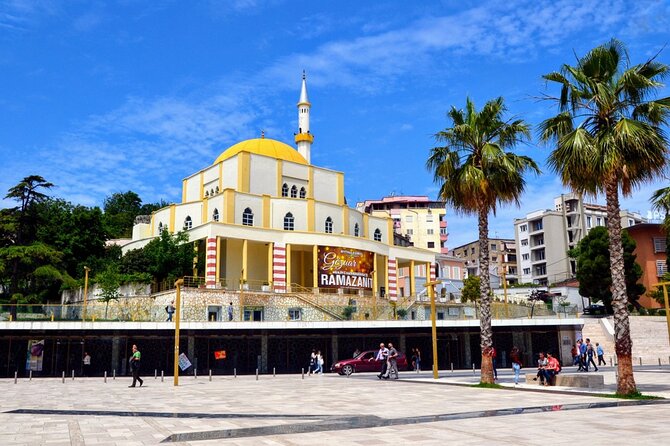
The tour starts and finishes at Sheshi Liria. This makes the experience easy to fit into a day in Durrës, especially if you are already near the central part of town. The meeting point is also near public transportation, which is useful if you are arriving from another part of the city.
Because the same square serves as both the starting and ending point, you do not need to plan a separate return journey. That is a small but practical advantage. After the visit, you can continue your own day from the same central area instead of figuring out where the tour leaves you.
The meeting details do not name a specific guide, so you should pay close attention to the confirmation you receive after booking. Confirmation is provided at the time of booking, and the mobile ticket format means you can keep the booking information on your phone.
One important condition is easy to miss: at least two people are required for the tour to operate. If you are booking alone, this matters. The experience may still be available if another person has booked, but the stated requirement means you should not assume a solo reservation guarantees departure.
What the 90-minute walk actually covers
The experience lasts about one hour and 30 minutes, but the scheduled attraction is the Roman Amphitheater itself. The listed visit time at the site is about 30 minutes. The remaining time presumably allows for meeting the guide, walking to the monument, entering, and receiving explanations, but the exact timing is not detailed.
That makes this a short and controlled outing. You are not signing up for a long city walk with several stops. You are choosing a brief introduction to one major Durrës attraction.
For you, the 90-minute format may be ideal if your day is already full. It can fit between meals, shopping, transportation, or a longer visit elsewhere. It also works well if you want a first look at Durrës before deciding how much more time to spend in the city.
I would not choose it if you want a wide survey of Durrës. The schedule names only the amphitheater, and the information provided does not promise visits to other historic buildings, the waterfront, museums, or churches. The tour’s strength is focus, not variety.
Entering a partly buried Roman arena
The Roman Amphitheater is the heart of the experience. Entry is included, and the tour information also describes admission as free, so you should not need to buy a separate ticket at the site. Your guide is expected to accompany you into the monument and explain what you are seeing.
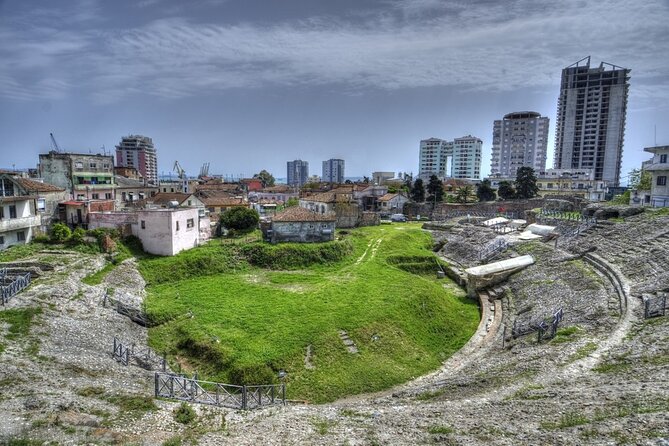
The most important thing to understand is that a substantial part of the amphitheater remains underground. You will not see the full 20,000-seat structure rising clearly around you. Instead, the visible remains offer fragments of the original plan, with buried sections limiting how much of the arena you can read at a glance.
This is where expectations matter. If you expect something as complete as Rome’s Colosseum, Durrës may seem underwhelming. One direct assessment called it not very imposing because such a large section remains below ground. That criticism is fair, especially for visitors who judge ancient sites mainly by size and preservation.
Still, I would not dismiss it. The amphitheater is easily accessible and remains a must-see for many people coming to Durrës. Its importance comes from the scale of what once existed and from the chance to see an ancient public building woven into the modern city.
The tour’s local perspective should help with that. Bare stones can be difficult to interpret when signs are sparse. A guide can point out the surviving areas and explain how the visible pieces fit into the original Roman design. Since the monument’s story is larger than its exposed remains, the spoken explanation may be more valuable than the physical entrance alone.
More day trips out of Durrës:
- Berat-Durres and Belsh Lake, day tour from Tirana
★ 4.5 · 274 reviews - Gjirokastra UNESCO & Ksamil Beach – From Tirana/Durres/Golem
★ 5.0 · 117 reviews - Ohrid – North Macedonia Full Day Tour from Tirana & Durres/Golem
★ 4.0 · 84 reviews - Private Ohrid Day Tour and Authentic Village from Tirana & Durres
★ 5.0 · 71 reviews
Why a guide matters at this particular site
Some archaeological sites explain themselves. Durrës’ amphitheater does not always do so. Missing illustrative inscriptions have been noted as a problem, and the site is not kept as carefully as some better-known Roman monuments.
That makes the guide more than a companion for a walk. The guide provides the structure that the site itself lacks. You can learn why the amphitheater was built, how large it was, and how its use ended. You can also ask questions in the moment rather than trying to decode incomplete remains from a phone screen.
I like this arrangement for a first visit. You get local interpretation without committing to a long private tour. The group can include up to 15 people, so it is not an intimate one-on-one experience, but the maximum is still manageable for a short stop.
The group size also affects how much personal attention you receive. With a full group, you may need to stay close to the guide and ask questions when there is an opening. With fewer people, the same format could feel much more personal. The booking information does not promise a private tour, so plan for a shared experience.
Is $40.65 good value?
At $40.65 per person, this is not the cheapest way to see a single archaeological site. Since the amphitheater’s listed admission is free, the price is mainly paying for the guide, organization, and short walking experience.
That can be worthwhile if you value interpretation. The site’s incomplete condition and missing inscriptions mean that you may get far more from a guided visit than from an independent look. The tour also removes the small uncertainty of finding the entrance, understanding what remains, and deciding what deserves your attention.
The value is weaker if you are comfortable exploring ruins independently. Since the visit centers on one attraction and the on-site portion is listed at about 30 minutes, some people may feel the price is high for the amount of time spent at the monument.
I would compare the cost with your priorities. If this is your only planned historic stop in Durrës, the guide may make the experience feel worthwhile. If you are already booking a broader city tour with historical commentary, paying separately for this short visit may be less appealing.
The price also needs to be considered alongside the minimum booking rule. Two people are required, so a solo visitor may need to coordinate with another booking or choose a different plan. The maximum of 15 keeps the group from becoming very large, but the tour is not advertised as private.
Who will enjoy this Durrës experience?
I would recommend the tour to you if you want a simple introduction to Roman Durrës and prefer having someone explain the ruins. It suits first-time visitors, history fans, and people with only a short window in the city.
It also works for visitors who want a central starting point and a clear end point. You can arrive at Sheshi Liria, visit the amphitheater, and finish back where you began. The nearby public transportation makes the meeting point practical, though the supplied information does not specify particular routes or stations.
Families and older visitors may appreciate the short duration, since the activity is not presented as a demanding full-day walk. The information says most people can participate. Still, you should judge your own comfort with walking and ancient-site surfaces, since no detailed accessibility description is provided.
I would be more cautious about recommending it to you if your main goal is an impressive, fully preserved arena. The amphitheater is not presented as perfectly maintained, and much of it is still underground. You need to enjoy historical context and reconstruction in your imagination.
Weather, cancellations, and planning advice
The experience requires good weather. If poor weather cancels the tour, you are offered a different date or a full refund. That policy gives you some protection, but it is still wise to avoid placing the tour immediately before an important departure.
You can cancel for a full refund up to 24 hours before the start time. Cancellations or changes made less than 24 hours in advance are not accepted for a refund. The cut-off follows local time in Albania.
I would book ahead if your schedule is fixed. This experience is often booked well in advance, with an average lead time of 129 days. That does not guarantee every date sells out, but it suggests that you should not wait until the last minute if the tour is important to your plans.
Keep the mobile ticket available on your phone, and check the booking confirmation for the final meeting details. The provider is My Tour in Albania, but no individual guide name is supplied, so the confirmation is your best source for day-of instructions.
My take on the site’s condition
The amphitheater’s condition deserves an honest warning. Some explanatory inscriptions are missing, and the site is not maintained at the level you may find at more famous Roman monuments. Parts of the structure remain below ground, which limits the visual impact.
That does not make the visit pointless. It simply means you should arrive with the right idea. This is an archaeological remnant in an active Albanian city, not a perfectly restored showpiece.
I find that kind of site rewarding when I have enough context to understand what I am seeing. The amphitheater’s size, Roman connection, and later earthquake damage give the visit substance. Without explanation, you may spend 10 minutes looking at stones and wonder why the site matters.
The tour is therefore strongest because of the guide, not because the monument is flawless. The physical remains may not impress everyone, but the story of a 20,000-person arena partly hidden beneath modern Durrës is still a good reason to stop.
Should you book the Roman Amphitheater walk?
Book this tour if you want a short, guided visit to Durrës’ main Roman monument, and if you appreciate historical explanation more than polished ruins. The included guide, central meeting point, small maximum group, and included entry make the outing straightforward.
Skip it if you want a full Durrës city tour, a long walking route, or a grand arena that is fully exposed and carefully restored. The price is easiest to justify for someone who would otherwise struggle to understand the partly buried site.
My practical advice is simple: book it as a focused history lesson, not as a major sightseeing spectacle. If you can accept the incomplete remains, the local guide can turn a modest-looking ruin into a clearer picture of ancient Durrës.
FAQ
Where does the Durrës Roman Amphitheater tour start?
It starts at Sheshi Liria in Durrës, Albania.
Where does the tour end?
The tour ends at Sheshi Liria, the same location where it begins.
How long does the walking tour last?
The experience lasts approximately one hour and 30 minutes.
How long is the amphitheater visit?
The scheduled stop at the Roman Amphitheater is about 30 minutes.
Is the entrance ticket included?
Yes. The guide and entrance ticket for the Roman Amphitheater are included.
How many people are required for the tour to operate?
A minimum of two people is required. The maximum group size is 15 people.
Can I cancel for a full refund?
Yes. You can cancel at least 24 hours before the experience start time for a full refund. Cancellations or changes made less than 24 hours before the start time are not accepted for a refund.
More Walking Tours
- Tirana Walking Tour: History, Culture &Gems by a Passionate Guide
★ 5.0 · 52 reviews - Premium Walking Tour of Berat with Expert Guides
★ 5.0 · 43 reviews - Walking tour of Tirana; History & Culture
★ 5.0 · 37 reviews - Private Walking Tour Visit to Durrës with Licensed Guide
★ 5.0 · 26 reviews
Recently added around Tirana
- Apollonia and Berat UNESCO tour from Tirana★ 5.0 · 3 reviews
- Berat 4×4 Off-Road and Vineyard Wine Tasting★ 5.0 · 3 reviews
- Tirana’s Communist Past: A Tasting Tour with Traditional Lunch★ 5.0 · 3 reviews
- Cultural Tour in Tirana including House of Leaves★ 5.0 · 3 reviews
- Apollonia and Ardenica Monastery – full day tour★ 4.5 · 3 reviews
- 3 Hour Pub Crawl Tour in Tirana★ 3.5 · 3 reviews
- Tirana to Ksamil and Saranda Bus★ 4.5 · 3 reviews
- SOTIRA WATERFALL HIKING/TREKKING from Berat by 1001 Albanian Adventures★ 5.0 · 3 reviews
Walking Tours, compared.



Tirana Walking Tour: History, Culture &Gems by a Passionate Guide
Read our review →
Premium Walking Tour of Berat with Expert Guides
Read our review →
Private Walking Tour Visit to Durrës with Licensed Guide
Read our review →
Walking Tour Baazar – The Argjiro Castle – Zekate house
Read our review →Browse the lists this tour appears in