
Reviewed · PRIVATE
Semi-Private Tour of The Balkans from Tirana to Dubrovnik / Split
The Balkans reward curious travelers. This eight-day small-group journey links five countries, moving from Tirana’s food stalls to Kotor’s stone lanes, Mostar’s Stari Most, and Sarajevo’s layered past. I like the unusual route through Kosovo, especially Prizren and Gjakova, and I like the strong local food angle, from Albanian byrek and qofte to farm produce at Mrizi i Zanave. The main consideration is pace: you cover a lot of ground, and several border crossings can make some days feel long.
The price of $2,754.29 per person includes private transport, seven nights in three-star hotels, breakfast, a tour leader, site tickets, road costs, fuel, insurance, and hotel transfers. That can be good value if you want the logistics handled, but lunches, dinners, drinks, snacks, and personal spending are extra. Room prices are based on double, twin, triple, or quadruple occupancy, so solo pricing and room arrangements deserve a close look before booking.
In This Review
- Five Countries, One Fast-Moving Route
- Why This Balkans Route Works
- Day 1: Tirana Through Byrek, Bazaars, and Bunk’Art 2
- Day 2: Kruja’s Bazaar and Prizren’s Hilltop View
- Day 3: Gjakova, Deçan Monastery, and Rahovec Wine Country
- Day 4: From Mrizi i Zanave to Shkodra’s Rozafa Castle
- Day 5: Montenegro’s Coast, From Sveti Stefan to Kotor
- Day 6: Mostar’s Stari Most and Blagaj’s Buna Spring
- Day 7: Sarajevo, War Memories, and the Latin Bridge
- Day 8: Finishing in Dubrovnik or Split
- What the $2,754 Price Really Buys
- Who Will Like This Tour Most
- FAQ
- Where does the tour start?
- Where does the tour finish?
- How long does the tour last?
- How many people can join the tour?
- What accommodation is included?
- Are meals included?
- Is transportation provided?
- Are entrance tickets included?
- Should You Book This Balkans Journey?
Five Countries, One Fast-Moving Route
- Tirana’s local food stops include byrek, Albanian coffee, qofte, gjize, and raki.
- Kosovo receives real attention, with Kruja, Prizren, Gjakova, Deçan, and Rahovec included rather than treated as a quick pass-through.
- Montenegro’s coast brings the big views, from the Sveti Stefan viewpoint to Budva and UNESCO-listed Kotor.
- Mostar and Sarajevo add powerful twentieth-century context, including Stari Most, war damage, and the Latin Bridge.
- The group is capped at 10 people, with private transport and a professional tour leader.
- You finish in Croatia, with a shuttle to either Dubrovnik or Split, not back in Tirana.
Why This Balkans Route Works
I like the way this trip connects places that are often sold as separate holidays. Albania gives you food, Ottoman-era bazaars, communist-era history, and mountain scenery. Kosovo adds an important cultural chapter, while Montenegro and Bosnia bring medieval towns, religious landmarks, and dramatic Adriatic and Balkan settings.
The route also avoids making the coast the whole story. Budva and Kotor are memorable, but they arrive after several days of markets, monasteries, vineyards, and old urban quarters. That balance gives you a better sense of how varied this part of Europe really is.
Still, this is not a slow holiday. You change countries several times, spend plenty of time on the road, and often have only an hour or two in a town. You should choose it because you want broad coverage and easy transport, not because you want a deep stay in each destination.
A few more ways to spend a day out of Tirana
- Hike Gamti Mountain with Bovilla lake view & canyon- From Tirana
★ 5.0 · 1,280 reviews - Berat city UNESCO tour, the Castle & Belshi lake- From Tirana
★ 5.0 · 804 reviews - Walking Tour of Tirana
★ 5.0 · 646 reviews
Day 1: Tirana Through Byrek, Bazaars, and Bunk’Art 2
The tour opens in Tirana at 9:00 a.m. with a local companion and a food-focused introduction to the capital. That is a smart beginning. Food helps you understand Albania quickly, and the first stop is a small local place for byrek, the flaky pastry filled with cheese, meat, or spinach.
At Tregu Çam, you get a look at a working market linked to Albania’s Çam community, which came from Çameria in what is now northwestern Greece. This is a shopping market rather than a polished sightseeing area, so you can browse clothing, kitchen goods, and other everyday items while bargaining with sellers.
The food walk continues through local neighborhoods and street markets. You can try a traditional dessert, see vendors selling fruit and vegetables, and learn about Albania’s coffee culture over Albanian coffee in a local café. I especially like this part because it gives you ordinary city life, not just monuments.
At Pazari i Ri, also called the New Bazaar, the tour adds more food and a look at the Bicycle Bazaar, where secondhand clothing and furniture are sold. Lunch centers on qofte, grilled meatballs with fresh bread. Vegetarians are offered bread with gjize, a cottage cheese, and the meal includes a taste of raki.
Keep your expectations clear here. The published tour price excludes lunches, drinks, and snacks, even though the itinerary includes tastings and meal stops. Ask your tour leader which food items are covered and which you should pay for as you go.
The final visit is Bunk’Art 2, a former nuclear bunker built for communist leader Enver Hoxha and senior officials. It became a museum in 2014 and uses video exhibitions to explain the communist army and daily life under the regime. The visit gives Tirana a serious closing note after a cheerful food tour.
Day 2: Kruja’s Bazaar and Prizren’s Hilltop View
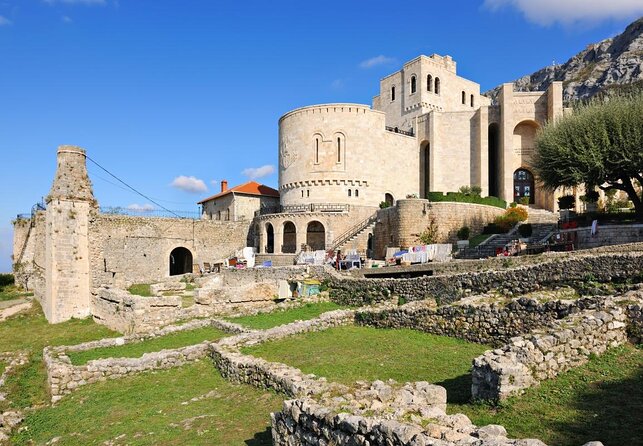
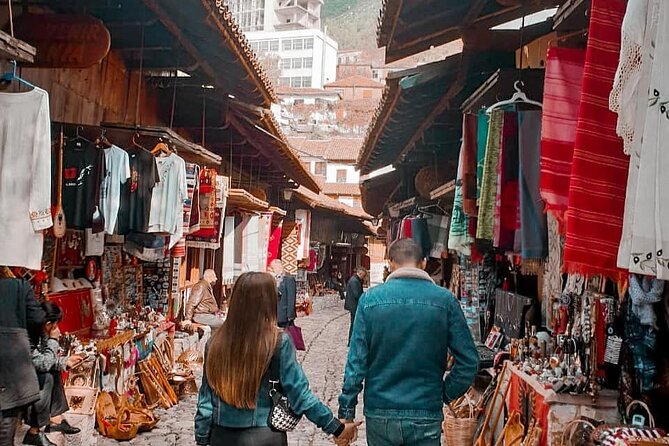
Kruja sits on rocky mountain terrain about 560 meters above sea level and is tied to Albania’s fifteenth-century resistance against Ottoman expansion. You begin with the old bazaar, where narrow lanes and wooden shopfronts offer carpets, jewelry, and handmade souvenirs.
This is probably the best shopping stop of the trip if you want traditional Albanian crafts. The bazaar is atmospheric, but an hour is not much time if you want to browse carefully, bargain, and visit the castle. Decide ahead of time whether shopping or sightseeing matters more to you.
Kruja Castle occupies a rocky hill and includes paths used by locals to leave unnoticed when enemies surrounded the fortress. That detail makes the visit more engaging than a simple walk around old walls. You receive an entry ticket, and the tour leader guides you through the castle area.
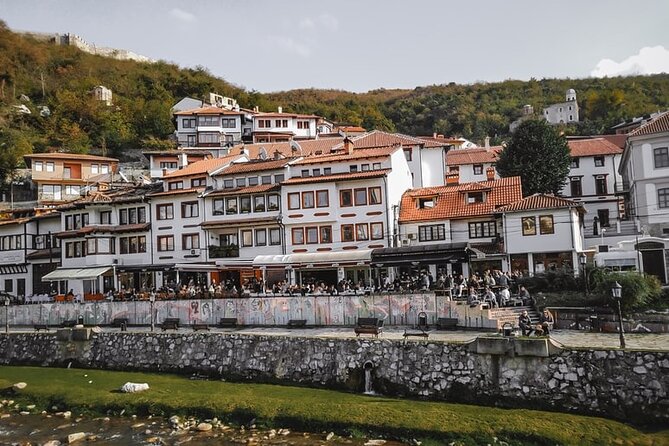
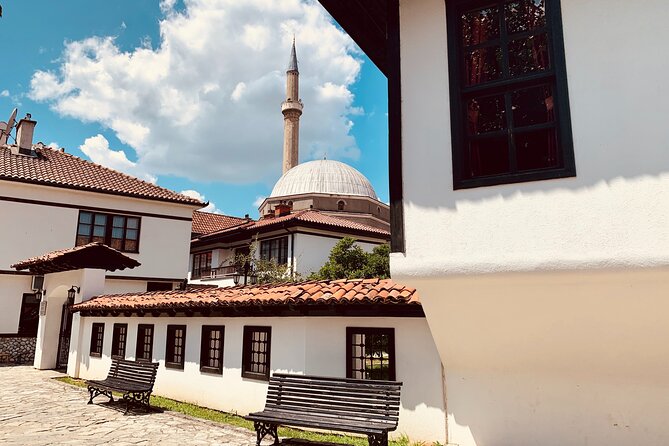
The international shift comes next, as you cross into Kosovo and continue to Prizren. The town’s old center follows a river, with bridges, medieval houses, religious buildings, and Ottoman-era details. Filigree metalwork is one of Prizren’s local crafts, and August brings Dokufest, an international short-film festival.
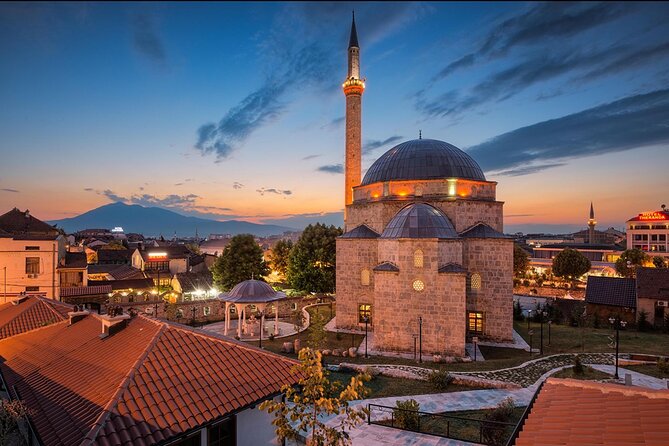
The Sinan Pasha Mosque is the key religious visit. Its colored patterns and arabesque decoration give you a clear sense of the Ottoman influence that shaped Prizren. Later, Kalaja Fortress provides a broad view over the town, followed by free time.
An hour of free time is useful, but limited. Prizren rewards wandering, eating, and browsing without a strict schedule, so use your free period for the activity you care about most.
Day 3: Gjakova, Deçan Monastery, and Rahovec Wine Country
Gjakova brings another old bazaar, described as the oldest and largest in Kosovo. It suffered repeated destruction during the Balkan Wars, World War II, and the Kosovo War, then was rebuilt. The reconstructed market offers traditional crafts, shops, and a place to stop for a meal.
The Deçan Monastery adds a different tone. Its white exterior and active Orthodox monastic community contrast with the Islamic architectural influence seen in Prizren. The monastery is a UNESCO site because of its fourteenth-century frescoes, which show both everyday life and the Palaeologan renewal of Byzantine painting.
Dress respectfully for the monastery and follow any instructions from the tour leader. The supplied information confirms the visit, but not detailed dress rules or photography rules, so check locally.
The day ends in the Rahovec Valley, Kosovo’s best-known wine area. Grape growing here is traced to Illyrian times, and vineyards sit on gentle hills between about 350 and 520 meters. September brings an annual wine festival, though the tour does not promise festival dates or a wine tasting.
This is a pleasant day for anyone interested in craft, religion, and food production. The tradeoff is that you spend another night in Prizren rather than adding a new hotel stop, which keeps packing simpler.
A completely different kind of day out of Tirana:
- Kruja castle, the old Bazaar & Sarisalltik- Departure from Tirana
★ 5.0 · 592 reviews - Albanian Night Show: Traditional Music, Dance & Dinner in Tirana
★ 5.0 · 431 reviews - From Tirana- Hiking Tour to Bovilla Lake & Gamti Mountain
★ 5.0 · 358 reviews - Shala river & Komani lake -Day trip departure from Tirana/Shkodra
★ 5.0 · 309 reviews
Day 4: From Mrizi i Zanave to Shkodra’s Rozafa Castle
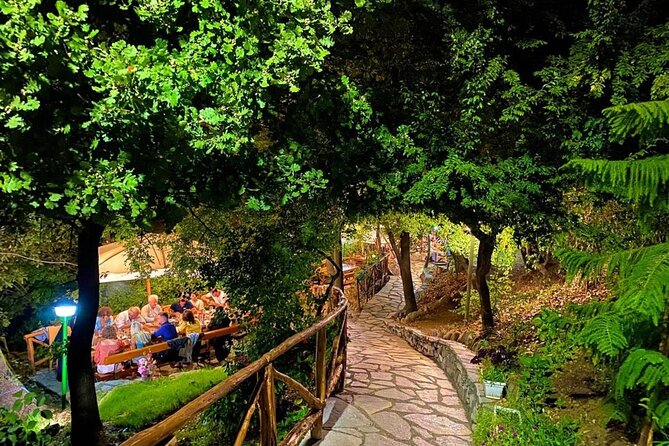
Mrizi i Zanave is one of the trip’s most distinctive stops. This slow-food farm uses regional organic products and has adapted old communist buildings for storage. You tour the farm, hear how the family business created more than 400 local jobs, and have free time for lunch or farm products.
I value this stop because it connects food with local economics. You see how regional ingredients can support a larger community, rather than simply sitting down to another arranged meal. Again, lunch and purchases are your own expense unless the operator tells you otherwise.
Shkodra is one of Albania’s oldest cities and gives its name to the largest lake in the Balkans. Its long story includes Illyrian, Roman, and Venetian influences. Rozafa Castle is the main visit, with views toward the lake and the three rivers that flow together toward the Adriatic Sea.
The city itself has Venetian touches, an important trading past, and a tradition of handmade carnival masks. If your trip falls in February, the carnival may add extra color, but it is not guaranteed. The castle involves uneven ground and a hilltop setting, so practical shoes are wise.
Day 5: Montenegro’s Coast, From Sveti Stefan to Kotor
The first coastal stop is a viewpoint near Sveti Stefan. The former fishing settlement sits on a small island, now an exclusive residential resort that you cannot visit as part of this tour. The viewpoint is still worth the pause and gives you one of the route’s most recognizable photographs.
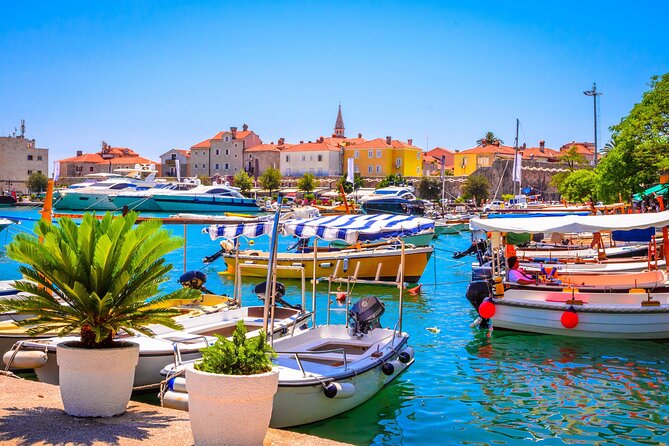
Budva offers a clear split between a modern area of offices, malls, restaurants, and bars and an older walled center. The tour focuses on Old Budva, including St. Ivan Church, St. Mary’s Church, and medieval streets.
Budva can feel more commercial than the inland towns, especially beside the beaches and newer buildings. That is not necessarily a flaw. It gives you a quick look at Montenegro’s major resort culture before the more historic atmosphere of Kotor.
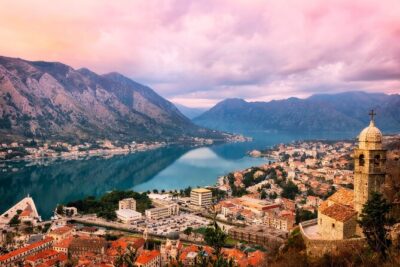
Kotor receives two hours, which is more generous. Its UNESCO-listed old town is built as a maze of narrow cobbled lanes, originally useful for confusing attackers. You visit St. Luke’s Church, important locally as a symbol of unity, and have time to notice dated buildings, small churches, and the defensive character of the town.
Kotor’s old center is compact but can be crowded during busy periods. The route does not include a climb to the famous fortress above town, so do not book this tour expecting a major hike or a long independent visit.
Day 6: Mostar’s Stari Most and Blagaj’s Buna Spring
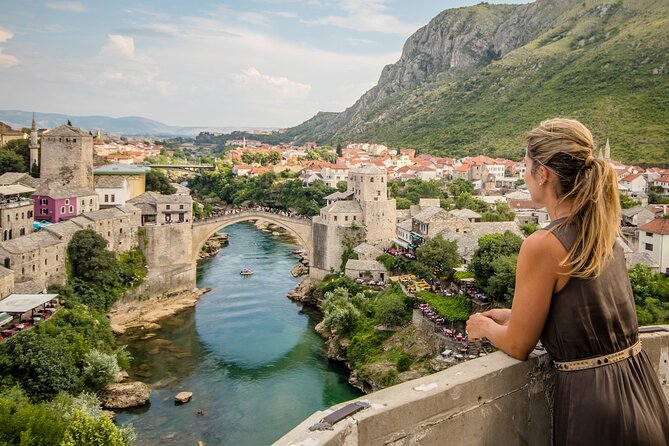
Crossing into Bosnia and Herzegovina brings you to Mostar and its famous Old Bridge, Stari Most. Built in the sixteenth century in an Islamic architectural style, the bridge is now part of a UNESCO site and is the visual center of the town.
The old bazaar around the bridge has colorful streets, cobbled lanes, mosques, and Turkish market influences. You will also see reminders of the city’s difficult past, including stones marked with Don’t Forget. Mostar is not only a pretty bridge town. Its old and new sections sit close together, and the contrasts are part of the experience.
Blagaj tekija, outside Mostar, adds a quieter stop. The monastery sits below a cliff beside the clear source area of the Buna River. The combination of Ottoman-era architecture and dramatic natural surroundings makes this one of the route’s more peaceful visits.
You have free time in Mostar during the afternoon. Use it to revisit the bridge area, explore the lanes, or eat. The tour provides no lunch or dinner, so budget for meals in town and ask about the day’s timing before wandering far.
Day 7: Sarajevo, War Memories, and the Latin Bridge
Sarajevo is the final major city and one of the most rewarding stops. The walking tour explains the city’s origins and medieval Bosnian kingdom, then moves through Ottoman and Austria-Hungarian areas. Mosques, churches, synagogues, bazaars, and markets show why Sarajevo is often described as a European Jerusalem.
The past century is impossible to ignore. Bullet holes and cannon marks remain visible, and the tour includes ruins connected with the Yugoslav War. This is a serious, sometimes difficult part of the trip, but it gives necessary context to the city rather than presenting it as only a picturesque old town.
At the Latin Bridge, you learn how the 1914 assassination of Archduke Franz Ferdinand helped trigger World War I. The bridge once connected the Miljacka River’s right bank with the Catholic quarter known in Ottoman times as Latinluk.
The walk includes uneven ground. If you have mobility concerns, ask the operator for specific details before booking. After the guided portion, free time lets you try Sarajevo’s meat dishes and desserts in the old town.
Day 8: Finishing in Dubrovnik or Split
The final day is mainly a transfer. Your tour leader takes you to the Croatian border, where a local driver continues to your hotel in either Dubrovnik or Split.
This arrangement is practical, but it is important to understand the handoff. The tour does not finish in Tirana, and the Croatian arrival transfer is part of the plan. Confirm your exact destination and hotel details before departure, especially if you are arranging flights or a separate Croatian stay.
Ending in Dubrovnik or Split makes sense for a longer regional holiday. You can continue along the Croatian coast, though this eight-day package does not include sightseeing time in either city.
What the $2,754 Price Really Buys
At $2,754.29 per person, this is not a budget bus tour. You are paying for a private vehicle, fuel, road taxes, international car insurance, hotel transfers, a tour leader, tourist taxes, breakfasts, and entry tickets at the included sites.
The maximum group size of 10 is important. You get more personal space than on a large coach, and border crossings and hotel arrivals should be easier to manage. The vehicle is also handling a route that would be complicated to arrange independently across five countries.
The value is strongest if you want a guided overview and do not want to organize border crossings, hotels, parking, and intercity transport. It is weaker if you prefer slow travel, local buses, independent hotel choices, or long stays in each city.
The accommodation is in three-star hotels, with pricing based on shared double, twin, triple, or quadruple rooms. Breakfast is included for all seven overnights. You should plan extra money for seven lunches, seven dinners, drinks, snacks, shopping, and any optional personal activities.
Who Will Like This Tour Most
I would recommend this trip to you if you want to see a large part of the Balkans in one organized journey. It suits first-time visitors who value a local tour leader, food experiences, UNESCO sites, and a route that includes Kosovo rather than skipping it.
It also works well for couples or small groups who want private transport without paying for a completely private custom itinerary. The praise directed toward guides Besa and Sirma points to the importance of the human side of the trip. A friendly, capable guide can make the long transfers and quick visits feel worthwhile.
I would hesitate if you need a relaxed schedule, dislike changing hotels, or want guaranteed time for beaches, nightlife, or long museum visits. You should also be comfortable with uneven streets, historic fortresses, and a cancellation policy that is non-refundable and cannot be changed after booking.
FAQ
Where does the tour start?
The tour starts in Tirana, Albania, with hotel pickup and a scheduled start time of 9:00 a.m.
Where does the tour finish?
The tour finishes with hotel drop-off in either Dubrovnik or Split, Croatia. You select the destination offered for your booking.
How long does the tour last?
The experience lasts approximately eight days and includes seven overnight stays.
How many people can join the tour?
The maximum group size is 10 people.
What accommodation is included?
The price includes bed-and-breakfast accommodation in three-star hotels. Rates are calculated according to double, twin, triple, or quadruple room occupancy.
Are meals included?
Seven breakfasts are included. Lunches, dinners, drinks, and snacks are not included.
Is transportation provided?
Yes. The company provides private transport, fuel, road taxes, international car insurance, hotel pickup in Tirana, and hotel drop-off in Dubrovnik or Split.
Are entrance tickets included?
Entry tickets are included for the sites scheduled for visits, including Bunk’Art 2, Kruja Castle, Sinan Pasha Mosque, Kalaja Fortress, Rozafa Castle, and Blagaj tekija.
Should You Book This Balkans Journey?
Book it if you want maximum regional coverage with minimum transport planning. In eight days, you see Albanian markets and communist history, Kosovo’s mosques and monasteries, Montenegro’s coast, Bosnia’s Ottoman towns, Sarajevo’s war reminders, and a Croatian finish.
Do not book it expecting a leisurely beach holiday or a slow cultural retreat. The route moves quickly, meals cost extra, room sharing affects the price, and the non-refundable terms require careful planning. For an energetic first look at the Balkans, though, the mix of food, history, scenery, and small-group transport makes this a strong choice.
Recently added around Tirana
- Apollonia and Berat UNESCO tour from Tirana★ 5.0 · 3 reviews
- Berat 4×4 Off-Road and Vineyard Wine Tasting★ 5.0 · 3 reviews
- Tirana’s Communist Past: A Tasting Tour with Traditional Lunch★ 5.0 · 3 reviews
- Apollonia and Ardenica Monastery – full day tour★ 4.5 · 3 reviews
- Cultural Tour in Tirana including House of Leaves★ 5.0 · 3 reviews
- Tirana to Ksamil and Saranda Bus★ 4.5 · 3 reviews
- 3 Hour Pub Crawl Tour in Tirana★ 3.5 · 3 reviews
- SOTIRA WATERFALL HIKING/TREKKING from Berat by 1001 Albanian Adventures★ 5.0 · 3 reviews
Private, compared.
Semi-Private Day Tour of Montenegro: Budva & Kotor from Tirana
Read our review →
Private Ohrid Day Tour and Authentic Village from Tirana & Durres
Read our review →
From Tirana; Semi – Private Day Trip to Berat & Belsh Lake
Read our review →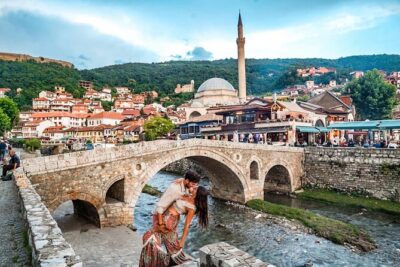
Semi-Private Day Tour of Theth & Blue Eye from Tirana / Shkoder
Read our review →
Semi – Private Tour of Saranda, Ksamil & Blue Eye from Tirana
Read our review →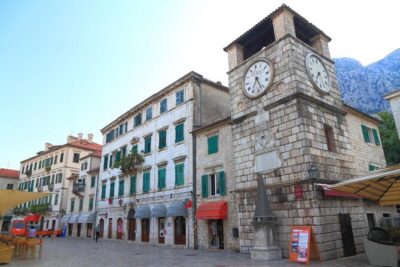
Private Montenegro Tour – Budva, Kotor & Sveti Stefan from Tirana
Read our review →Browse the lists this tour appears in