
Reviewed · COOKING CLASSES
Cooking Class & Traditional Albanian Dinner
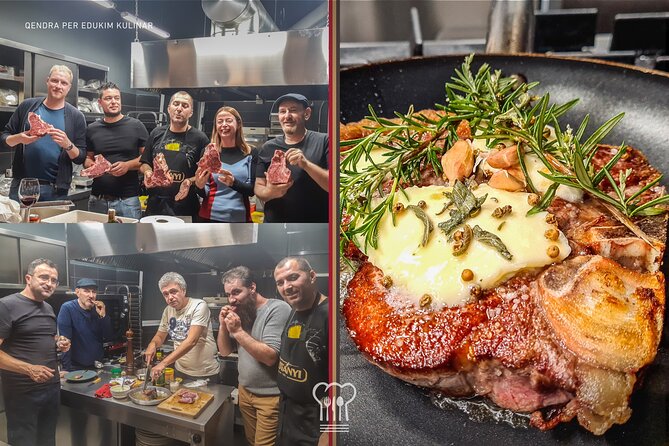
Come hungry, leave full of Albanian stories. This five-hour evening in Tirana combines a hands-on cooking lesson with a long communal meal, giving you a useful taste of local food and the customs behind it. Chef Sokol Prenga leads the class, explaining how Albanian cuisine developed from its older roots into the food served today.
I like the chance to make dishes from scratch, especially pispili, the spinach pie, and the thin filo dough used for several types of pite. I also like the social feel: cooking, music, wine, and conversation share the same evening. The main drawback is the minimum of eight participants, so this is not a quiet private lesson for a couple or a small family.
The price is $90.11 per person, which is fair if you value both the instruction and the substantial dinner. You should also allow the full five hours, since this is a slow food experience rather than a quick demonstration followed by one plate.
In This Review
- Key things to know before booking
- Starting on Rruga Myslym Shyri at 5:00 PM
- Meeting Chef Sokol Prenga and hearing the food story
- Making pite with thin, hand-stretched filo
- Baking pispili, Albania’s spinach pie
- Tasting Albanian breads: corn, wheat, and rustic loaves
- From Tavë Kosi to Shqeto e Përmetit
- The main course: veal ribs with plum syrup
- Finishing with Qumeshtor, wine, and spirits
- What the five-hour format really gives you
- Is $90.11 a fair price?
- Practical details, cancellation, and who should book
- FAQ
- Where does the cooking class begin?
- Where does the experience end?
- How long does the experience last?
- On which days is it offered?
- What language is the experience offered in?
- How many people are required for the class to run?
- What is the maximum group size?
- What dishes may be included?
- Can I cancel for a full refund?
Key things to know before booking
- Chef Sokol Prenga leads the evening: He explains Albanian food traditions while guiding you through the dishes.
- Pispili is made by hand: You learn to prepare this spinach pie as part of a menu built around classic Albanian cooking.
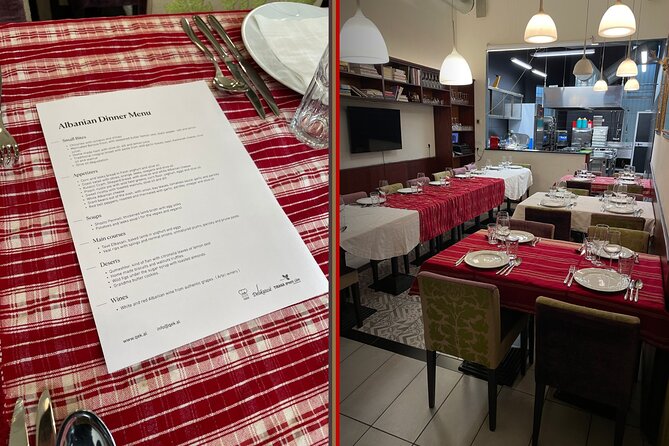
- The meal covers several courses: Expect pite, traditional breads, Tavë Kosi, pispili, veal ribs, soup, flan, wine, and spirits.
- Groups need at least eight people: The activity accepts a maximum of 20 participants.
- The class runs five hours: Sessions are scheduled Monday through Friday from 5:00 PM to 10:00 PM.
- It ends where it starts: Meet at Delikatesë Pastiçeri, Rruga Myslym Shyri 97, in Tirana.
Starting on Rruga Myslym Shyri at 5:00 PM
The evening begins at Delikatesë Pastiçeri on Rruga Myslym Shyri 97. The meeting point is near public transportation, and the activity returns there at the end, so you do not need to arrange a separate ride between a restaurant and a cooking venue.
The schedule makes sense for a day in Tirana. You can spend the afternoon seeing the city, then arrive in time for a long evening meal. Since the class is listed from 5:00 PM to 10:00 PM, do not book a tight evening appointment afterward. Five hours allows time for cooking, explanations, eating, and the relaxed conversation that is part of the experience.
A group size of up to 20 makes this more of a shared Albanian evening than an intimate chef lesson. That can be a strength if you enjoy meeting people and cooking as a group. It also means you may not receive individual attention for every step, especially when the room is full.
The minimum of eight is the key booking condition. If you are traveling alone or with only one companion, check that the session is running before building your evening around it. If the minimum number is not met and the experience is canceled, you are offered another date or experience, or a full refund.
More Cooking Classes in Tirana
- Cooking Classes and Traditional food tasting in Tirana
★ 5.0 · 282 reviews - Traditional Albanian Cooking Class in Tirana with Raki Tasting
★ 5.0 · 125 reviews - Berat Cooking Class- Traditional Albanian Cooking Class /By Vato
★ 5.0 · 120 reviews
Meeting Chef Sokol Prenga and hearing the food story
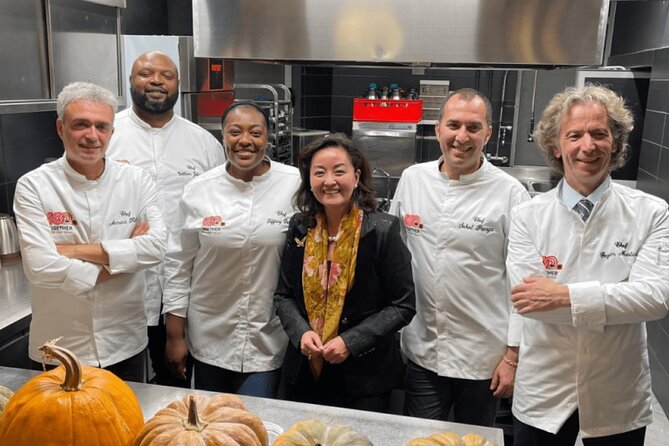
Chef Sokol Prenga has designed the setting and menu around Albanian culinary customs. His role is not limited to showing you how to stir or shape dough. He also explains the journey of Albanian food, from older methods and ingredients to the dishes served in modern homes and restaurants.
That context gives the meal more meaning. A plate of pie becomes a lesson in how Albanian cooks use simple fillings and thin pastry. A loaf of corn bread connects to the importance of corn and wheat flour. The evening is built to show how food reflects place, family habits, and the passage of time.
Chef Sokol’s teaching style, as described in the supplied material, is patient and lively. Beginners are welcome, and the tone includes humor, music, and plenty of social time. You do not need to arrive with serious kitchen skills. The class is designed to guide you through each stage.
Some food is cooked with your help, while the chef and his team prepare other parts of the menu. That is worth understanding before you book. This is a hands-on introduction, not a promise that every dish will be made entirely by each participant.
Making pite with thin, hand-stretched filo
The first major lesson centers on pite, Albania’s family of filled pies. The pastry is stretched into thin filo and filled according to the variety being prepared. Possible fillings in the menu include spinach, minced meat, leek, and feta cheese.
This is one of the most useful parts of the class because pastry-making shows the practical side of Albanian home cooking. You see how one basic form can produce several different pies, each named for its contents. It also gives you a better sense of the work behind a dish that can look simple on the plate.
The menu lists pite as a starter, but the course is not a rushed sequence of small restaurant portions. Preparation and tasting overlap, and the group works through different dishes before sitting down to enjoy the results. If you like learning techniques you can remember after returning home, the filo lesson should be a highlight.
The exact filling you make may depend on the evening’s preparation, but the planned menu includes spinach, meat, leek, and feta versions. Anyone with dietary restrictions should ask in advance, since the available information does not spell out substitutions.
Baking pispili, Albania’s spinach pie
Pispili is another featured dish and one of the clearest reasons to choose this experience. It is an Albanian spinach pie, and making it from scratch gives the class a strong local focus rather than presenting only familiar Balkan standards.
The dish also fits the evening’s wider theme: basic ingredients handled with care. Spinach, pastry, and other traditional components become a dish with a clear place in Albanian food culture. You get to taste the result after taking part in the preparation, which makes the final meal more satisfying.
If you are choosing between a general cooking class and this one, pispili helps tip the balance. It is a specific regional recipe you may not encounter in the same form elsewhere. Just remember that the evening is not devoted only to spinach pie. It is a broad tour through appetizers, breads, mains, dessert, and drinks.
A few more ways to spend a day out of Tirana
- Savor Albanian Cuisine Cooking Class with Mama Nina Berat Castle
★ 5.0 · 55 reviews - Cooking Class in Berat Slow Food Community
★ 5.0 · 34 reviews - Farm-to-Table Cooking Class with Local Family by 1001 AlbAdv
★ 5.0 · 10 reviews - Berat Cooking Class- Traditional Albanian Cooking Class
★ 5.0 · 9 reviews
Tasting Albanian breads: corn, wheat, and rustic loaves
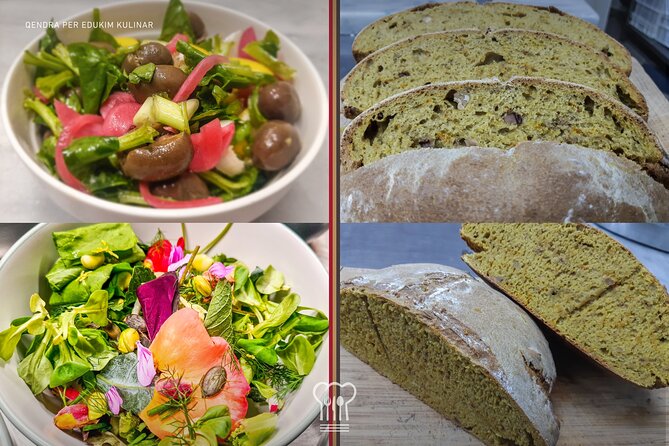
Bread receives unusual attention here. The sample menu includes Bukë Kallamoqe, Bukë Misri, Kulaç, Pogaçe, and Kamkuçe, covering traditional breads made with corn and wheat flour.
This section helps explain how Albanian cooking stretches simple staples across different textures and styles. Corn bread and wheat bread are not just side items. They are part of the food culture being presented, and tasting several forms side by side makes the differences easier to notice.
The breads also give you something practical to remember. A complicated dish may be difficult to reproduce at home, but the idea of using corn and wheat flour in traditional ways is easier to carry into your own cooking. The menu does not specify that you will prepare every bread yourself, so expect to taste and learn about some items while the team handles other work.
From Tavë Kosi to Shqeto e Përmetit
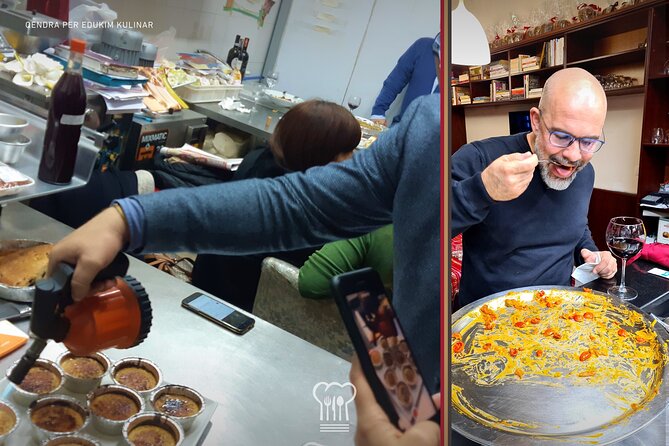
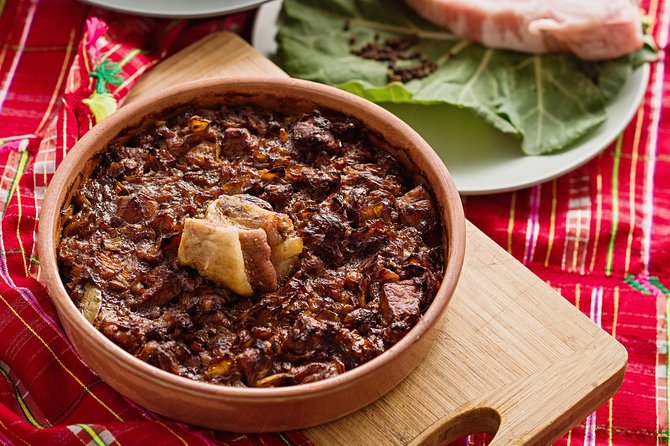
Tavë Kosi is a baked casserole made with yogurt and lamb. It is a hearty dish, and its place on this menu helps shift the class from pastry and bread toward the heavier flavors of a full Albanian meal.
The menu also includes Shqeto e Përmetit, an egg-based soup from Përmet. Including a regional soup beside lamb, veal, and pies shows the range of Albanian cooking. The evening is not built around one famous dish. It presents different ways Albanian cooks use dairy, meat, eggs, grains, vegetables, and fruit-based flavors.
Descriptions of the portion sizes are not provided, but the menu is extensive. You should expect to eat well. One practical tip is to pace yourself early. The final course is Qumeshtor, an Albanian flan, and the supplied comments make clear that the amount of food can be considerable by dessert.
The main course: veal ribs with plum syrup
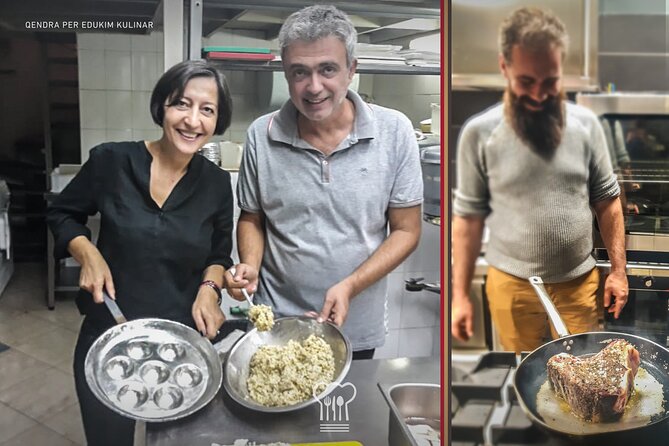
Mish me Pistil brings veal ribs together with plum syrup. This is one of the more distinctive combinations on the menu, pairing a substantial meat dish with a sweet fruit element.
It gives the dinner a different character from the pies and casserole. If you enjoy trying food that is not easily reduced to one familiar category, this is the sort of course that makes the evening worthwhile. The menu lists the dish as a main course, so it is likely to arrive after the earlier breads, pies, casserole, and soup have already made you quite full.
The use of plum syrup also adds a useful lesson in Albanian flavor preferences. The dinner is not simply about meat cooked plainly. It includes sweet, sour, creamy, earthy, and savory notes across several courses.
Finishing with Qumeshtor, wine, and spirits
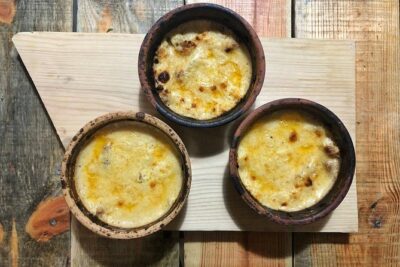
Qumeshtor is an Albanian flan and the planned dessert. It provides a soft, dairy-based finish after a menu that includes pastry, lamb, veal, bread, and soup.
Wine and spirits are part of the evening’s social rhythm. The supplied details describe local wine as a major part of the experience, along with Albanian spirits. That makes the class feel closer to a hosted dinner than a formal cooking school. You are expected to eat, talk, raise a glass, and enjoy the company around the food.
Alcohol is an important consideration. The available information does not specify how much wine or spirits is included, nor does it describe nonalcoholic alternatives. If you do not drink, ask the provider before booking so you know what to expect.
What the five-hour format really gives you
Five hours may sound long for a cooking class, but the schedule is designed to cover a full menu and its background. You are not simply watching a chef prepare one dish and then leaving. The time allows the group to move through preparation, instruction, tasting, and dinner.
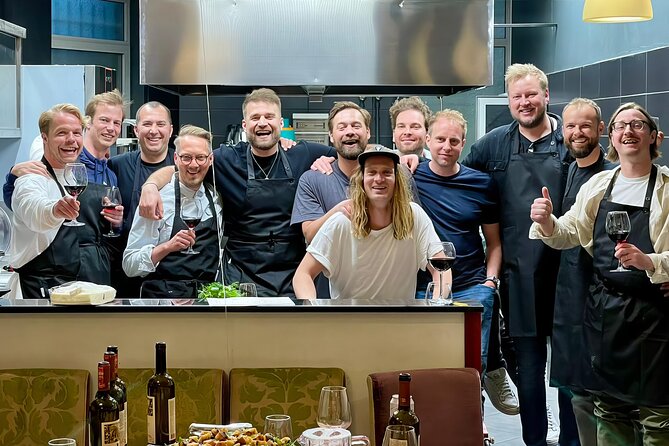
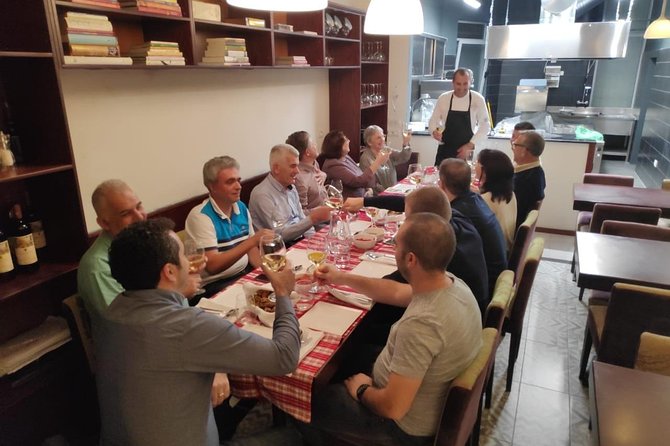
The class also has a strong social element. Groups of 13 have joined and grown into larger shared tables, with some evenings reaching the maximum of 20 people. That can create a cheerful atmosphere, with music, laughter, and conversation, but it is not ideal if you prefer silence or close one-on-one teaching.
I would choose this for a group of friends, an office outing, or anyone who enjoys meeting people over food. It is also suitable for beginners because the chef and team guide participants through the steps. A serious home cook may still enjoy the regional recipes, though the class is more about cultural connection and shared eating than advanced technical training.
Is $90.11 a fair price?
At $90.11 per person, the value depends on what you compare it with. You are paying for roughly five hours, a guided cooking experience, a multi-course traditional dinner, explanations of Albanian culinary culture, and wine and spirits as part of the social setting.
That is better value than a short demonstration followed by a basic meal. The menu includes several starters, two main dishes, dessert, multiple breads, and drinks. The class also gives you access to Chef Sokol Prenga and his team, rather than asking you to eat anonymously in a restaurant.
The price is less attractive if you mainly want a quiet dinner or a private lesson. You may not prepare every item yourself, and a full group can limit personal instruction. Still, the combination of food, teaching, and hospitality makes the cost reasonable for a special evening in Tirana.
The perfect value comes when you care about how the food is made as much as how it tastes. If you only want to sample Albanian dishes, a restaurant meal will take less time and probably cost less.
Practical details, cancellation, and who should book
The class is offered in English and uses a mobile ticket. Most people can participate, and the meeting point is near public transportation. The activity ends back at Delikatesë Pastiçeri, so the evening has a clear start and finish in central Tirana.
You receive confirmation at the time of booking. Free cancellation is available if you cancel at least 24 hours before the scheduled start. Cancellations or changes made inside that window are not refunded or accepted, and all cut-off times use local time in Albania.
I would book this if you want a warm, social evening with traditional food and a strong sense of place. It suits curious beginners, food-focused visitors, and groups who can meet the eight-person minimum.
I would skip it if you need a private class, have strict dietary requirements that have not been confirmed, or want to control your evening hour by hour. For everyone else, the mix of pite, pispili, rustic breads, lamb, veal, flan, wine, and stories makes this one of Tirana’s more memorable food experiences.
FAQ
Where does the cooking class begin?
It begins at Delikatesë Pastiçeri, Rruga Myslym Shyri 97, Tiranë, Albania.
Where does the experience end?
The activity ends back at the meeting point at Delikatesë Pastiçeri.
How long does the experience last?
The cooking class and dinner last approximately five hours, with scheduled hours from 5:00 PM to 10:00 PM.
On which days is it offered?
It is offered Monday through Friday.
What language is the experience offered in?
The experience is offered in English.
How many people are required for the class to run?
A minimum of eight participants is required.
What is the maximum group size?
The activity accepts a maximum of 20 participants.
What dishes may be included?
The menu may include pite, traditional Albanian breads, Tavë Kosi, pispili, Mish me Pistil, Shqeto e Përmetit, and Qumeshtor.
Can I cancel for a full refund?
Yes. You can cancel at least 24 hours before the start time for a full refund. If the minimum number is not reached and the activity is canceled, you are offered another date or experience, or a full refund.
More Dinner Experiences
- Albanian Night Show: Traditional Music, Dance & Dinner in Tirana
★ 5.0 · 431 reviews - Traditional Albanian and Mediterranean Dinner
★ 5.0 · 9 reviews - Shen Gjergji Waterfall & Tirana Sunset Included Dinner
★ 5.0 · 9 reviews
More Workshops
- Paint and Wine – Authentic Art Workshop in Tirana
★ 4.5 · 27 reviews - Painting on Tote Bags Workshop with Welcome Drink
★ 5.0 · 4 reviews - Cooking Class
★ 4.5 · 12 reviews - Vegetarian Cooking Class @Teta Marjeta
★ 5.0 · 11 reviews
Recently added around Tirana
- Apollonia and Berat UNESCO tour from Tirana★ 5.0 · 3 reviews
- Berat 4×4 Off-Road and Vineyard Wine Tasting★ 5.0 · 3 reviews
- Tirana’s Communist Past: A Tasting Tour with Traditional Lunch★ 5.0 · 3 reviews
- Apollonia and Ardenica Monastery – full day tour★ 4.5 · 3 reviews
- Cultural Tour in Tirana including House of Leaves★ 5.0 · 3 reviews
- 3 Hour Pub Crawl Tour in Tirana★ 3.5 · 3 reviews
- Tirana to Ksamil and Saranda Bus★ 4.5 · 3 reviews
- Day Tour in Berat, Unesco Heritage★ 5.0 · 3 reviews
Cooking Classes, compared.
Cooking Classes and Traditional food tasting in Tirana
Read our review →
Traditional Albanian Cooking Class in Tirana with Raki Tasting
Read our review →
Berat Cooking Class- Traditional Albanian Cooking Class /By Vato
Read our review →
Savor Albanian Cuisine Cooking Class with Mama Nina Berat Castle
Read our review →
Farm-to-Table Cooking Class with Local Family by 1001 AlbAdv
Read our review →Browse the lists this tour appears in