
Reviewed · UNESCO HERITAGE TOURS
UNESCO Heritage Sites in Albania on 3 day tour
Albania packs centuries into three long days. This private tour links Butrint, Gjirokastër, and Berat, then adds Apollonia and Durres for a wider look at the country’s past. I like the route’s variety: ancient Greek and Roman ruins one day, Ottoman towns the next, then a coastal Roman amphitheater to finish. I also like that guides such as Zeni and Skerdi bring warmth, humor, and clear local knowledge to the drive.
The main drawback is the pace. Butrint is almost four hours from Tirana, and Day 1 also includes Saranda and Gjirokastër. You spend plenty of time in the car, so this suits you best if seeing several major places matters more than slow mornings and long museum visits.
In This Review
- Key points to know before booking
- Three days across Albania’s major historic sites
- Day 1: Butrint, Saranda, and Gjirokastër
- Butrint National Park and its ancient ruins
- A short coastal pause in Saranda
- Gjirokastër, the stone city on the hill
- Bazaar streets and the city’s old trading center
- Gjirokastër Castle and its valley views
- Day 2: Apollonia and Berat’s City of Many Windows
- Apollonia Archaeological Park near Fier
- Berat and its two-thousand-year story
- Inside Berat Castle
- Day 3: Durres and the Roman amphitheater
- Durres promenade and ancient arena
- Guides, vehicle, and the private format
- What the $520.40 price really covers
- Who will enjoy this route most?
- Should you book this three-day Albania tour?
- FAQ
- How long is the tour?
- Where does the tour start?
- Is this a private tour?
- What is included in the price?
- Are meals included?
- Which UNESCO World Heritage sites are visited?
- Can I cancel for a full refund?
Key points to know before booking
- Butrint and Gjirokastër make Day 1 the hardest but most rewarding day, with a long drive south and several important stops.
- Berat Castle is a highlight, with Byzantine churches, Ottoman buildings, and a chance to try gliko with Turkish coffee at a local guesthouse.
- The tour is private, so only your own group takes part, with an air-conditioned vehicle and pickup offered.
- Apollonia adds a quieter archaeological stop, combining ancient ruins with open countryside near Fier.
- Lunches and dinners cost extra, while entrance fees for Butrint and Apollonia are included in the tour details.
- The route covers sites with different UNESCO status, including established World Heritage locations and places being considered for future recognition.
Three days across Albania’s major historic sites
At $520.40 per person, this is not a budget bus trip. It is a private, multi-day sightseeing service with transport, pickup, guiding, and several entry costs included. The value depends on how much you want handled for you.
Albania’s main historic sights are spread across the country. Reaching Butrint, Gjirokastër, Berat, Apollonia, and Durres independently would mean arranging several long transfers, checking road connections, and working out how to move between hill towns and archaeological parks. Here, the air-conditioned vehicle and private format remove much of that work.
Still, the price does not include lunches or dinners. The information provided also does not spell out accommodation arrangements, so I would ask exactly what overnight lodging is included, if any, before paying. That detail matters on a three-day route.
The experience begins at 9:00 a.m. Pickup is offered, and mobile tickets are available. Group discounts may also affect the final cost if several people book together. Most people can participate, and service animals are allowed.
More UNESCO heritage days:
- Berat city UNESCO tour, the Castle & Belshi lake- From Tirana
★ 5.0 · 804 reviews - From Tirana: Berat UNESCO & Belshi Lake Full-Day Tour
★ 5.0 · 118 reviews - Gjirokastra UNESCO & Ksamil Beach – From Tirana/Durres/Golem
★ 5.0 · 117 reviews
Day 1: Butrint, Saranda, and Gjirokastër
Day 1 covers the greatest distance. The drive from Tirana to Butrint takes almost four hours, including short breaks. The road passes near some of southern Albania’s best-known coastal areas, including Saranda and Ksamil.
That long transfer is both a weakness and part of the point. You see a broad slice of southern Albania in a single day, but this is not a relaxed sightseeing drive. If you dislike long road journeys, the first day may feel demanding.
Butrint National Park and its ancient ruins
Butrint is the day’s major archaeological stop. The park contains ancient remains set among trees and open ground, giving the visit a pleasant sense of space rather than the feel of a tightly packed urban ruin.
You are taken back through several periods of Albanian and Mediterranean history as you walk around the archaeological park. The setting matters here. Butrint is not only about walls and stones. The surrounding natural area gives the remains room to breathe and makes the visit feel more like an outing than a single monument stop.
The scheduled visit is about one hour. That is enough for a guided introduction and the main sights, but not enough for a slow, highly detailed archaeological study. If you enjoy taking photographs, reading every panel, or wandering without a timetable, you may want more time than the schedule allows.
Entrance for Butrint is included. Wear comfortable shoes, since the stop involves walking through an archaeological site rather than simply viewing it from a roadside platform.
A short coastal pause in Saranda
On the return route, the group stops in Saranda for about an hour. This port city gives you a change of mood after the ruins: sea views, a promenade, and time for lunch.
Lunch is not included, so this is one of the meals you should budget for. The stop is brief, but it gives you a practical chance to eat rather than trying to fit a full meal into the castle visits later in the day.
Saranda is presented here as a coastal pause, not a full city tour. You should expect a walk along the seafront and lunch, not an extensive look at the town.
More history and heritage:
- Tirana Walking Tour: History, Culture &Gems by a Passionate Guide
★ 5.0 · 52 reviews - Semi – Private Tour at Cape of Rodon; Hidden Beaches & History
★ 5.0 · 46 reviews - Walking tour of Tirana; History & Culture
★ 5.0 · 37 reviews - Berat Cultural Tour by 1001 Albanian Adventures
★ 5.0 · 26 reviews
Gjirokastër, the stone city on the hill
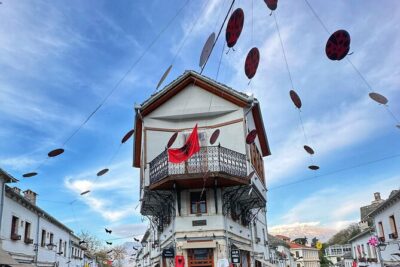
After Saranda, the route turns toward Gjirokastër. The town sits on the side of Mount Gjere, with the old center climbing a hill above the valley.
Gjirokastër is one of Albania’s established UNESCO World Heritage sites. Its Ottoman-era buildings and steep cobbled streets give it a strong sense of place. The town is often described as a museum city, but it is more useful to think of it as a historic town where the old urban form remains the main attraction.
The two-hour visit gives you time to walk through the old quarter and take in the hilltop views. The slopes are real, and the cobblestones can make the walking feel harder than the short distances suggest. Good shoes will help.
Bazaar streets and the city’s old trading center
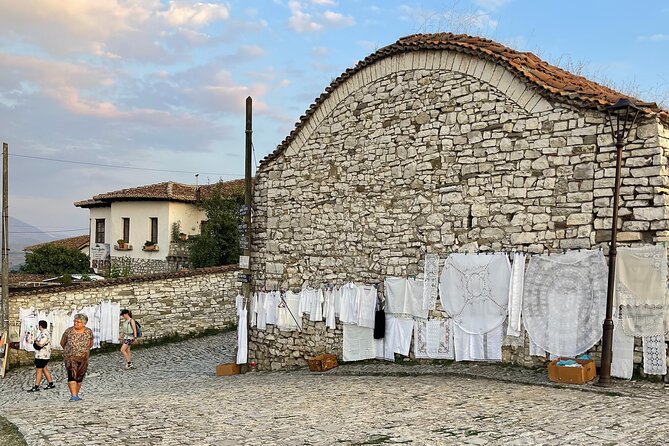
The Gjirokastër Bazaar receives a short, 15-minute visit. The bazaar developed during the Ottoman period and once served as a center for trade, news, and everyday business.
The main square is named for Cerciz Topulli, an important Albanian patriot of the 19th century. From here, cobbled streets rise and fall toward the castle, giving you a clear sense of how the old town is arranged.
Fifteen minutes is enough to get oriented and take photographs, but it is not a long shopping stop. If you want to browse local goods or sit for coffee, you will likely need to use free time elsewhere in the visit.
Gjirokastër Castle and its valley views
The final stop is Gjirokastër Castle, reached by walking up from the bazaar. The fortress sits above the town and is often called the Crown of the City because of its position.
Its walls were renovated substantially in the 19th century, and the site has served as a fortress and prison under different rulers and political powers. That layered use gives the visit more weight than a simple lookout point.
The scheduled castle visit lasts about 30 minutes. The strongest feature may be the view over the town and valley, though the fortress itself also gives useful context for Gjirokastër’s position and development. Admission is included.
By the end of Day 1, you have seen an ancient park, an Adriatic port, an Ottoman old town, and a hilltop fortress. It is an impressive list, but also a packed one. Ask about the overnight plan, since the supplied details do not identify the accommodation or exact evening arrangements.
Day 2: Apollonia and Berat’s City of Many Windows
Day 2 moves through central and southern Albania at a more manageable pace. It combines a quiet archaeological park with one of the country’s best-known historic towns.
Apollonia Archaeological Park near Fier
Apollonia lies about 13 miles from Fier in southwestern Albania. The archaeological park is valued for the way its ancient remains sit within a calm natural setting.
The stop lasts about an hour. You can expect a contrast with Butrint. Butrint is the larger headline attraction on this route, while Apollonia offers a quieter visit shaped by open space, old monuments, and a slower atmosphere.
The site is included among places awaiting UNESCO recognition, rather than one of Albania’s current UNESCO World Heritage properties. That makes it useful for you if you want to see not only the country’s famous listed sites but also places being considered for wider international recognition.
The tour information includes entrance fees for Apollonia, although the stop description also labels admission as free. Because those details do not fully match, confirm the current admission arrangement when booking.
Berat and its two-thousand-year story
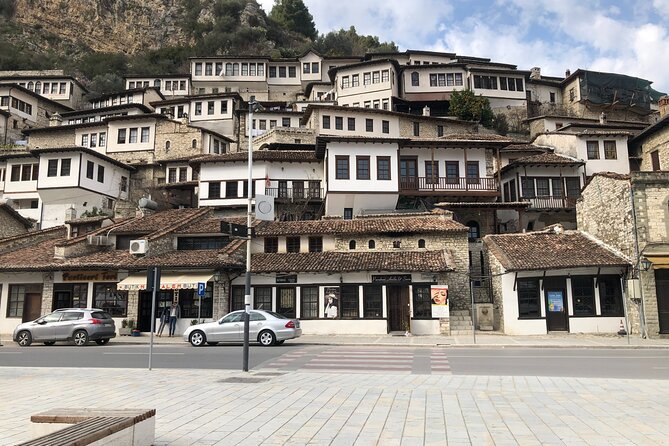
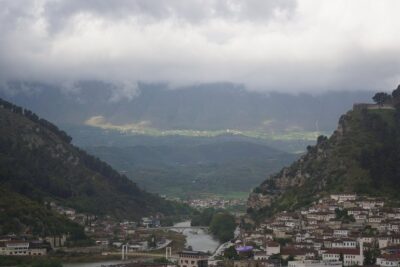
From Apollonia, the route continues to Berat, known as the City of Many Windows. Berat has been on the UNESCO World Heritage list since 2008 and has a history stretching back more than two thousand years.
The town is memorable for its hillside homes and the way its neighborhoods rise above the river valley. The nickname comes from the rows of windows on the historic houses, which create the town’s familiar appearance.
You receive about two hours in Berat. That allows time for a guided walk and a general look at the old quarters, but it is not a full exploration of every church, mosque, or museum.
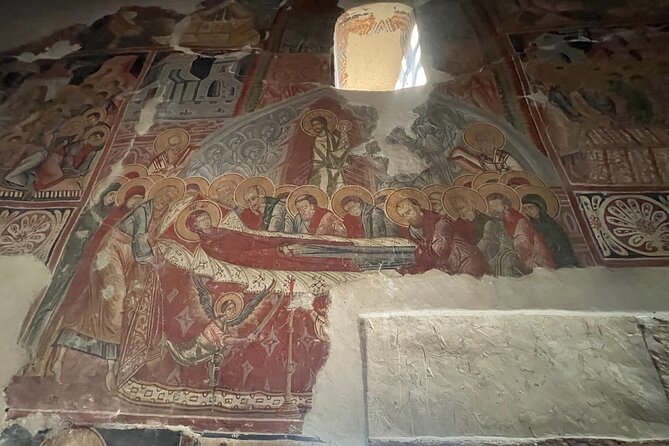
Berat is a good place to notice Albania’s religious and cultural layers. The castle quarter has a strong Orthodox Christian presence, with churches that date as far back as the 14th century. The town also includes Ottoman influences, making it an especially useful stop for understanding how different traditions developed side by side.
Inside Berat Castle
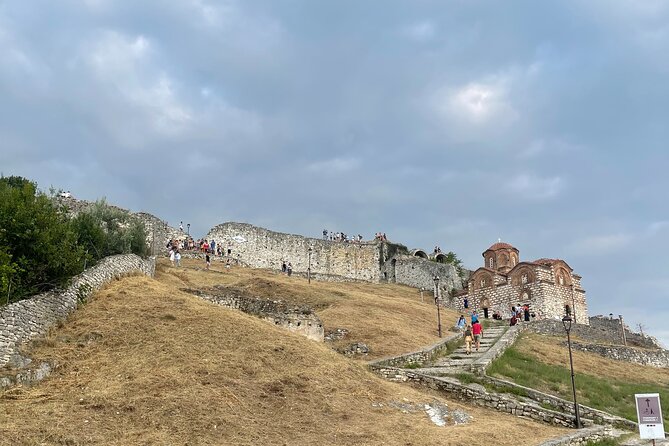
Berat Castle, or Kalaja, rises above the town. Its surviving walls date mainly from the 13th century, and the castle quarter contains Byzantine churches and Ottoman mosques.
Unlike many castle sites that are empty shells, Berat’s citadel is described as the oldest district of the town and has remained inhabited. That gives the visit a more human scale. You are not simply looking at defensive walls. You are walking through an old neighborhood with religious buildings, homes, and views across Berat.
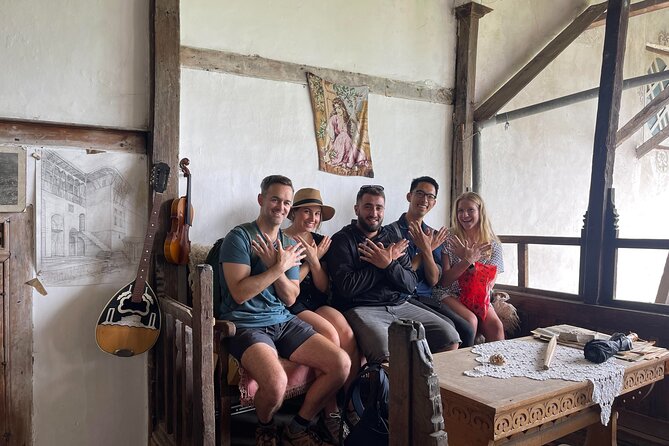
The scheduled time here is about one hour. A local guesthouse may offer traditional gliko, a type of preserved fruit sweet, along with Turkish coffee. This is a small but worthwhile cultural detail. It gives you a taste of everyday hospitality rather than another quick monument photograph.
The hilltop setting requires some walking, and the stone surfaces can be uneven. The reward is a closer look at Berat’s old quarter and a better view back toward the town.
Day 3: Durres and the Roman amphitheater
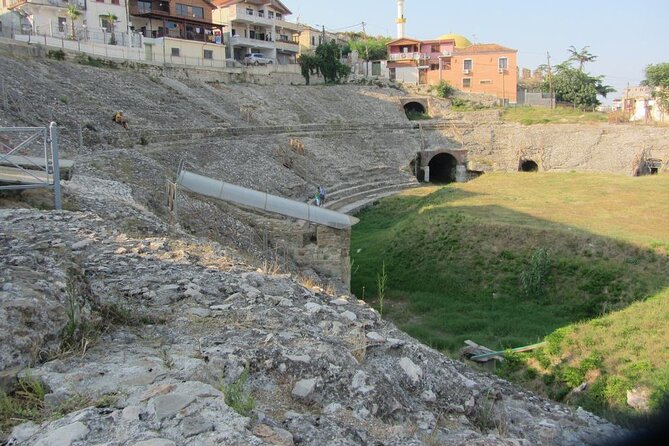
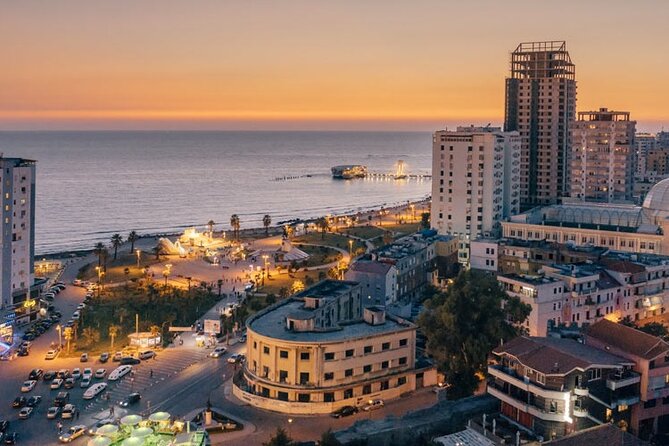
The final day is shorter and ends in Tirana. You travel to Durres, Albania’s coastal city, for a promenade walk and a visit to its historic amphitheater.
Durres promenade and ancient arena
Durres gives the tour another change of scene. After two days focused on ancient parks and hill towns, you reach the coast and can stroll along the main promenade beside the sea.
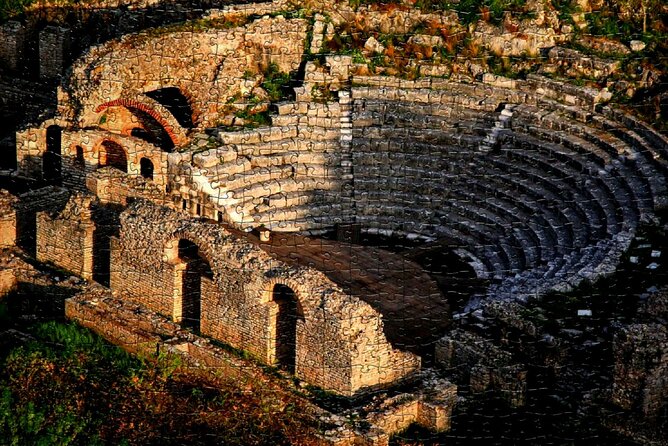
The principal historic stop is the Durres Amphitheater, once used for gladiatorial contests. Its presence inside a modern coastal city makes the site especially interesting. You get to see how ancient remains fit into a living urban setting rather than an isolated park.
The visit lasts about one hour. That should cover a look at the amphitheater and a walk along the seafront, but it is not enough for an extensive city tour.
Durres is also described as a place awaiting UNESCO recognition. Like Apollonia, it broadens the tour beyond Albania’s current listed properties and shows you sites that may receive greater international attention in the future.
After Durres, the vehicle returns to Tirana, where the tour ends.
Guides, vehicle, and the private format
The guide can make or break a route with this much driving. The strongest praise for this experience focuses on the personal side of the service: friendly guides, clear explanations, professionalism, and a relaxed manner.
Zeni is specifically praised for making the tour fun while explaining Albania’s past and hospitality. Skerdi is also singled out for his understanding of Albanian history and culture. Those comments suggest that the guide is not simply driving between sites and pointing at monuments. You can expect storytelling and help placing each stop in a wider national context.
Because this is a private tour, only your group participates. That gives you more control than a large coach tour, even though the published schedule is fairly fixed. You can ask questions without competing with a busload of people, and the guide can keep the conversation focused on your interests.
The air-conditioned vehicle is important. Southern Albania can involve long road sections, and comfort matters when the first day includes nearly four hours of driving before the main visit. Pickup is offered, but confirm the exact pickup point and whether the service covers your accommodation.
What the $520.40 price really covers
The $520.40 per-person price includes an air-conditioned vehicle, all fees and taxes, and entrance fees for Butrint and Apollonia. It also covers the private touring format and guiding service described for the three days.
Lunches and dinners are not included. You should set aside extra money for the Saranda lunch and other meals during the route. The information does not specify breakfast, drinks, lodging, or hotel transfers, so ask about each one before booking.
The price is easier to justify for a small private group that wants a driver and guide across several distant areas. It is less attractive if you are comfortable planning your own buses, hiring local guides separately, or spending more time in fewer towns.
Group discounts are offered, which may improve the per-person value for families or friends. The tour also allows free cancellation up to 24 hours before the start time. A cancellation less than 24 hours before departure is not refundable, and late changes are not accepted.
Who will enjoy this route most?
I would choose this tour if you have only a few days in Albania and want to cover the country’s major historic names without managing the transport yourself. It is particularly suitable for first-time visitors who want context from a local guide and a private vehicle.
It also works well for people who value variety. You move from ancient ruins to Ottoman streets, from mountain towns to the coast, and from established UNESCO sites to places being considered for future recognition.
I would hesitate if you want long, unhurried visits. One hour at Butrint, 30 minutes at Gjirokastër Castle, and one hour at Apollonia or Durres are useful introductions, but not enough for a specialist’s study.
You should also be comfortable with hills, cobbled streets, and a demanding first day. The itinerary is culturally rewarding, but it is not a restful three-day break.
Should you book this three-day Albania tour?
Book it if your priority is seeing a lot of Albania with a private guide, comfortable transport, and a clear route through the country’s best-known historic sites. The strongest reasons are the mix of Butrint, Gjirokastër, Berat, Apollonia, and Durres, plus the friendly guiding style associated with Zeni and Skerdi.
Before booking, confirm the overnight accommodation, pickup details, and the Apollonia admission wording. If those arrangements suit you, the price can be fair for a private three-day journey. If you prefer slow travel, choose fewer destinations and spend extra nights in Berat or Gjirokastër instead.
FAQ
How long is the tour?
The experience lasts approximately three days.
Where does the tour start?
The tour starts in Tirana at 9:00 a.m., with pickup offered.
Is this a private tour?
Yes. Only your group participates in the activity.
What is included in the price?
The price includes an air-conditioned vehicle, all fees and taxes, and entrance fees for Butrint and Apollonia.
Are meals included?
No. Lunches and dinners are not included.
Which UNESCO World Heritage sites are visited?
The route includes Butrint, Gjirokastër, and Berat, which are established UNESCO World Heritage sites in Albania.
Can I cancel for a full refund?
Yes, if you cancel at least 24 hours before the experience starts. Cancellations made less than 24 hours before the start time are not refundable.
More 3-Day Experiences
- Hiking Tour of Valbona, Theth & Blue Eye in 3 Days from Tirana
★ 5.0 · 73 reviews - Semi-Private Hiking Tour; Theth, Valbona & Koman Lake in 3 Days
★ 5.0 · 28 reviews - Self-Guided Hiking Tour: Theth, Valbona & Koman Lake in 3 Days
★ 5.0 · 26 reviews - Albanian Riviera in 3 Days;Semi–Private Tour with Tour Leader&Car
★ 5.0 · 16 reviews
Recently added around Tirana
- Berat 4×4 Off-Road and Vineyard Wine Tasting★ 5.0 · 3 reviews
- Apollonia and Berat UNESCO tour from Tirana★ 5.0 · 3 reviews
- Tirana’s Communist Past: A Tasting Tour with Traditional Lunch★ 5.0 · 3 reviews
- Cultural Tour in Tirana including House of Leaves★ 5.0 · 3 reviews
- Apollonia and Ardenica Monastery – full day tour★ 4.5 · 3 reviews
- 3 Hour Pub Crawl Tour in Tirana★ 3.5 · 3 reviews
- Tirana to Ksamil and Saranda Bus★ 4.5 · 3 reviews
- SOTIRA WATERFALL HIKING/TREKKING from Berat by 1001 Albanian Adventures★ 5.0 · 3 reviews
UNESCO Heritage Tours, compared.
Berat city UNESCO tour, the Castle & Belshi lake- From Tirana
Read our review →
Gjirokastra UNESCO & Ksamil Beach – From Tirana/Durres/Golem
Read our review →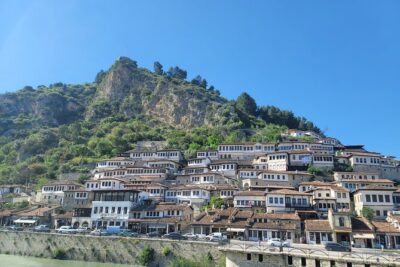
Small Group Tour; Pearls of Albania in 8 Days (3 UNESCO Sites)
Read our review →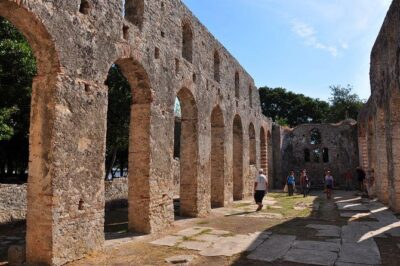
Ancient City of Butrint, UNESCO World Heritage site – A Must
Read our review →
Berat Day Tour: Explore Albania’s UNESCO City from Durres
Read our review →
Day tour of Berat UNESCO city , castle and Belshi Lake
Read our review →Browse the lists this tour appears in