
Reviewed · TOURS
Tour a Piedi di Tirana
Tirana rewards a good first walk. I like the route’s wide sweep from Skanderbeg Square to Bllok, and I like the way guides such as Martin bring Albania’s difficult past into the streets you are seeing. The main tradeoff is pace: with around 15 stops in two and a half hours, several places receive a short explanation rather than a long visit.
At $20.93 per person, this is a sensible introduction to central Tirana, especially if you have just arrived and want to get your bearings fast. Guides speak English and Italian, and the group can reach 25 people, so your experience may feel personal or slightly crowded depending on the day.
In This Review
- Key points to know before you book
- Why this Tirana walk works as a first-day tour
- Starting with Skanderbeg Square and Et’hem Bej Mosque
- Bunk’Art and the Communist story
- The Fortress of Justinian and old Tirana
- Parliament, Namazgah Mosque, and Albania’s public life
- Tanners’ Bridge and Saint Paul Cathedral
- The Pyramid and the memory of Enver Hoxha
- Bllok and Enver Hoxha’s former residence
- Taiwan Pool and the Orthodox Cathedral
- House of Leaves and the return to the square
- Guides, languages, and group size
- Price, timing, and who gets the most value
- Cancellation and practical planning
- Should you book Tour a Piedi di Tirana?
- FAQ
- Where does the tour start?
- Where does the tour end?
- How long does the walking tour last?
- What languages does the guide speak?
- Is transportation included?
- How many people can join the tour?
- Are admission tickets included?
- Can I bring a service animal?
- What happens if the tour is canceled because of bad weather?
Key points to know before you book
- A broad 2.5-hour route: You cover Skanderbeg Square, historic religious buildings, Communist-era sites, Bllok, and several central landmarks.
- Martin is a well-praised guide: He is described as warm, funny, clear in English, and able to answer questions about Albania’s past.
- History is the main attraction: The walk connects Ottoman, religious, royal, Communist, and modern political chapters.
- The tour starts and ends at Skanderbeg Square: Meet beside Et’hem Bej Mosque, at Sheshi Skënderbej 1.
- English and Italian are available: One tour even involved Martin explaining the material in both languages for a mixed group.
- Free cancellation has a firm deadline: Cancel at least 24 hours before the start for a full refund.
Why this Tirana walk works as a first-day tour
This is not a tour built around one grand sight. It is a city orientation with history attached, and that makes it useful early in your stay.
You begin at Et’hem Bej Mosque on Skanderbeg Square, then loop through the central districts before returning to the same square. You see where Tirana’s public life happens, where political power sits, how religion fits into Albanian society, and how the Communist period still shapes the city.
I like that the route does not stay inside one historical period. Tirana can seem young and fast-changing at first glance, but this walk shows the layers underneath. A mosque, a cathedral, a former dictator’s residence, a memorial to surveillance, and a youth park all appear in one compact circuit.
The format also suits you if you prefer explanations while looking at real streets and buildings. There is no private transport, so you move between the stops on foot. That keeps the price low and gives you a better feel for central Tirana than a vehicle passing by each sight.
Still, this is a survey rather than a museum day. The listed stops are generally given about 10 minutes each. You will hear the story and see the setting, but you should not expect a long interior visit at every location.
A few more ways to spend a day out of Tirana
- Hike Gamti Mountain with Bovilla lake view & canyon- From Tirana
★ 5.0 · 1,280 reviews - Berat city UNESCO tour, the Castle & Belshi lake- From Tirana
★ 5.0 · 804 reviews - Walking Tour of Tirana
★ 5.0 · 646 reviews
Starting with Skanderbeg Square and Et’hem Bej Mosque
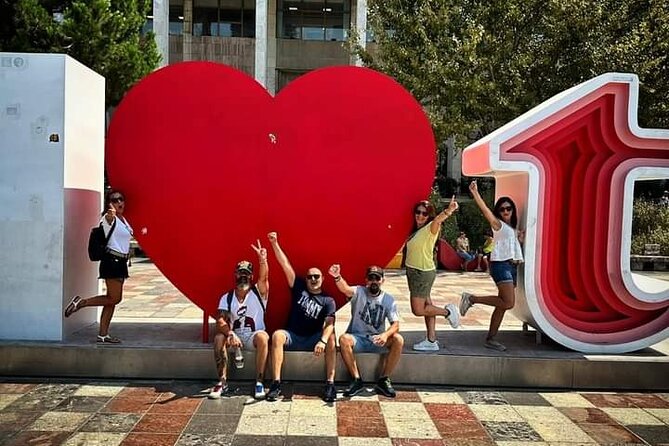
The meeting point is easy to identify: Et’hem Bej Mosque, at the edge of Skanderbeg Square. This is a practical starting place because the square is Tirana’s main reference point, and the tour returns here at the end.
The opening explanation of Skanderbeg Square sets up the city. The square is not simply an open plaza for photographs. It provides the broad civic stage for Tirana, with major public buildings and landmarks arranged around it.
Et’hem Bej Mosque adds a more intimate note. The guide explains the mosque and its place in the city, giving you a chance to see one of Tirana’s important religious buildings before moving into the wider story of Albania.
The short time here is useful for orientation, but limited if you want detailed architectural study. I would treat this first section as a visual introduction and return later if you want more time with the square or mosque.
Bunk’Art and the Communist story
The stop at Bunk’Art 2 introduces the two Bunk’Art museums, Bunk’Art 1 and Bunk’Art 2. The tour focuses on explaining what these museums represent, rather than promising a full museum visit.
That distinction matters. Bunk’Art 1 and Bunk’Art 2 are closely tied to Albania’s Communist past and the country’s long period under Enver Hoxha. A guide can give you the background needed to understand why bunkers, surveillance, isolation, and political control remain such important subjects in Tirana.
You receive about 10 minutes here, so you may want to schedule a separate museum visit if this period interests you. The walk gives you the basic framework, which can make a later visit to one of the museums easier to follow.
This is one of the strongest parts of the route for anyone who wants more than postcard views. Albania’s recent past is not distant, and the explanations help connect the city’s present appearance with what came before.
The Fortress of Justinian and old Tirana
The Fortress of Justinian, also called Tirana Castle in the route description, offers a change of mood. Here you hear about the ruins and the older foundations of the city.
Do not expect a fully preserved castle complex. The attraction is the surviving remains and the chance to discuss Tirana before its modern boulevards and large public squares took shape.
The brief stop works well as a link between old and new Tirana. It also shows why a walking guide adds value. Ruins can be easy to pass without context, especially when the city around them feels much more modern.
A completely different kind of day out of Tirana:
- Kruja castle, the old Bazaar & Sarisalltik- Departure from Tirana
★ 5.0 · 592 reviews - Albanian Night Show: Traditional Music, Dance & Dinner in Tirana
★ 5.0 · 431 reviews - From Tirana- Hiking Tour to Bovilla Lake & Gamti Mountain
★ 5.0 · 358 reviews - Shala river & Komani lake -Day trip departure from Tirana/Shkodra
★ 5.0 · 309 reviews
Parliament, Namazgah Mosque, and Albania’s public life
At the Parliament of Albania, the guide explains the country’s political situation. This is a useful stop because the tour does not treat politics as an abstract subject. You are standing near the center of national decision-making while hearing how Albania functions today.
The explanation will likely be most useful if you have little prior knowledge of Albanian politics. The tour is not presented as a long political seminar, but it gives you a foundation for understanding the country beyond its scenery and food.
The next stop is Namazgah Mosque, described as the biggest mosque in the Balkans. The visit adds another religious perspective after Et’hem Bej Mosque and before the Christian churches later in the route.
That sequence is one of the route’s best choices. Albania’s religious identity is not presented through one building alone. Instead, you move between Islamic and Christian landmarks while the guide discusses religion in the country.
The stop is short, so once again, think of the explanation as an introduction. If you enjoy architecture or religious history, you may wish to return independently.
Tanners’ Bridge and Saint Paul Cathedral
Tanners’ Bridge is a smaller landmark, but it adds texture to the walk. The guide explains the bridge and its role in Tirana’s older urban story.
This is the kind of stop you might overlook when walking alone. It is not necessarily the largest or most famous sight on the route, yet these modest structures help you notice that central Tirana is not only about monumental squares and government buildings.
Saint Paul Cathedral then shifts the focus back to religion. The guide explains religion in Albania, giving you a second Christian reference point later in the walk.
I appreciate the route’s mix of major and minor sights here. A large cathedral gives you scale, while Tanners’ Bridge offers a smaller point of contact with the city’s past. The 10-minute format means neither stop becomes a long architectural visit, but both help build a fuller picture.
The Pyramid and the memory of Enver Hoxha
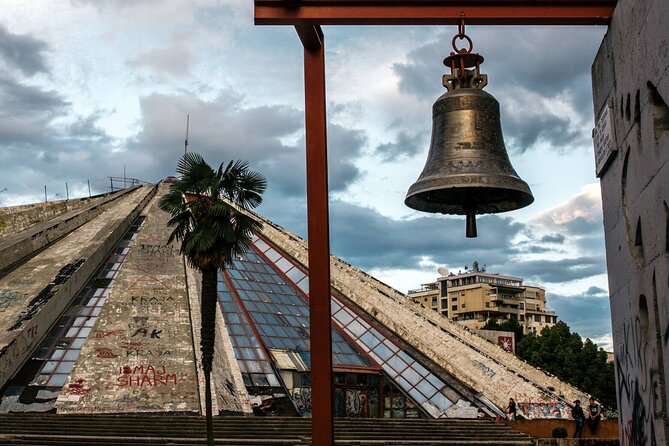
The Enver Hoxha Pyramid is one of Tirana’s most recognizable symbols, and the explanation centers on the dictator and the building’s meaning.
This is an important stop because the pyramid is visually striking, but its story is political rather than purely architectural. You learn why a structure associated with Hoxha still occupies such a prominent place in the capital.
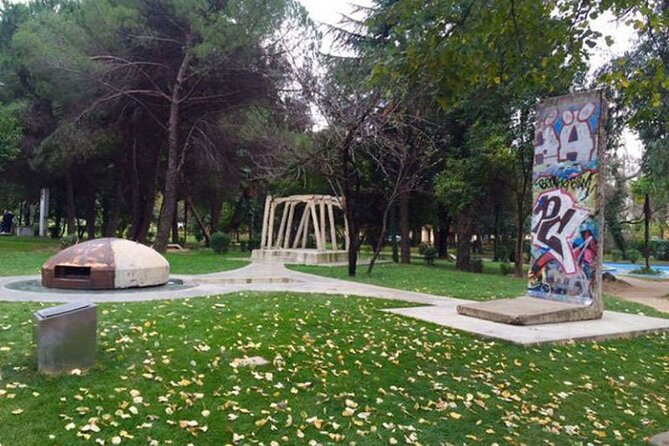
The stop at Postbllok, or the Checkpoint Monument, continues the story of Communist control. The memorial addresses the checkpoint and the atmosphere of surveillance and restriction connected with Albania’s past.
Taken together, these two sites give the walk emotional weight. The pyramid shows how power can be presented through a monumental building. Postbllok points toward the personal cost of that system.
The short explanations may leave you wanting more detail, especially if you have an interest in twentieth-century European history. That is not a fault unique to this tour. It is the natural limit of fitting so many locations into one circuit.
Bllok and Enver Hoxha’s former residence
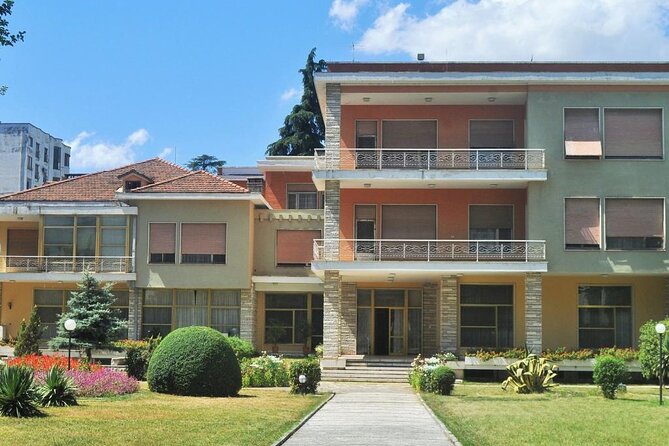
The walk continues into Bllok, one of Tirana’s best-known areas. The route includes an explanation of the district and then stops at Enver Hoxha’s former residence.
This contrast is especially effective. Bllok is now associated with cafés, restaurants, and nightlife, while the former residence points to the restricted world of Albania’s Communist leadership. You see how a district can change meaning over time.
The former residence is not presented as a grand palace tour. The value lies in its connection to the dictator and the social geography of the old regime. A guide can explain why this ordinary-looking building matters.
One unusual point from the tour’s feedback is that guide Ilir once extended an expected food-focused outing into a much longer six-hour exploration of small streets, coffee shops, restaurants, bars, and markets, with history added along the way. That is not the standard length promised here, so do not book this walk expecting six hours. It does show the kind of flexible, social approach some guides may bring to Tirana.
Taiwan Pool and the Orthodox Cathedral
Taiwan Pool, or Pishina Taiwan, introduces Tirana’s Youth Park and the Taiwan center. This part of the route gives you a break from political monuments and religious buildings.
The explanation helps place the park within everyday city life. After several stops tied to national history, it is useful to see a public recreation area and a place connected with modern Tirana.
The Orthodox Autocephalous Church of Albania follows. The guide explains the Orthodox church, adding another part of Albania’s religious picture.
By this point, the route has moved through Muslim, Catholic, and Orthodox settings. You are not simply checking off religious buildings. You are hearing how different traditions fit into Albanian society, a theme that gives the walk more substance than a basic sightseeing loop.
House of Leaves and the return to the square
The final major stop is the House of Leaves. The guide explains the building, which is tied to Albania’s surveillance history.
This makes a strong closing subject. Earlier, Bunk’Art and Postbllok introduced Communist repression. House of Leaves brings the theme back in a more focused way before the group returns to Skanderbeg Square.
The walk ends where it began, with about five minutes at the square. That is handy for you because you finish in a familiar central location rather than beside a distant attraction.
You can use the final position to continue sightseeing, find a café, or return to a landmark that received only a brief explanation. A loop is often more useful than a one-way route when you are learning a new city.
Guides, languages, and group size
The strongest praise centers on the guides, especially Martin. He is described as clear in English, lively, well prepared, and able to answer questions about Albania’s past. One account also describes him as entertaining and a good singer, which suggests a relaxed style rather than a stiff lecture.
Martin has also handled mixed English and Italian groups. On one occasion, he explained each subject in both languages after an administrative mix-up placed different language speakers together. That can make the walk longer or place extra demands on the guide, but it also shows the service is designed for both language groups.
The experience includes an English and Italian speaking licensed guide. The maximum group size is 25. If you prefer a very quiet, private walk, that number is worth noting. If you enjoy asking questions and meeting other people, a larger group may be perfectly comfortable.
There is one practical caution. Two very poor accounts describe arriving at the meeting point and finding no guide, followed by difficulty contacting the company and seeking a refund. These reports are sharply different from the many positive accounts, but they are still worth keeping in mind. Confirm the meeting details before you set out, arrive at Et’hem Bej Mosque with time to spare, and keep your booking confirmation accessible on your phone.
Price, timing, and who gets the most value
At $20.93, the tour offers good value if you want a guided overview rather than a series of paid admissions. The price covers the walking guide and the interactive explanation. Private transport is not included, but transport would make little sense for this central route.
The tour is about two hours and 30 minutes, and bookings are made on average 17 days ahead. That advance pattern suggests you should not assume a last-minute place will always be available, particularly during busy periods.
The walking format matters. You should be comfortable spending the full tour on foot, moving between 15 listed points and listening outdoors. Most participants can take part, and service animals are allowed. Public transport is nearby, which makes reaching the central meeting point straightforward.
I would choose this tour if you want:
- A first look at Tirana’s major central sights
- Clear background on the Communist period
- A guide who can speak English or Italian
- A low-cost alternative to a private city tour
- A route that mixes famous places with smaller landmarks
I would choose something else if you want long interior visits, a food-focused experience, or a private vehicle. The route touches many subjects, but it cannot give each one a full treatment in 10 minutes.
Cancellation and practical planning
You can cancel for a full refund up to 24 hours before the start time. Changes or cancellations inside that period are not accepted and are not refunded.
The experience depends on good weather. If poor weather cancels the walk, you are offered another date or a full refund. The tour also requires a minimum number of participants, so a cancellation for that reason brings the same choice of another date or a full refund.
I would wear comfortable shoes and plan to arrive early at the mosque on Skanderbeg Square. Since the route returns to the same place, you can leave extra purchases or other plans for after the walk rather than trying to carry them through the whole circuit.
Should you book Tour a Piedi di Tirana?
Yes, if you want a compact, history-led introduction to Tirana at a modest price. The route covers an impressive range of subjects, and the strongest guide feedback points to Martin’s warmth, humor, English, and command of Albanian history.
Book it early if your schedule is fixed, and remember that the tour is a walking overview, not a series of extended museum visits. You will get the most from it on your first day, when the city is still new and you want the main streets, landmarks, and historical themes to make sense.
If you prefer slow sightseeing, private attention, or a food tour, this may feel too broad. For a first orientation with a lively local guide, however, it gives you a lot of Tirana for $20.93.
FAQ
Where does the tour start?
The tour starts at Et’hem Bej Mosque, Sheshi Skënderbej 1, Tirana 1001, Albania.
Where does the tour end?
The activity ends back at the meeting point in Skanderbeg Square.
How long does the walking tour last?
The tour lasts approximately two hours and 30 minutes.
What languages does the guide speak?
The tour includes a licensed guide who speaks English and Italian.
Is transportation included?
No. Private transportation is not included. The experience takes place on foot, and public transportation is available near the meeting point.
How many people can join the tour?
The maximum group size is 25 participants.
Are admission tickets included?
The listed stops show no admission ticket charge. The experience includes the guided walking tour, and private transportation is not included.
Can I bring a service animal?
Yes. Service animals are allowed.
What happens if the tour is canceled because of bad weather?
You will be offered a different date or a full refund if poor weather causes the experience to be canceled.
Recently added around Tirana
- Berat 4×4 Off-Road and Vineyard Wine Tasting★ 5.0 · 3 reviews
- Apollonia and Berat UNESCO tour from Tirana★ 5.0 · 3 reviews
- Tirana’s Communist Past: A Tasting Tour with Traditional Lunch★ 5.0 · 3 reviews
- Cultural Tour in Tirana including House of Leaves★ 5.0 · 3 reviews
- Apollonia and Ardenica Monastery – full day tour★ 4.5 · 3 reviews
- 3 Hour Pub Crawl Tour in Tirana★ 3.5 · 3 reviews
- Tirana to Ksamil and Saranda Bus★ 4.5 · 3 reviews
- SOTIRA WATERFALL HIKING/TREKKING from Berat by 1001 Albanian Adventures★ 5.0 · 3 reviews
Tours, compared.
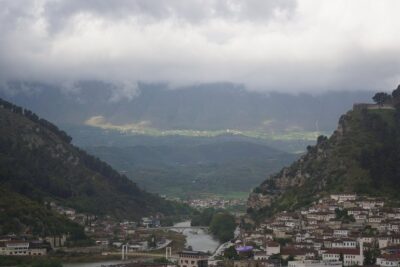
Berat city UNESCO tour, the Castle & Belshi lake- From Tirana
Read our review →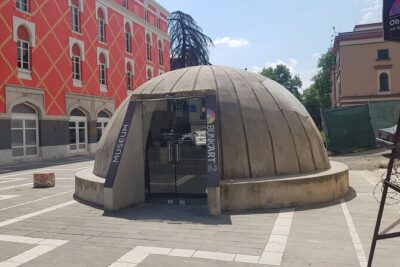
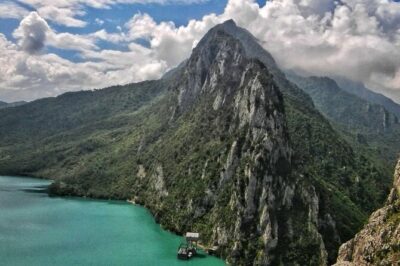
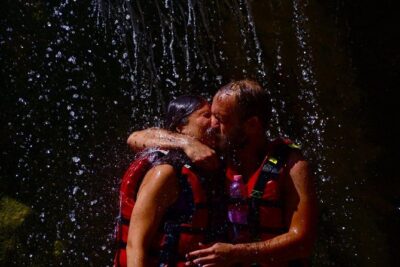
Berat Tour Osumi Canyons Exploration Lunch Transfer
Read our review →
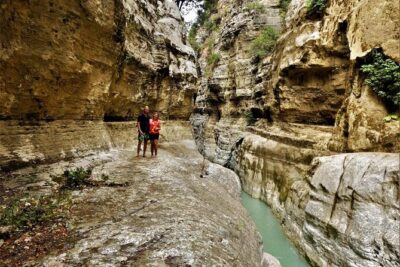
Osumi Canyons and Bogova Waterfall from Berat – Tour by 1001 Albanian Adventures
Read our review →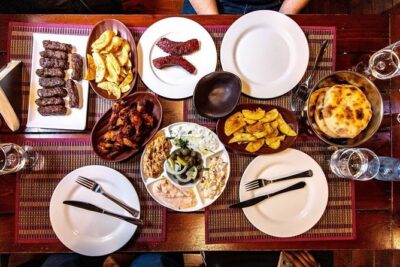
Best of Local Food & City Tour of Tirana – Food & Drinks Included
Read our review →
Browse the lists this tour appears in