
Reviewed · TIRANA TOURS
Tirana by locals
Tirana tells its story in layers. This two-hour walk brings together Skanderbeg Square, communist-era landmarks, and the cafés of modern Blloku, with a local guide explaining how the city changed after dictatorship. I especially like the compact route and the chance to connect major sights with everyday Albanian life. The main consideration is that the tour moves quickly, and the House of Leaves stop may leave you wanting more time inside.
I also like the small maximum of 15 people, which should make questions easier and the walk less clumsy. Guides named in guest feedback include Leo, Eri, and Mimmi, with Leo praised for his kindness and professionalism. At $17.36 per person, this is an appealing introduction to Tirana, though museum entry details should be checked before you book.
In This Review
- Key points at a glance
- Why this short Tirana walk works
- Starting at Skanderbeg Square
- The Pyramid and the problem of memory
- House of Leaves and the surveillance state
- Blloku, from forbidden quarter to social center
- Polytechnic University and a look at present-day Tirana
- What the guide adds
- Is $17.36 a good value?
- Who should book this walk?
- Should you book Tirana by Locals?
- FAQ
- Where does the tour start?
- Where does the tour finish?
- What time does the tour begin?
- How long does the tour last?
- How much does the tour cost?
- What is included in the tour?
- Are food and drinks included?
- What places are visited?
- How large is the group?
- Can I cancel for a full refund?
Key points at a glance
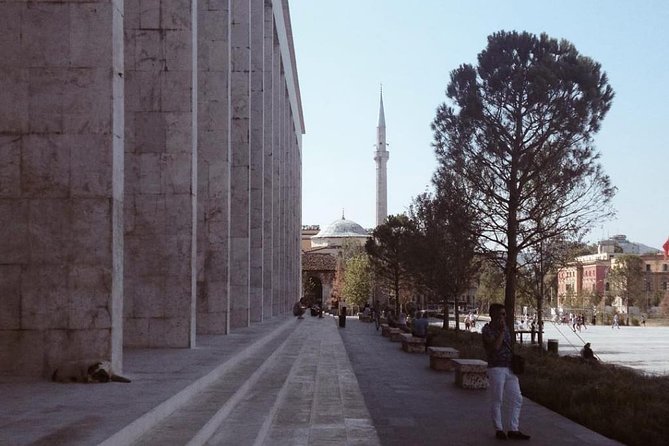
- A quick route through Tirana’s political heart: Skanderbeg Square, the Clock Tower, Et’hem Bey Mosque, the Opera and Ballet Theater, and the National Bank appear at the start.
- The Pyramid explains Albania’s difficult past: You see the former symbol of Enver Hoxha’s communist rule and learn why it still carries mixed meaning.
- The House of Leaves adds a darker chapter: This former espionage building presents the reality of surveillance during the communist period.
- Blloku shows the city’s sharpest change: Once closed to ordinary people, the dictator’s former neighborhood now has cafés, boutiques, cocktail bars, and pubs.
- A small group keeps the walk personal: The maximum group size is 15 people, with a professional guide included.
- The price suits a first morning in Tirana: At $17.36, you receive a focused introduction without paying for lunch, drinks, or optional activities.
Why this short Tirana walk works
Tirana can feel confusing at first. Its center mixes Ottoman traces, Italian planning, communist concrete, new construction, and café culture within a relatively small area. A local-led walk gives you a useful framework before you set off on your own.
This is not a long sightseeing expedition. The listed duration is approximately one to two hours, and the route contains several stops rather than extended visits at each one. I see that as a strength if you have limited time, a free afternoon, or only one morning to get oriented.
The route also has a clear theme: Albania’s move from monarchy and foreign influence through harsh communist rule and into a more open modern city. You are not simply checking off monuments. You are comparing different versions of Tirana as you walk.
The 9:00 am start is practical. You get the tour done early and keep the rest of the day open for museums, food, shopping, or a longer visit to any stop that catches your attention. The tour returns to its starting point at Skanderbeg Square, so you do not need to arrange a separate ride back.
A few more ways to spend a day out of Tirana
- Hike Gamti Mountain with Bovilla lake view & canyon- From Tirana
★ 5.0 · 1,280 reviews - Berat city UNESCO tour, the Castle & Belshi lake- From Tirana
★ 5.0 · 804 reviews - Walking Tour of Tirana
★ 5.0 · 646 reviews
Starting at Skanderbeg Square
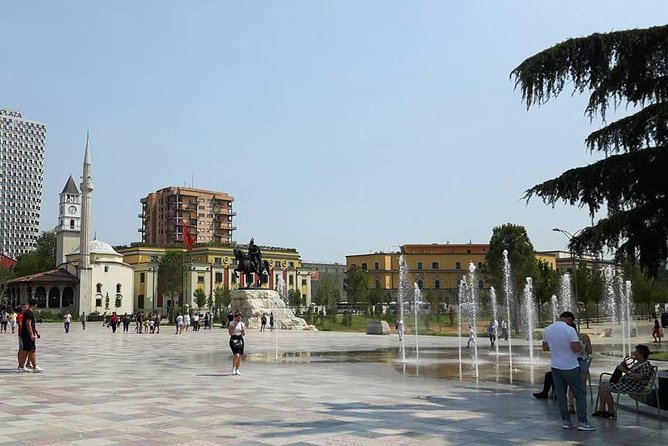
Skanderbeg Square is the right place to begin. It is Tirana’s main public space and gathers several of the city’s most recognizable buildings around one broad central area.
The first part of the walk includes the Et’hem Bey Mosque, the Clock Tower of Tirana, the National Theater of Opera and Ballet, and the National Bank of Albania. The listed stop lasts about 10 minutes, so expect an overview rather than a long architectural visit.
The Et’hem Bey Mosque and Clock Tower help establish Tirana’s older urban identity. The mosque is a reminder of the city’s Ottoman period, while the Clock Tower gives the square a familiar vertical marker. Together, they make a useful contrast with the more formal public buildings nearby.
The Opera and Ballet Theater also carries political symbolism. Its first brick was laid by Nikita Khrushchev, the former leader of the Soviet Union. That detail gives the building more meaning than its plain exterior might suggest. It points to Albania’s close relationship with the Soviet bloc during part of the communist period.
The National Bank adds another layer. Italian influence can be seen in parts of Tirana’s central architecture, and the building helps explain why the city does not look entirely Ottoman or entirely communist. Your guide can tie these styles together in a way that is difficult to grasp from a quick solo walk.
A practical note: this is an outdoor opening stop, so comfortable shoes and weather protection matter. The tour requires good weather, and the booking terms allow a different date or a full refund if bad weather cancels it.
The Pyramid and the problem of memory
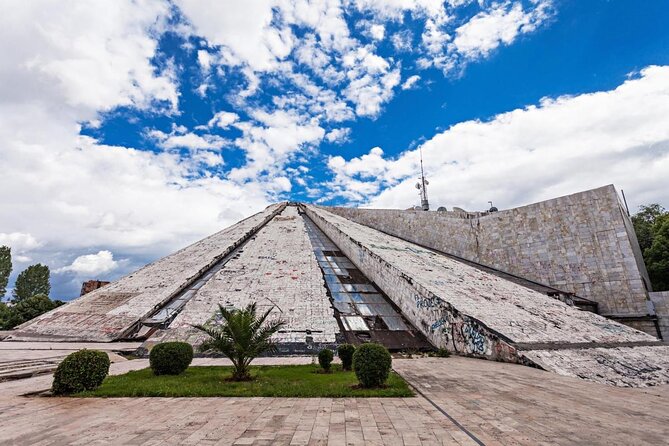
The Enver Hoxha Pyramid is one of the most striking stops because it refuses to fit neatly into one category. It was built as a symbol connected to Albania’s former communist dictator, but it later became a controversial reminder of a period many people would rather leave behind.
The building survived attempts by earlier governments to destroy it. That survival is part of its meaning. It is not presented as a polished monument to admire without questions. Instead, it remains a physical sign of Albania’s uneasy relationship with its communist past.
The stop lasts about 20 minutes, with admission listed as included. That gives your guide enough time to explain the Pyramid’s background and the arguments around its preservation. It also gives you a chance to look at how such a large structure affects the surrounding city.
I like this stop because it encourages a useful question: what should a country do with buildings connected to an authoritarian past? Tirana does not offer a simple answer. The Pyramid has been criticized, threatened with demolition, and retained as part of the city’s present.
You should not expect a traditional museum visit here. The value is in the explanation, the setting, and the conversation around the building. If you have a strong interest in communist architecture, you may want to return later for a longer look.
House of Leaves and the surveillance state
The House of Leaves Museum is probably the most serious part of the walk. The building once served as Albania’s National Intelligence Agency and an espionage center. Its purpose was tied to surveillance, secrecy, and control during the communist era.
This stop helps put a human meaning behind the Pyramid’s political symbolism. You move from a large public structure to a place associated with private fear. The subject is not light, but it is important if you want to understand why Albania’s recent past still shapes public conversation.
The museum aims to explain the harsh reality of communism to younger Albanians and people from abroad. That makes it especially useful for you if you know little about Albania before the country opened up. A local guide can explain the broader setting, while the museum gives the subject a physical home.
The supplied schedule does not give a precise visit length for the House of Leaves. That matters because the overall experience lasts only one to two hours. If the museum is open during your visit, ask the guide how much time is planned inside and whether any admission charge is separate. The tour includes a professional guide, but the inclusion list does not specifically state that House of Leaves entry is covered.
I would treat this as a key reason to choose the tour, not just an extra stop. You may find the museum more affecting than the grander sights because it deals with how ordinary life was shaped by surveillance. It also gives you a better basis for understanding the guide’s comments about present-day Albania.
A completely different kind of day out of Tirana:
- Kruja castle, the old Bazaar & Sarisalltik- Departure from Tirana
★ 5.0 · 592 reviews - Albanian Night Show: Traditional Music, Dance & Dinner in Tirana
★ 5.0 · 431 reviews - From Tirana- Hiking Tour to Bovilla Lake & Gamti Mountain
★ 5.0 · 358 reviews - Shala river & Komani lake -Day trip departure from Tirana/Shkodra
★ 5.0 · 309 reviews
Blloku, from forbidden quarter to social center
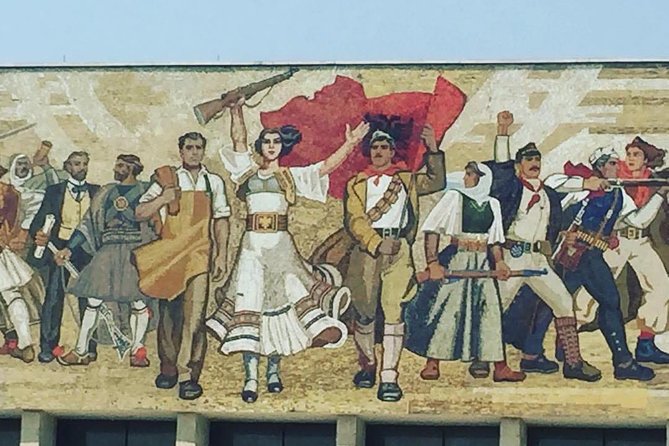
Blloku provides the tour’s biggest change of mood. During Enver Hoxha’s rule, this district was reserved for government officials. Ordinary people could not enter, and the dictator’s villa was located here.
Today, Blloku is known for cafés, boutiques, cocktail bars, and pubs. The area’s current social life makes its former restrictions hard to imagine, which is exactly why the stop works so well.
The walk through Blloku lasts about 25 minutes and has no admission charge. You are not entering a paid attraction. Instead, you are reading the neighborhood as a living example of political and social change.
I like this part because it brings history into the present tense. A building does not need to be old to be historically important. The district’s current businesses and relaxed public life show how completely its role has changed.
There is also a practical benefit. Your guide can point out the part of Tirana that many people later return to for a meal or drink. The tour does not include lunch or alcoholic beverages, so Blloku is a useful place to continue on your own after the walk.
Do not expect a quiet heritage quarter. The cafés, bars, and shops make this one of the more social parts of the route. If you prefer monuments and museums, the area may feel less substantial. If you want to see how locals use the city today, it is essential.
Polytechnic University and a look at present-day Tirana
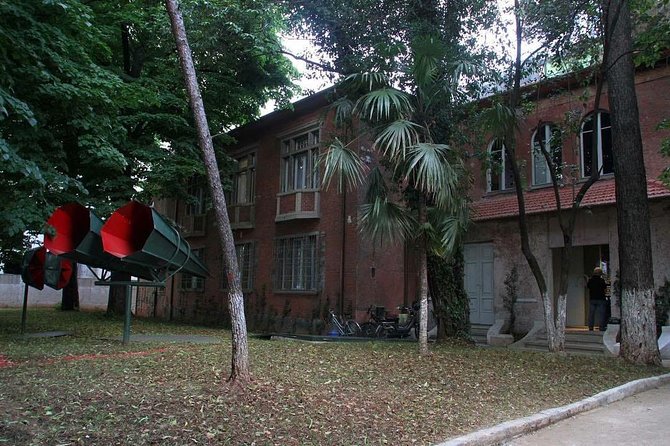
The Polytechnic University of Tirana is the final listed stop. Founded in 1951, it is Albania’s oldest and second-largest university after the University of Tirana. It now has about 10,000 students from Albania, Kosovo, Macedonia, and Montenegro.
The stop lasts around 15 minutes and is free. You are not signing up for a campus tour or entering a lecture hall. The point is to see an institution that connects Tirana to education, regional movement, and the country’s future.
This stop also keeps the walk from ending entirely in the communist past. After the Et’hem Bey Mosque, Soviet-linked theater, Pyramid, surveillance museum, and former officials’ quarter, the university gives you a more current subject.
The student population reflects Albania’s connections with nearby communities. That regional mix is worth noting because Tirana is not isolated from the Balkans. People from Kosovo, Macedonia, and Montenegro contribute to the city’s social and academic life.
The university is also a good place for your guide to discuss daily life rather than only historic events. One of the strongest features of this experience is the attempt to connect Albania’s past with how people live now. The walk is more useful when you listen for those links.
What the guide adds
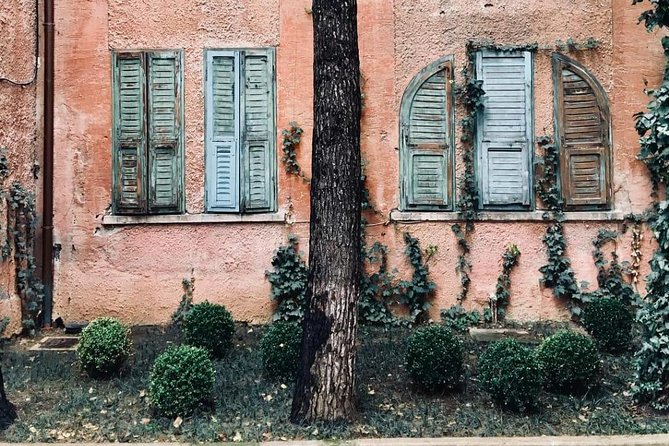
The route itself is easy to understand, but the guide determines how much you gain from it. The experience includes a professional guide, and the small group limit of 15 people should allow a more direct exchange than a large city tour.
Guest feedback gives useful clues about the guiding style. Leo is praised for being kind, bright, and highly professional. Eri is described as patient and willing to take photos and videos during an outing, while Mimmi is remembered as more than a guide, offering a friendly local perspective on Tirana.
One caution is necessary: the feedback includes comments that appear to relate to other Lost In Albania activities, including a hike near a lake. I would not assume every compliment applies directly to this city walk. Still, the repeated praise for friendly local guides supports the tour’s central promise.
You should ask questions. For example, you might ask how people in Tirana view the Pyramid today, what changed in Blloku after communism, or how the House of Leaves presents the intelligence service. Those questions can turn a short walk into a much more useful conversation.
Is $17.36 a good value?
At $17.36 per person, I consider the price fair for a guided introduction to central Tirana. You are paying for a professional guide and a carefully arranged route through several major sights, not for transport or a full-day excursion.
The value comes from the connections between stops. A free walk through Skanderbeg Square will show you the buildings, but it may not explain the Soviet link to the Opera and Ballet Theater or the political meaning of the Pyramid. The guide gives those facts a place in the larger story.
The price is less attractive if you want long museum visits, a meal, drinks, or private guiding. Lunch, alcoholic beverages, personal expenses, and optional activities are not included. The tour also lasts only one to two hours, so it is best viewed as an introduction rather than a complete Tirana program.
A small group helps justify the cost. With no more than 15 people, you should have a reasonable chance to hear the guide and ask questions. That is especially useful at busy outdoor sights, where a large group can scatter or block the explanation.
The experience is booked an average of 70 days ahead, so early planning is sensible if your dates are fixed. Confirmation arrives when you book, and free cancellation is available up to 24 hours before the 9:00 am start. Changes or cancellations inside that window are not accepted for a refund.
Who should book this walk?
I would recommend it to first-time visitors who want a quick orientation, history-minded people who want context for Albania’s communist period, and anyone who prefers walking to sitting on a bus.
It also suits solo visitors and couples who want local conversation without paying for a private tour. The maximum group size keeps it smaller than many city excursions, though it is still a shared experience.
Families can consider it too. Most people can participate, and service animals are allowed. The main issue is attention span, since the House of Leaves and communist history may be heavy for young children.
The walk is less suitable if you need extensive museum time or want a tour focused only on architecture. It also may not fit you if hot, wet, or otherwise poor weather is expected, since the activity requires good weather.
Wear comfortable shoes. The route is a walking tour through central Tirana, and the schedule moves between several stops. Public transportation is nearby, but the tour begins and ends at Skanderbeg Square, so you can plan around that central location.
Should you book Tirana by Locals?
Book it if you want Tirana to make sense quickly. The strongest part is not any single building, but the contrast between the mosque and Clock Tower, the communist Pyramid, the former espionage house, restricted Blloku, and the modern university.
At $17.36, the cost is modest, and the 15-person limit gives the local guide room to make the walk personal. I would book early, especially since it is often reserved well ahead, and I would confirm the House of Leaves entry details before paying.
Skip it if you want a full museum tour or a leisurely half-day outing. For most first visits, though, this is a sensible morning introduction that leaves you with both practical bearings and better questions about Albania.
FAQ
Where does the tour start?
The tour starts at Skanderbeg Square, Sheshi Skënderbej, in Tirana, Albania.
Where does the tour finish?
The activity ends back at the meeting point at Skanderbeg Square.
What time does the tour begin?
The start time is 9:00 am.
How long does the tour last?
The approximate duration is one to two hours.
How much does the tour cost?
The listed price is $17.36 per person.
What is included in the tour?
A professional guide is included.
Are food and drinks included?
No. Lunch, alcoholic beverages, personal expenses, and optional activity costs are not included.
What places are visited?
The route includes Skanderbeg Square, the Enver Hoxha Pyramid, the House of Leaves Museum, Blloku, and the Polytechnic University of Tirana.
How large is the group?
The activity has a maximum of 15 participants.
Can I cancel for a full refund?
Yes. You can cancel at least 24 hours before the experience start time for a full refund. Poor weather or failure to meet the minimum number of participants may also lead to a different date or a full refund.
Recently added around Tirana
- Berat 4×4 Off-Road and Vineyard Wine Tasting★ 5.0 · 3 reviews
- Apollonia and Berat UNESCO tour from Tirana★ 5.0 · 3 reviews
- Tirana’s Communist Past: A Tasting Tour with Traditional Lunch★ 5.0 · 3 reviews
- Cultural Tour in Tirana including House of Leaves★ 5.0 · 3 reviews
- Apollonia and Ardenica Monastery – full day tour★ 4.5 · 3 reviews
- 3 Hour Pub Crawl Tour in Tirana★ 3.5 · 3 reviews
- Tirana to Ksamil and Saranda Bus★ 4.5 · 3 reviews
- SOTIRA WATERFALL HIKING/TREKKING from Berat by 1001 Albanian Adventures★ 5.0 · 3 reviews
Tirana Tours, compared.
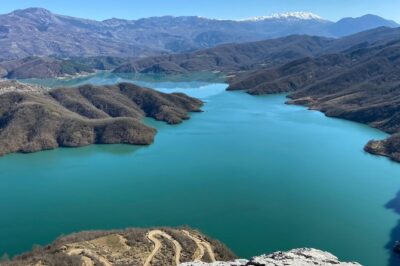
Hike Gamti Mountain with Bovilla lake view & canyon- From Tirana
Read our review →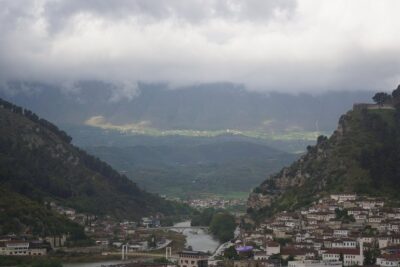
Berat city UNESCO tour, the Castle & Belshi lake- From Tirana
Read our review →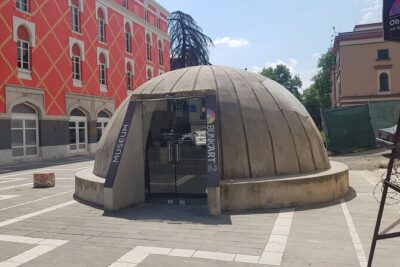
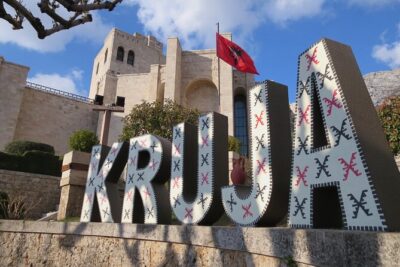
Kruja castle, the old Bazaar & Sarisalltik- Departure from Tirana
Read our review →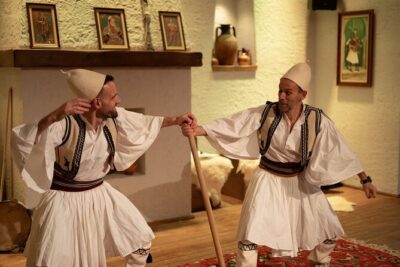
Albanian Night Show: Traditional Music, Dance & Dinner in Tirana
Read our review →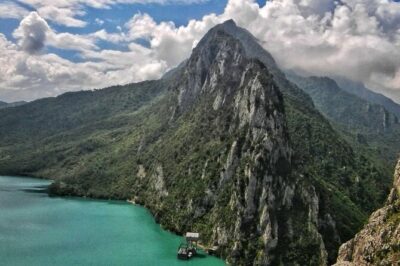
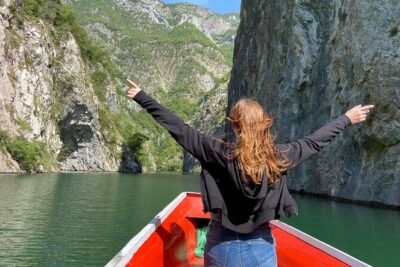
Shala river & Komani lake -Day trip departure from Tirana/Shkodra
Read our review →
Cooking Classes and Traditional food tasting in Tirana
Read our review →Browse the lists this tour appears in