
Reviewed · ALBANIA
Prepare Osa with Teta Marjeta
Bring your appetite to an Albanian home. This small-group cooking class gives you a practical taste of Gjirokaster, from shaping local dishes to sharing the finished meal at Marjeta’s home. I like the personal setting and the chance to cook three foods tied closely to the city. I also like that you receive recipe cards, so the class does not end when you leave Albania.
The main consideration is the short two-and-a-half-hour schedule. You will prepare several dishes, eat them, and enjoy drinks, but this is a focused introduction rather than a long culinary workshop. With a maximum of 10 people, the group should feel friendly, though the class may be less appealing if you prefer a private lesson.
In This Review
- Key points to know before booking
- Why this cooking class fits Gjirokaster so well
- Meeting at Cerciz Topulli Square
- Starting with raki and conversation
- Making Qifqi, Gjirokaster’s rice specialty
- Preparing Osa with chicken and pasta
- Finishing with Hasude and seasonal salad
- Sitting down to eat what you made
- A small group makes a difference
- What to bring and how to plan your time
- Who will enjoy this Gjirokaster food class most
- Should you book Prepare Osa with Teta Marjeta?
- FAQ
- Where does the cooking class meet?
- Where does the activity finish?
- How long does Prepare Osa with Teta Marjeta last?
- What dishes will I prepare?
- Are food and drinks included?
- Is the class offered in English?
- How far in advance should I book?
Key points to know before booking
- Three Gjirokaster specialties: Prepare Qifqi, Osa, and Hasude, including a rice dish found specifically in Gjirokaster.
- A real home setting: The class takes place at Marjeta’s home, where you begin with raki or a soft drink.
- Besi may guide the conversation: A previous class included local guide and translator Besi, who helped make the session welcoming and easy to follow.
- The meal is included: Food, a seasonal salad, and drinks are part of the price, with wine, raki, or a soft drink served alongside the meal.
- Recipes go home with you: Recipe cards let you try the dishes again after your visit.
- Small-group format: The activity accepts no more than 10 people and lasts about 2 hours and 30 minutes.
Why this cooking class fits Gjirokaster so well
Gjirokaster is a city best understood through its daily life. Stone streets and old buildings tell part of the story, but food gives you another way to connect with the place. This class moves beyond simply eating a local dish in a restaurant. You handle the ingredients, learn how the food comes together, then sit down with the people who prepared it.
The setting matters. You are welcomed into Marjeta’s home rather than placed in a large commercial kitchen. Her husband produces the raki served at the beginning, and Marjeta also prepares homemade drinks. That small detail gives the welcome a family feel and makes the class more personal than a standard demonstration.
The activity is offered in English. That is useful for following the cooking steps and asking questions, especially when working with unfamiliar dishes. Besi helped with translation during one class, so you may have a local guide who makes the conversation easier for everyone in the group.
I like the balance here. You get instruction, hands-on work, a full meal, and time to talk. You are not just watching someone cook while standing at a distance.
Other Albania trips people book when they are planning this one:
- Hike Gamti Mountain with Bovilla lake view & canyon- From Tirana
★ 5.0 · 1,280 reviews - Day Trip to Saranda and Butrint National Park from Corfu
★ 4.2 · 847 reviews - Berat city UNESCO tour, the Castle & Belshi lake- From Tirana
★ 5.0 · 804 reviews
Meeting at Cerciz Topulli Square
The class begins at Sheshi Çerçiz Topulli 5 in Gjirokaster. You meet the host at Cerciz Topulli Square, then walk together to Marjeta’s home. The activity also ends back at the meeting point.
That arrangement keeps the start simple. You do not need to find a private residence on your own, and you have a clear place to gather before the class begins. Plan to arrive ready for a short walk with the group.
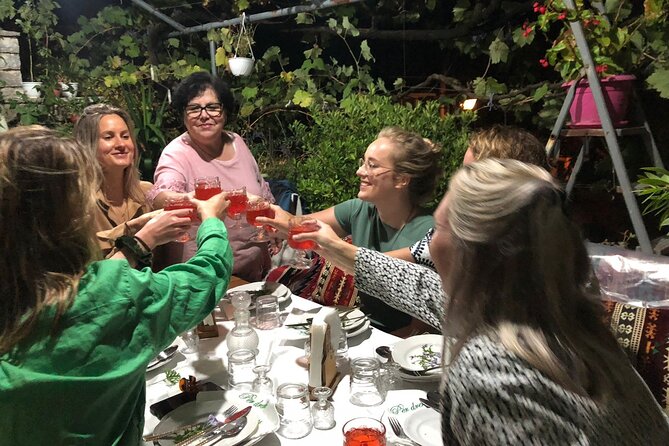
Once you reach the house, the mood shifts from meeting point to social visit. You begin with a glass of raki made by Marjeta’s husband, or with a soft drink if you do not drink alcohol. The class also includes other beverages, and you can later pair the meal with wine, raki, or a soft drink.
The minimum drinking age is 18. You do not need to drink alcohol to take part, since soft drinks are available.
Starting with raki and conversation
The first drink is not simply a refreshment. It gives everyone time to settle in, meet the guide, and chat with the group before the cooking starts. In a class capped at 10 people, this opening can help the session feel relaxed rather than rushed.
I would use this moment to ask about the ingredients and the dishes ahead. Osa, Qifqi, and Hasude may be unfamiliar names, and learning what makes each one different will make the cooking more interesting.
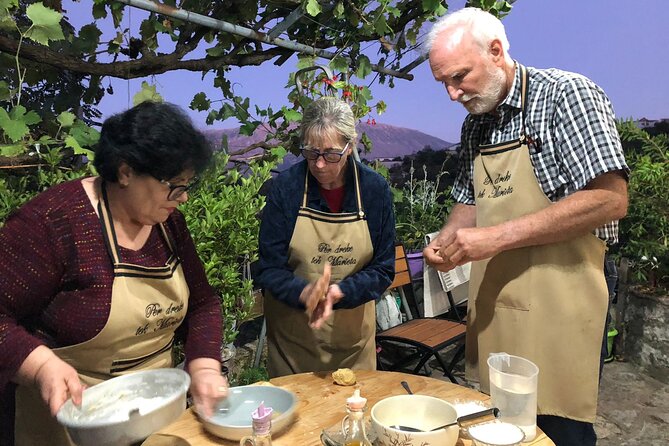
The atmosphere described by the class is informal and social. A previous group cooked on a small veranda with local ingredients, drank wine, and found Marieta and Besi friendly and welcoming. The veranda setting may depend on the day, but it gives you a good idea of the tone: this is meant to feel like time spent in someone’s home, not a formal restaurant lesson.
That warmth is one of the strongest reasons to book. You will likely remember the conversation and hospitality as much as the food itself.
Making Qifqi, Gjirokaster’s rice specialty
The first dish is Qifqi, listed as the starter. It is made mainly with rice and is associated specifically with Gjirokaster. That makes it more than a generic appetizer. It is a chance to try a food closely connected to the city you are visiting.
You will prepare it as part of the class, then eat it at the start of the final meal. The value of making Qifqi yourself is that you can pay attention to its texture and preparation instead of treating it as just another plate brought to the table.
The available information does not spell out every cooking step, so you should not expect a detailed technical preview before arriving. That is part of the point of a hands-on lesson. The guide and Marjeta will show you how the dish is made using fresh, local ingredients.
Qifqi is also a useful choice for home cooking. Since recipe cards are provided, you can try to recreate the starter later. The card will not replace the feel of cooking beside Marjeta, but it gives you a practical reminder of the ingredients and method.
A completely different kind of day out of Albania:
- Walking Tour of Tirana
★ 5.0 · 646 reviews - Kruja castle, the old Bazaar & Sarisalltik- Departure from Tirana
★ 5.0 · 592 reviews - Albanian Night Show: Traditional Music, Dance & Dinner in Tirana
★ 5.0 · 431 reviews - From Tirana- Hiking Tour to Bovilla Lake & Gamti Mountain
★ 5.0 · 358 reviews
Preparing Osa with chicken and pasta
Osa is the main dish and the namesake of this cooking experience. It is described as a kind of pasta combined with chicken, and it is one of the special recipes taught by Marjeta.
This is where the class becomes especially useful for people who want to learn rather than simply taste. You work from raw ingredients, follow the process, and then eat the result while the preparation is still fresh in your mind. The meal gives you a clear reward for the work, without leaving you to find lunch or dinner afterward.
Fresh, local ingredients are part of the class. The exact ingredients may vary, and no complete list is supplied in advance, but the focus is on preparing the food from scratch. You should expect a regional home recipe rather than a cooking lesson built around supermarket shortcuts.
I like that Osa is not presented as an international standard dish. It gives the class a strong local purpose. You are learning something connected to Gjirokaster, not simply making a familiar pasta recipe in a different country.
Finishing with Hasude and seasonal salad
Hasude is the dessert. The class includes it alongside Osa and Qifqi, so the menu covers a starter, main course, and sweet finish. A seasonal salad prepared by Marjeta is served with the meal as well.
The salad is a small but useful addition. After working with the main dishes and dessert, a fresh side gives the meal some balance. It also lets you taste what Marjeta has already prepared, while the three featured recipes remain the focus of your work.
Hasude helps complete the sense of a home meal. You are not leaving after the cooking demonstration or stopping after the main course. You sit down and eat through the menu together, with drinks and conversation included.
The class is not designed for someone who wants to prepare a huge number of dishes. Three featured recipes in 2 hours and 30 minutes is a reasonable amount, but the pace will need to keep moving. If you want detailed practice with every possible variation, a longer private course would suit you better.
Sitting down to eat what you made
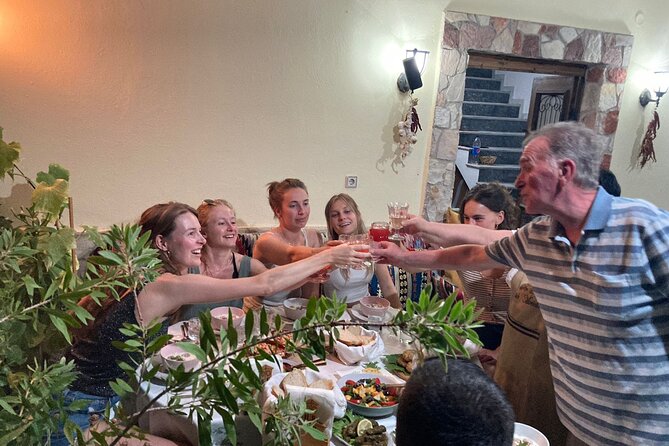
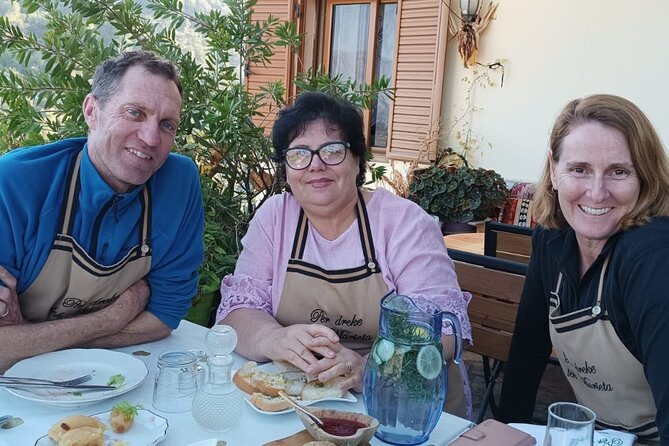
After the cooking is finished, you sit with Marjeta and the group to taste the food. The meal includes Qifqi as the starter, Osa as the main dish, Hasude for dessert, and a seasonal salad.
This shared meal is the best part of the format. It turns the class into a social evening rather than a string of instructions. You can compare the finished dishes, talk about the recipes, and enjoy the food with the guide and host.
Drinks are included. You can choose from wine, raki, or a soft drink with the meal, while the welcome drink may also be raki or a soft drink. Since beverages are already covered, the advertised price is easier to judge than a class where food is included but drinks cost extra.
The experience is priced at $66.09 per person. That is not the cheapest way to eat in Gjirokaster, but you are paying for more than dinner. The price includes instruction, ingredients, a home visit, the full meal, beverages, and recipes to take away. For someone interested in food and local culture, those combined elements make the cost reasonable.
If you only want a quick meal, you can spend less elsewhere. If you want a personal activity that also feeds you, the price makes more sense.
A small group makes a difference
The maximum group size is 10 people. That is large enough to create conversation but small enough for the host and guide to work with the group directly.
A class of this size can still feel different depending on who books it. You might share the table with couples, families, or other small groups. The supplied comments describe a friendly atmosphere, including an especially positive mention of Marieta, Besi, and the welcoming approach of the whole team.
The main advantage is access. You have a better chance to see what is happening, ask questions, and take part than you would in a large demonstration. The main limitation is that it is not guaranteed to be a one-on-one lesson.
If you are traveling alone, this may be a good way to meet people without committing to a full-day group tour. If you are traveling as a couple or family, it offers a shared activity with a clear meal at the end.
What to bring and how to plan your time
The class lasts approximately 2 hours and 30 minutes. Allow a little extra time around the meeting and return to Cerciz Topulli Square, even though the stated activity time is about two and a half hours.
Wear clothing you are comfortable cooking in. The information does not specify a dress code or particular equipment, so you do not need to arrive with specialist gear. Since you will prepare food and then eat it, practical clothing is the sensible choice.
Arrive at the stated meeting point, Sheshi Çerçiz Topulli 5, rather than trying to go directly to Marjeta’s home. The group walks from there with the host.
The class is offered in English and tickets are mobile, which makes the meeting process simple. Confirmation is provided when you book. The activity is commonly booked well ahead, with an average lead time of 37 days, so you should reserve early if the class is central to your Gjirokaster plans.
Free cancellation is available up to 24 hours before the start time for a full refund. Cancellations or changes made inside that 24-hour window are not accepted for a refund, and the cut-off follows local time.
Who will enjoy this Gjirokaster food class most
I would choose this class if you want food to serve as a doorway into local life. It suits people who enjoy meeting hosts, trying dishes they cannot easily find at home, and taking part in the preparation.
It is also a good fit if you prefer a short activity. At 2 hours and 30 minutes, it can fit between sightseeing plans without taking over the whole day. The included meal means you can use it as lunch or dinner planning, though the exact time of day should be checked when booking.
Families and mixed-age groups may appreciate the soft-drink option, but the minimum drinking age applies to alcohol. The class can also work well for solo visitors who want a small social setting.
I would be more cautious if you have strict dietary requirements, since no allergy or dietary information is provided. Ask the provider before booking if your meal needs special changes. I would also choose another activity if you want an advanced culinary course, a long menu, or guaranteed private instruction.
Should you book Prepare Osa with Teta Marjeta?
Book it if you want three local recipes, a meal in a private home, included drinks, and a friendly small-group setting. The strongest parts are the personal welcome, the Gjirokaster-specific Qifqi, and the chance to take recipe cards home.
The class is a good value for food-focused visitors who want more than a restaurant meal. It is less suitable for anyone seeking a private, highly technical lesson or a broad survey of Albanian cooking.
For most visitors with two and a half hours to spare, I would consider it one of the more personal ways to meet Gjirokaster through its food. Come ready to cook, eat, and accept a glass of raki if you like.
FAQ
Where does the cooking class meet?
You meet at Sheshi Çerçiz Topulli 5 in Gjirokastër, Albania, also known as Cerciz Topulli Square. The host then walks with the group to Marjeta’s home.
Where does the activity finish?
The activity ends back at the original meeting point.
How long does Prepare Osa with Teta Marjeta last?
The class lasts approximately 2 hours and 30 minutes.
What dishes will I prepare?
You will prepare Qifqi as a starter, Osa as the main dish, and Hasude as dessert. A seasonal salad prepared by Marjeta is also served.
Are food and drinks included?
Yes. All food is included, along with beverages. Drink options include wine, raki, and soft drinks.
Is the class offered in English?
Yes. The experience is offered in English.
How far in advance should I book?
The activity is booked an average of 37 days in advance. Confirmation is provided at the time of booking, and the group has a maximum of 10 people.
Recently added around Albania
- Apollonia and Berat UNESCO tour from Tirana★ 5.0 · 3 reviews
- Berat 4×4 Off-Road and Vineyard Wine Tasting★ 5.0 · 3 reviews
- Llogara Caesar’s Path,Orikum Park & Marmiroi Church Guided Tour★ 5.0 · 3 reviews
- Vlora Airport Transfers – Via Transfer Albania★ 5.0 · 3 reviews
- Tirana’s Communist Past: A Tasting Tour with Traditional Lunch★ 5.0 · 3 reviews
- Daily tour★ 4.5 · 3 reviews
- Apollonia and Ardenica Monastery – full day tour★ 4.5 · 3 reviews
- Cultural Tour in Tirana including House of Leaves★ 5.0 · 3 reviews