
Reviewed · DAY TRIPS TO KOSOVO
Small Group Tour; Gems of Albania, Kosovo & N. Macedonia
Three countries, eight busy days. This small-group journey links Albania, Kosovo, and North Macedonia through old fortresses, Orthodox monasteries, Ottoman bazaars, mountain roads, and Lake Ohrid. I especially like the maximum group size of 10, which should make border crossings, guided walks, and questions easier than on a large coach tour. I also like that hotels, breakfast, private transport, road costs, and a tour leader are included.
The main consideration is pace. You cover a lot of ground, often crossing borders and changing towns, so this is better for a first look at the western Balkans than for a slow holiday. The advertised price is $2,361.02 per person, based on shared rooms in three-star hotels, and several places named in the overview, including Butrint National Park and the Blue Eye spring, do not appear in the eight-day schedule provided. Confirm the final route before paying.
In This Review
- Key points to know before booking
- What this eight-day route does well
- Day 1: Kruja’s bazaar and Skanderbeg’s fortress
- Day 2: Shkodra, Rozafa, and Deçan
- Day 3: Prizren from the river to Kalaja Fortress
- Day 4: Pristina and Skopje’s layered capitals
- Day 5: Matka Canyon and Lake Ohrid
- Day 6: St. Naum, Galichitsa, and Driloni
- Day 7: Berat, the town of a thousand windows
- Day 8: Tirana from Skanderbeg Square to Blloku
- Is $2,361.02 good value?
- Who should book this tour?
- FAQ
- How long is the tour?
- Which countries does the tour visit?
- What is included in the price?
- Are lunches and dinners included?
- What type of accommodation is provided?
- How large is the group?
- Does the tour include Butrint National Park and the Blue Eye spring?
- Should you book it?
Key points to know before booking
- A three-country route from Tirana: You travel through Albania, Kosovo, and North Macedonia, with hotel pickup and drop-off in Tirana.
- Four UNESCO World Heritage locations are promised: The route clearly includes Ohrid, Berat, and Deçan, while the fourth site should be confirmed because Butrint is mentioned in the tour description but not in the daily plan.
- The best scenery comes around Lake Ohrid and Matka Canyon: Boat time at Matka, St. Naum, Galichitsa National Park, and Driloni add welcome outdoor time between historic towns.
- Guides are a major part of the value: Past praise singles out Ardit, Eltoni, Sokol, Lecko, Gizeem, and Nik for strong storytelling, patience, and local knowledge.
- Meals are mostly your responsibility: Breakfast is included, but lunch, dinner, drinks, snacks, and personal purchases are extra.
- Expect shared accommodation and long road days: The listed price assumes double, twin, triple, or quadruple occupancy in three-star hotels. A single room costs an additional €45 per night.
What this eight-day route does well
This is a smart introduction to a part of Europe that can be awkward to organize independently. Albania, Kosovo, and North Macedonia do not offer a simple rail network linking these sights, and the route uses private transportation to connect them. That saves you from arranging several buses, border crossings, hotels, and local guides on your own.
The small group matters. With no more than 10 people, you should have a better chance to hear the guide, get help at borders, and keep the group moving without the slow shuffle of a large tour bus. The experience is guided by a professional tour leader rather than being a simple transfer service, so the drive time becomes part of the learning.
The strongest praise in the supplied comments focuses on the guides. Ardit is described as combining a large store of information with humor. Eltoni is praised along with the hotels, while Sokol is singled out for a six-person group. Lecko receives especially warm praise for storytelling and careful attention, and Gizeem is credited with excellent knowledge of Albanian history. Those comments suggest that the quality of your trip may depend heavily on who leads your departure.
The route also mixes old cities with parks and lakes. That balance helps. Eight days of churches, castles, and museums could become tiring, but Matka Canyon, Lake Ohrid, St. Naum, and Driloni give you time around water and mountains.
The weakness is the amount of territory covered. You visit many places for only 30 minutes to one hour. That is enough for an introduction and photographs, but not enough for a slow museum visit or a long meal in every town. You should think of this as a well-organized survey, not a relaxed stay in each destination.
More cross-border days to Kosovo:
- Day Tour of Kosovo from Tirana, Pristina and Prizren
★ 5.0 · 93 reviews - From Tirana/Durres/Golem: Prizren and Prishtina Full-Day Tour
★ 5.0 · 67 reviews - Best of Kosovo Day Tour – Pristina & Prizren from Tirana & Durres
★ 5.0 · 66 reviews
Day 1: Kruja’s bazaar and Skanderbeg’s fortress
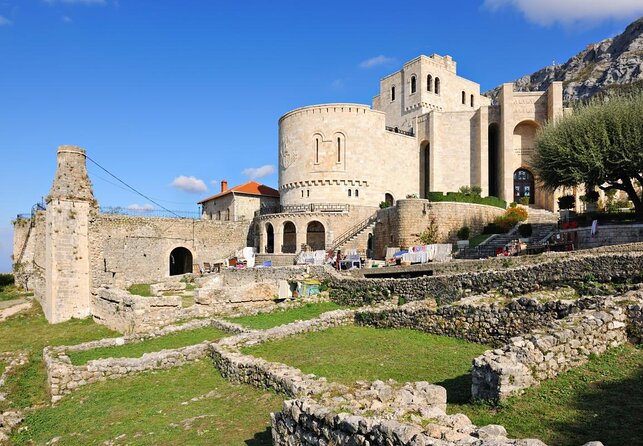
The tour begins with hotel pickup in Tirana at 9:00 a.m. and heads to Kruja, a hill city linked with Albanian resistance to Ottoman expansion in the 15th century. Its position on rocky ground, about 560 meters above sea level, gives the first day an immediate change of setting from the capital.
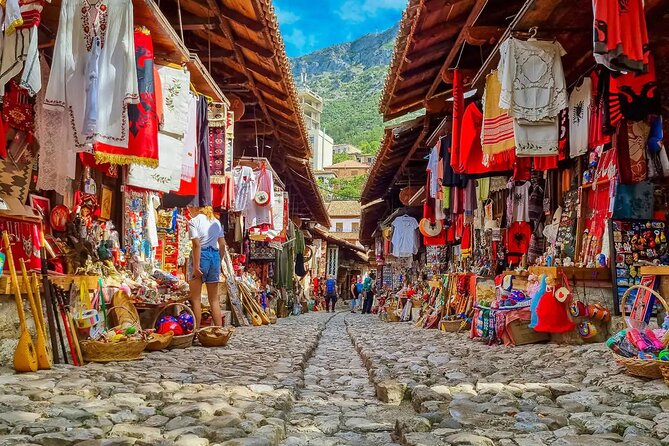
The medieval bazaar is one of the day’s most enjoyable stops. Wooden houses and narrow lanes lead past carpets, jewelry, and handmade souvenirs. You get about an hour here, which is enough to browse without making shopping the whole purpose of the morning. If you want a useful Albanian souvenir, this is likely your best chance on the route.
Kruja Castle adds the historical backbone. The fortress was built in the 5th century and sits on a rocky hill that was difficult to attack. The guide is expected to show you lesser-used paths that locals used to leave the castle during sieges. That detail gives the visit more life than simply looking at old walls.
You have about 30 minutes of free time for lunch, shopping, or wandering. Lunch is not included, so keep some local currency available. The short schedule means you may need to choose between a leisurely meal and more time in the bazaar.
Day 2: Shkodra, Rozafa, and Deçan
Shkodra is one of Albania’s oldest cities and sits near Lake Shkodra, described in the tour material as the largest lake in the Balkans. The city has links to Illyrian, Roman, and Venetian periods, and its position near routes into the Adriatic helped different cultures meet here.
Rozafa Castle is the main visual reward. From its hilltop position, you can see the lake and the rivers that join before reaching the Adriatic. The scheduled visit is only 30 minutes, so the value comes mainly from the views and the guide’s explanation rather than a long archaeological exploration.
Back in Shkodra, you get an hour to see the city. Venetian influence appears in the architecture, and the town is also known for handmade Venetian-style masks. If your departure takes place in February, the tour description says you might encounter the city’s carnival.
Later, you cross into Kosovo to visit the Monastery of Deçan. The white monastery is still home to Orthodox monks and became a UNESCO site in 2004 for its frescoes. The stop is brief, listed at 30 minutes, and entry conditions at religious sites can affect exactly what you see. Dress respectfully and follow the guide’s instructions.
This is a full road day. The combination of castle, city walk, international border, and monastery is rewarding, but you should not expect a slow morning.
Day 3: Prizren from the river to Kalaja Fortress
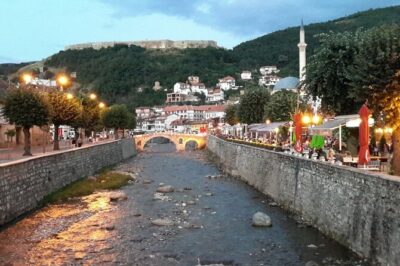
Prizren is given more time than some other stops, with about an hour in the city before visits to Sinan Pasha Mosque and Kalaja Fortress. The old town is shaped by its river, Ottoman-era buildings, bridges, religious sites, and metalwork traditions.
Walking is the right way to understand Prizren. The river passes through the center, and bridges connect the older streets. Look for filigree work in precious metals, a craft closely tied to the city. The combination of churches, mosques, old houses, and food makes Prizren one of the most rewarding urban stops on the trip.
Sinan Pasha Mosque is the main religious visit. Its interior is noted for arabesque color and pattern. A 30-minute stop will not allow a long visit, but it provides a useful look at Kosovo’s Ottoman heritage.
The final stop is Kalaja Fortress, set above the town. The view is the reason to make the climb, though the uphill walk may feel demanding after a day on foot. Wear shoes with a firm sole. August adds the possibility of Dokufest, a major short-film festival held in Prizren, but the tour does not say that festival admission or special programming is included.
More cross-border days to Ohrid:
- Semi-Private Tour of North Macedonia: Ohrid & Struga from Tirana
★ 5.0 · 170 reviews - North Macedonia: Ohrid & Saint Naum Day Tour from Tirana
★ 5.0 · 151 reviews - Ohrid – North Macedonia Full Day Tour from Tirana & Durres/Golem
★ 4.0 · 84 reviews - Private Ohrid Day Tour and Authentic Village from Tirana & Durres
★ 5.0 · 71 reviews
Day 4: Pristina and Skopje’s layered capitals
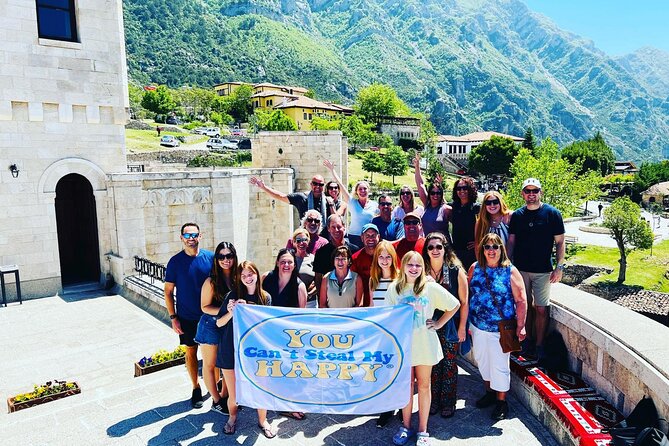
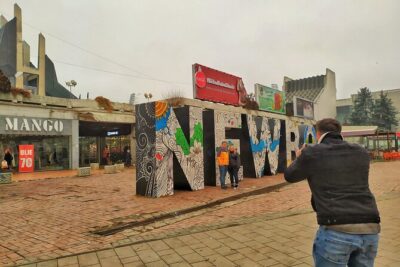
Before leaving Kosovo, you visit Pristina. The Newborn monument represents Kosovo’s independence and its identity as a young country. The walk continues along Mother Teresa Square, with a stop near the Skanderbeg statue.
The Pristina visit is short, about 30 minutes. That is enough to get a feel for the center, but not enough to explore the capital’s museums or neighborhoods. If you want a full impression of Pristina, you will need extra time before or after the tour.
The route then crosses into North Macedonia and reaches Skopje. The capital can feel visually surprising, with European, Ottoman, and Asian influences gathered in one city. The Stone Bridge connects the newer section with the Old Bazaar, and the central Alexander the Great statue is hard to miss.
You also see the Art Bridge, lined with statues of Macedonian artists and musicians, before spending about an hour in the Old Bazaar. This is one of the day’s better chances to wander without a fixed sequence. You can look at the historic streets, stop for coffee, and compare the old trading district with Skopje’s grander modern center.
The schedule gives you an introduction rather than a full city visit. Skopje’s contrasts are the point, but the short stops may leave you wanting more.
Day 5: Matka Canyon and Lake Ohrid
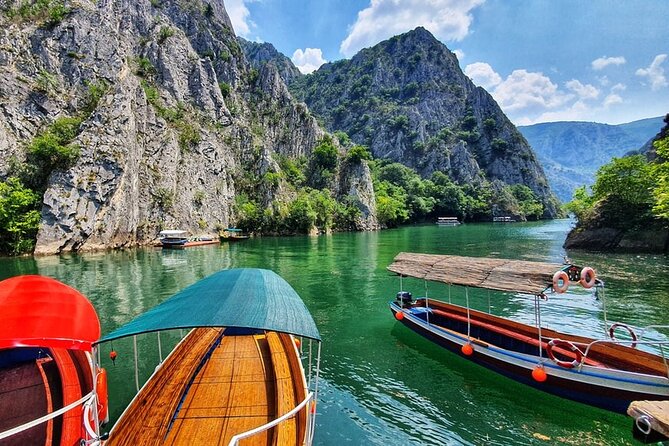
Matka Canyon provides a welcome change after several days of city streets and fortresses. It lies close to Skopje, yet the setting quickly becomes one of cliffs, water, caves, and walking routes. A boat trip through the canyon is included, and you may also have options for hiking, seeing medieval remains, or swimming in turquoise water.
The schedule allows about an hour. That makes the boat trip the most realistic activity, while longer hikes or swimming may not fit. Ask the guide how much free time is available before setting off, especially if you are hoping to walk.
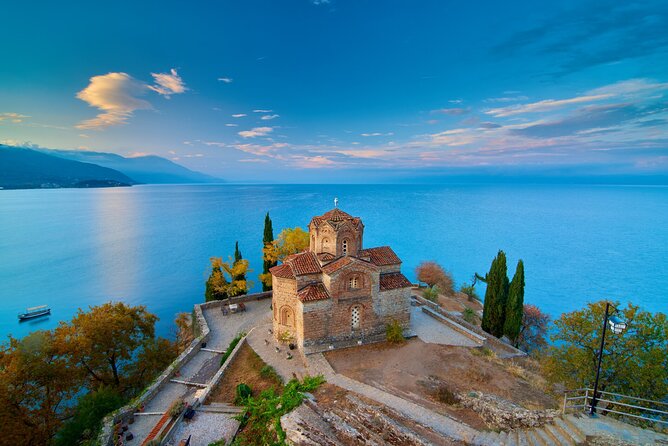
The drive to Ohrid brings you to one of the major highlights of the trip. Ohrid and Lake Ohrid have UNESCO status dating from 1980, and the lake is associated with some of Europe’s oldest human settlements. The Romans called it Lyhnidas, or the Light Lake, a fitting name for the clear water and bright mountain setting.
In Ohrid, the route includes viewpoints near St. John Church, St. Nicholas Church, and the Halveti Hayati Tekke mosque. The town is also an important center of Orthodox Christianity. This mixture of lake scenery, churches, and Islamic heritage gives Ohrid more depth than a simple lakeside resort.
Again, one hour is brief. I would treat this as your first orientation to Ohrid and pay close attention to the guide’s suggestions for any free time later.
Day 6: St. Naum, Galichitsa, and Driloni
The road to St. Naum passes through Galichitsa National Park, between Lake Ohrid, Lake Prespa, and the Albanian border. The mountain route is one of the most scenic stretches of the tour, though road time can be substantial.
St. Naum Monastery sits near the source of the Crni Drim River. The water is famously clear, reflecting the greenery and mountain peaks around the springs. The complex is within a protected area, and the visit combines religious history with a calm natural setting.
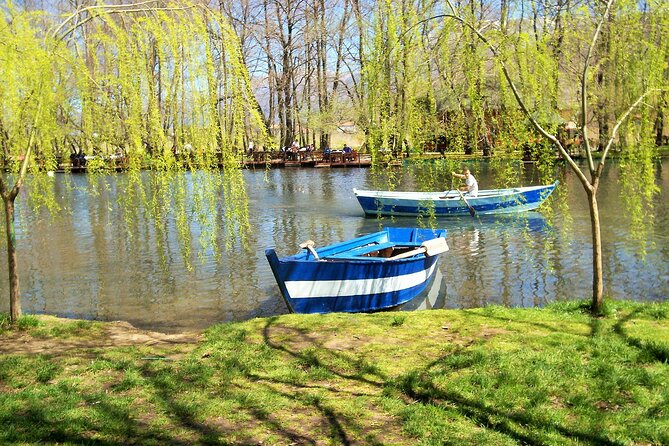
After crossing back into Albania, you visit Driloni National Park and the nearby village of Tushemisht. The small lake is formed by the Driloni waters and surrounded by greenery. This is a quieter stop than the major cities, with time for a traditional meal if you choose to pay separately.
The local specialty here is Koran, a speckled trout from Lake Ohrid, often baked. Pickles are another local favorite. Since lunch is not part of the package, this is a good place to ask the guide about a reliable meal and the time available.
The day ends with a drive toward Berat. You will see a lot, but this is one of the longest and most road-heavy days.
Day 7: Berat, the town of a thousand windows
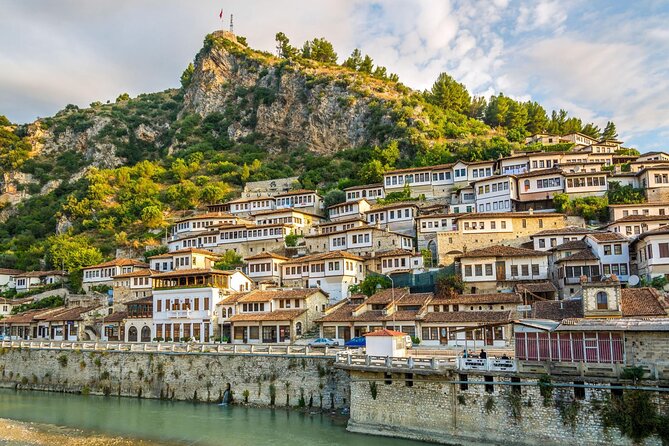
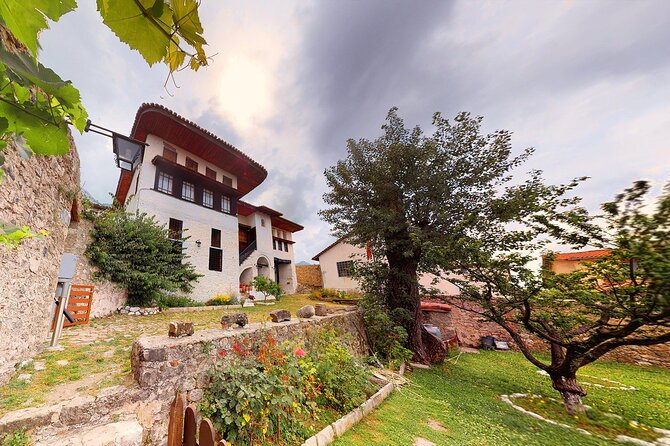
Berat is one of the strongest stops in Albania. Its old houses climb the hills, with rows of windows giving the town its familiar nickname, the town of 1001 windows. The old center and castle are UNESCO listed, and the castle remains unusual because people still live within its walls.
The stone streets inside Berat Castle can be uneven and steep. Take your time, especially in warm weather, and wear practical shoes. The castle includes old churches, mosques, museums, and views over the town.
The National Iconographic Museum Onufri is included. It honors Onufri, a church painter known for a distinctive reddish color that is still hard to copy. This is a compact but worthwhile museum stop, especially if you enjoy religious art and painted interiors.
You also visit the Gorica neighborhood and its old stone bridge. Together, the castle, museum, hillside houses, and bridge give Berat a strong sense of place. The 30-minute allocations for some stops are short, but Berat is the kind of town where even a guided introduction can help you understand what deserves a closer look.
Day 8: Tirana from Skanderbeg Square to Blloku
The final day returns to Tirana. The capital brings together Ottoman, Italian, and communist-era buildings, along with museums, parks, mountains, cafés, and modern streets.
Skanderbeg Square is the natural starting point. Around it are the National Museum, Opera House, Bank of Albania, Skanderbeg statue, and Ethem Beu Mosque. The stop is brief, but the square gives you a clear orientation to the city center.
Bunk’Art 2 is the day’s most distinctive museum. It occupies a former nuclear bunker built to shelter Enver Hoxha and senior communist leaders during the Cold War. Opened as a museum in 2016, it uses video and exhibits to explain the communist army and everyday life under the regime.
You then walk along Rruga Murat Toptani toward Tirana Castle. The castle area now functions as a pedestrian street where old references and newer restaurants meet. The final stop is Blloku, once associated with the communist ruling class and now known for food, bars, and evening life.
Blloku is a good place to end because dinner is not included and Tirana offers choices from inexpensive street food to more polished restaurants.
Is $2,361.02 good value?
The price is high for an eight-day Balkan tour, but the package includes more than sightseeing. You receive private transportation, hotel pickup and drop-off in Tirana, three-star accommodation with breakfast, tourist taxes, international vehicle insurance, road taxes, petrol, and a professional tour leader.
The value improves if you would otherwise need to arrange cross-border transport and several separate hotels. The private vehicle also makes it possible to reach places such as Kruja, St. Naum, Driloni, and Berat without relying on limited public connections.
The price is based on shared double, twin, triple, or quadruple rooms. Solo visitors should add €45 per night for a single room, which is a meaningful extra over seven nights. Lunches, dinners, drinks, snacks, souvenirs, and other personal costs are not included.
One important point needs clarification before booking. The tour is promoted around four UNESCO sites, but the supplied schedule clearly identifies Deçan, Ohrid, and Berat. Butrint National Park and the Blue Eye are named in the general description, yet neither appears in the daily itinerary. Ask for the exact departure schedule and included UNESCO locations in writing.
The booking is non-refundable and cannot be changed after purchase, so this check matters.
Who should book this tour?
I would recommend it to you if you want a guided first visit to the western Balkans, prefer a small group, and value transport and historical explanation over free time. It is especially useful for couples, families, and solo visitors who do not want to manage three countries and several border crossings alone.
It suits people who enjoy castles, religious buildings, old towns, museums, lake views, and local food. The route also works well if you want a broad introduction before returning later for longer stays in Ohrid, Berat, Prizren, or Tirana.
I would hesitate if you dislike long drives, frequent hotel changes, short visits, or shared accommodation. You should also skip it if your main goal is hiking, swimming, or extended time at Lake Ohrid, because those activities receive less time than the headline destinations.
FAQ
How long is the tour?
The tour lasts approximately eight days and begins and ends in Tirana.
Which countries does the tour visit?
The route visits Albania, Kosovo, and North Macedonia.
What is included in the price?
Accommodation with breakfast, private transportation, a professional tour leader, hotel pickup and drop-off in Tirana, tourist taxes, international car insurance, road taxes, and petrol are included.
Are lunches and dinners included?
No. Lunches, dinners, drinks, snacks, souvenirs, and personal spending are not included.
What type of accommodation is provided?
The price is based on three-star hotel accommodation with double, twin, triple, or quadruple room occupancy. A single room is available for an extra €45 per night.
How large is the group?
The tour has a maximum of 10 people.
Does the tour include Butrint National Park and the Blue Eye spring?
They are named in the general tour description, but they do not appear in the eight-day schedule provided. Confirm with Choose Balkans whether they are included on your specific departure.
Should you book it?
Book this tour if you want to cover a large portion of the Balkans in a practical, guided format and you are comfortable with a quick pace. The strongest reasons are the small group, private vehicle, capable local guides, and excellent mix of historic towns, mountain scenery, lakes, and religious sites.
Before paying, confirm the final itinerary, the fourth UNESCO location, hotel towns, and how much free time you receive in Ohrid and Berat. If those details suit you, this is a useful way to see three countries without spending your holiday piecing together buses, borders, and hotels.
Recently added around Tirana
- Berat 4×4 Off-Road and Vineyard Wine Tasting★ 5.0 · 3 reviews
- Apollonia and Berat UNESCO tour from Tirana★ 5.0 · 3 reviews
- Tirana’s Communist Past: A Tasting Tour with Traditional Lunch★ 5.0 · 3 reviews
- Cultural Tour in Tirana including House of Leaves★ 5.0 · 3 reviews
- Apollonia and Ardenica Monastery – full day tour★ 4.5 · 3 reviews
- 3 Hour Pub Crawl Tour in Tirana★ 3.5 · 3 reviews
- Tirana to Ksamil and Saranda Bus★ 4.5 · 3 reviews
- SOTIRA WATERFALL HIKING/TREKKING from Berat by 1001 Albanian Adventures★ 5.0 · 3 reviews
Day Trips to Kosovo, compared.
Day Tour of Kosovo from Tirana, Pristina and Prizren
Read our review →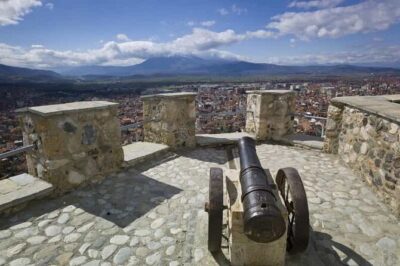
Durres/Golem: Prizren and Prishtina Full-Day Tour
Read our review →
Best of Kosovo Day Tour – Pristina & Prizren from Tirana & Durres
Read our review →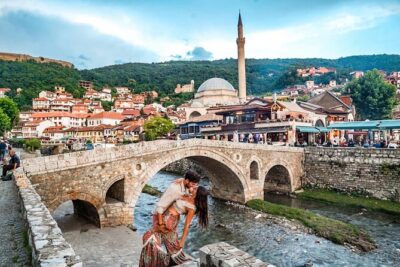
2 Day Tour of North Macedonia & Kosovo from Tirana
Read our review →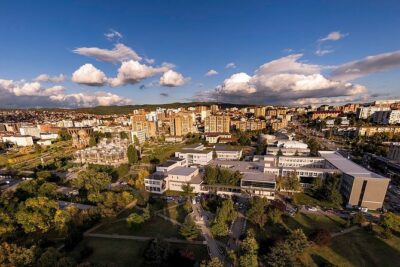
Private Kosovo Tour from Tirana: Prishtina & Prizren Highlights
Read our review →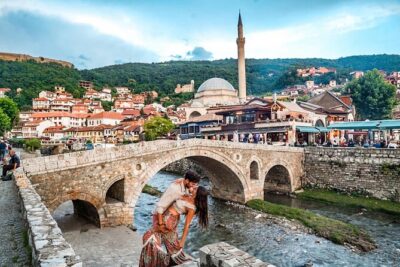
Full Day Tour from Tirana to Prishtina and Prizren
Read our review →Browse the lists this tour appears in