
Reviewed · ALBANIAN RIVIERA TRIPS
4-Days UNESCO Towns and Albanian Riviera Tour
Albania packs a lot into four days. This small-group route links Tirana, Berat, Gjirokaster, Butrint, Saranda, the Ionian coast, Vlore, and Durres without asking you to arrange every hotel, transfer, and historic site yourself. I like the contrast between inland Ottoman towns and open-sea coastal stops, and I especially like that the group is limited to eight people. The main consideration is pace: this is a sightseeing loop, not a slow beach holiday, and several stops are short.
I also like the practical comfort of an air-conditioned vehicle, included accommodation, and some meals. Guide Genci has been praised for his calm, professional approach and for helping arrange the route, even on short notice. Still, you should check exactly which meals, admissions, and hotel nights are included before paying, since the published schedule gives only broad details.
In This Review
- Five reasons this Albania route is worth considering
- How the four-day route works
- Tirana, Belsh, and Berat on the first day
- Gjirokaster’s stone houses and castle
- Butrint and an evening in Saranda
- Qeparo Beach, Porto Palermo, and the Llogara Pass
- Durres amphitheater and the return north
- What the $806.76 price really covers
- Who will enjoy this route most
- Practical details before you book
- Should you book the UNESCO towns and Riviera tour?
- FAQ
- Where does the tour start?
- How many people can join the tour?
- What language is the tour offered in?
- Is accommodation included?
- Are meals included?
- Which admissions are included?
- Can the tour be customized?
- What is the cancellation policy?
Five reasons this Albania route is worth considering
- A strong inland-and-coast combination: See Berat and Gjirokaster before reaching Butrint, Saranda, and the Ionian shore.
- A genuinely small group: The maximum is eight people, which should make hotel check-ins, questions, and photo stops easier.
- Several UNESCO-level cultural stops: Gjirokaster, Butrint, and Berat bring Ottoman, Greek, Roman, and medieval Albania into one trip.
- A useful range of scenery: Lakes around Belsh, mountain views at Llogara Pass, old stone towns, sandy Qeparo Beach, and the Riviera all appear.
- A relaxed guide style: Genci is praised for clear information, smooth organization, and useful restaurant suggestions.
- Good arrival flexibility: Pickup is usually available from Tirana Airport or the port, with other meeting points possible by arrangement.
How the four-day route works
This is best understood as a compact circuit through southwestern Albania. You begin in Tirana, move south through central Albania and Berat, continue to Gjirokaster and Butrint, spend time along the Ionian coast, then return north through Vlore and Durres.
The route covers a lot of ground. That is its strength and its weakness. You get a broad introduction to Albania rather than a deep look at one region. The air-conditioned vehicle matters here, particularly on long summer drives and on winding coastal roads.
The start time is 8:00 a.m. Pickup is generally offered from the airport or port, and the guide waits with a sign showing the company name. If you need another pickup point, the operator says it can usually be arranged in advance.
The tour is offered in English. It is also customizable, which is useful if your interests lean more toward archaeology, communist-era history, beaches, or food. Ask about changes before departure rather than assuming every stop can be extended.
More Riviera beaches and Ksamil islands:
- Gjirokastra UNESCO & Ksamil Beach – From Tirana/Durres/Golem
★ 5.0 · 117 reviews - From Tirana/Durrës: Saranda, Ksamil, and Blue Eye Tour
★ 4.6 · 49 reviews - Semi – Private Tour of Saranda, Ksamil & Blue Eye from Tirana
★ 5.0 · 48 reviews
Tirana, Belsh, and Berat on the first day
The first day begins with Tirana’s central sights. Skanderbeg Square is the obvious starting point, surrounded by key public buildings and the main boulevard. The visit may also include the mosque, the Gallery of Arts, Mother Teresa Square, the Blloku district, Tirana’s National Park, and the Mosaic of Tirana.
You may visit the National Historical Museum if you wish. The schedule allows about an hour in Tirana, so you should not expect a full museum visit plus a long city walk. If the museum is a priority, ask the guide how much time is available before choosing it.
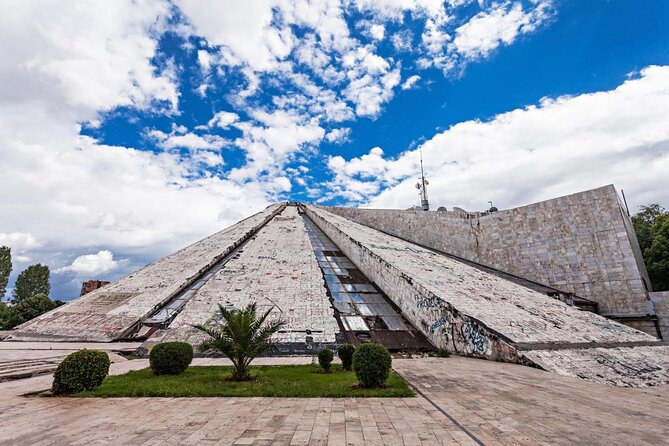
The short stop at the Pyramid of Enver Hoxha gives you a quick look at one of Tirana’s most debated buildings. Designed by Hoxha’s daughter and son-in-law and completed in 1988, it once housed a museum devoted to Albania’s communist leader. Today, its worn marble exterior and graffiti reflect the country’s uneasy relationship with that period.
This is a 15-minute stop, with about 10 minutes set aside for an explanation. It is not a major sightseeing visit, but it adds useful context to modern Albanian history.
Next comes Belsh, a small agricultural town surrounded by lakes. It is a quieter choice than the country’s headline sights. You get roughly two hours here, making it a chance to see a less polished part of Albania rather than another famous monument.
Belsh will appeal most if you enjoy ordinary towns, open countryside, and local scenery. If you want nonstop castles and archaeological sites, this may feel like a detour. Its value is the change of rhythm.
The day ends in Berat, one of Albania’s most attractive historic towns. The castle is the main focus, along with the city’s older quarters and traditional character. Berat is known for its preserved Ottoman buildings, hillside setting, and strong sense of place.
About two hours is scheduled here. That is enough for an introduction, but not a leisurely exploration of every lane and church. Wear shoes with a good grip, since old-town streets and castle paths can be uneven. The schedule lists the visit as free, so confirm whether any specific museum or interior admission is extra.
Gjirokaster’s stone houses and castle
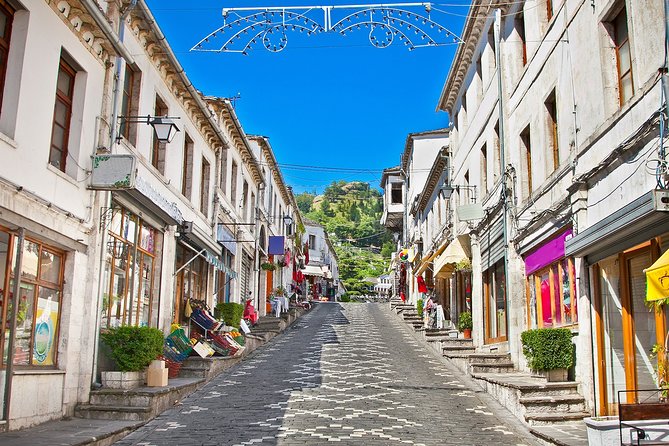
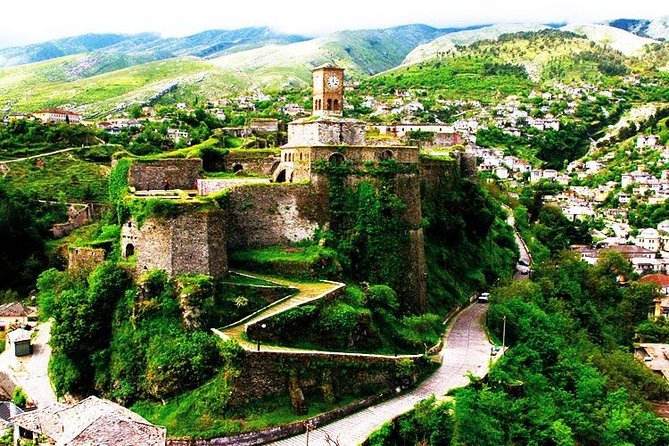
Day two takes you to Gjirokaster, one of the most memorable stops on the route. Its Ottoman-era houses climb a steep hillside, and the town is known for its stone roofs, narrow streets, and commanding castle.
The Skenduli House provides the most personal part of the visit. The house dates from the early 1700s and was partly rebuilt in 1827. It remained with the same family for generations, apart from several years when the communist government took control of it.
You may be shown around by a member of that family. That detail matters because the building becomes more than an old residence. Its rooms reveal how a wealthy household was organized, including a wedding room with 15 windows, several fitted with stained glass.
The visit lasts about an hour and includes a guide. The house admission is listed as included. This is a good example of why a small group helps: there is more room for questions, and the visit feels less like a quick pass through a museum.
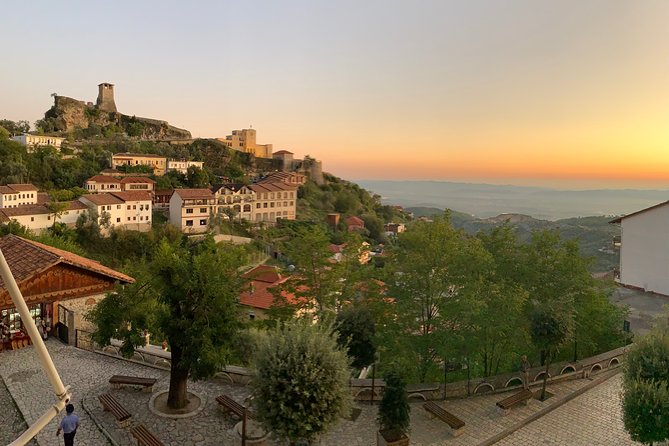
The schedule also gives time for Gjirokaster’s bazaar and castle. The castle rises above the town and has the scale of a stone ship spread across the hillside. The castle area is the main historic attraction, with broad views and nearly two thousand years of changing use behind it.
The published timing is slightly confusing. One section says around two hours at the castle, including the time to go and return, while another lists 30 minutes for the bazaar stop. Treat these as approximate rather than fixed. Ask your guide how much actual walking and castle time you will have.
Gjirokaster is hilly. You should be comfortable walking uphill and over old stone surfaces. The reward is a town with a stronger medieval and Ottoman feel than Tirana, plus one of the country’s best preserved historic settings.
Butrint and an evening in Saranda
After lunch, the route continues to Butrint National Park. Butrint is the archaeological centerpiece of the trip, with remains connected to ancient Greek, Roman, and later Christian periods. The site was inhabited from prehistoric times, became a Greek city and then a Roman colony, and later served as a bishopric.
Its story also includes decline and abandonment. A major earthquake flooded much of the city, helping bring its ancient urban life to an end. That layered past is what makes Butrint so valuable. You are not looking at one isolated ruin, but at a place shaped by many eras.
The visit is listed at about an hour, with admission included. That is enough for the principal remains, though you may want more time if archaeology is your main interest. Ask in advance if the itinerary can be adjusted, since the tour is described as customizable.
Later, you check into a hotel by the sea in Saranda and have free time. Saranda is the unofficial center of the Albanian Riviera, with a seafront promenade, beaches, restaurants, and summer nightlife.
The free evening is welcome after a full day. You can walk by the water, find a restaurant, or simply rest. The town is also busy in summer, so do not expect a quiet resort atmosphere. Its appeal is energy and access to the coast, not solitude.
The included accommodation and some meals make this part easier. One especially useful detail from the tour experience is that Genci has suggested good restaurants for meals not covered by the price. That kind of local help can save time when you are tired and unfamiliar with the town.
More UNESCO heritage days:
- Berat city UNESCO tour, the Castle & Belshi lake- From Tirana
★ 5.0 · 804 reviews - From Tirana: Berat UNESCO & Belshi Lake Full-Day Tour
★ 5.0 · 118 reviews - Berat UNESCO Small-Group Day Tour from Tirana
★ 5.0 · 31 reviews - Small Group Tour; Pearls of Albania in 8 Days (3 UNESCO Sites)
★ 5.0 · 29 reviews
Qeparo Beach, Porto Palermo, and the Llogara Pass
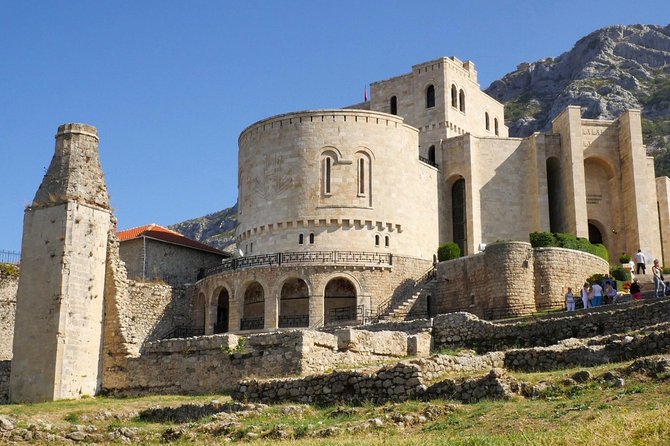
Day three shifts toward the Ionian coast. Qeparo Beach is scheduled for about three hours, making it the best chance on the route to slow down beside the sea.
Unlike many rocky southern beaches, Qeparo has fine sand and shallow water for the first few meters. That makes it more suitable for families and for anyone who prefers an easier swim. There is also an old pier built among the rocks, giving you a simple place for photographs and a change of view.
Do not mistake this for a full beach-resort day. The tour continues afterward, and the time includes the stop rather than an entire day with no driving. Bring whatever you need for a few hours by the water, and ask about changing clothes if swimming is important to you.
Porto Palermo Castle is next. The fortress sits in a scenic bay south of Himara and is also called the Castle of Ali Pasha. Inside, the rooms can feel dark and severe, but the battlements open to excellent sea views.
About two hours is listed for this stop, and admission is included. The length gives you time to walk around rather than take a quick photograph from the road. The castle is compact enough to visit without special planning, but you should expect steps and uneven surfaces.
The drive through the Riviera is part of the experience. The road from Himara toward Qeparo offers repeated Mediterranean views, and the route later reaches Llogara Pass in the Ceraunian Mountains. A short photo stop is planned there.
Llogara Pass connects the Dukat Valley in the north with Himara in the south. You will not have a long mountain hike, but the stop gives you a chance to see how sharply Albania changes from coast to mountain. Weather can affect the views, so keep expectations flexible.
The day ends with a short stop at Vlore’s Independence Monument in Flag’s Plaza. The monument honors Albania’s declaration of independence, and the square is near the building where the first Albanian government worked in 1913.
Only about 10 minutes is set aside for this historic center, within a 30-minute stop. Think of it as an orientation stop, not a full tour of Vlore. If modern Albanian statehood interests you, ask for a little more explanation while you are there.
Durres amphitheater and the return north
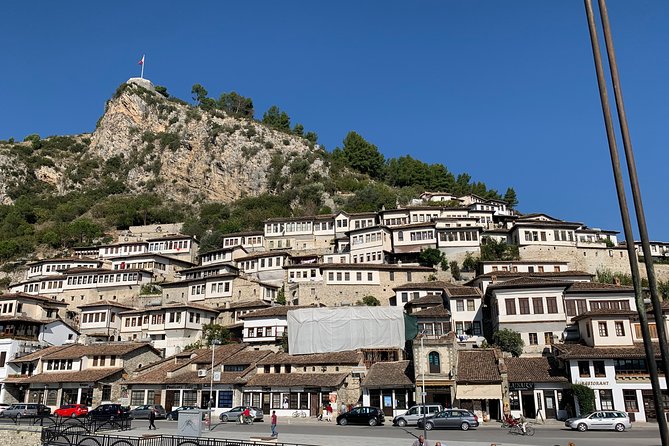
The final day visits Durres, Albania’s major port city and one of its most important ancient sites. The Roman amphitheater is the main attraction. It was discovered in 1966 after archaeologist Vangjel Toçi became curious about a fallen fig tree that revealed a drop in the ground.
The story is memorable because it shows how much of ancient Durres remained beneath the modern city. The amphitheater is considered one of the notable Roman arenas in the Balkans, and the visit lasts about an hour with admission included.
You also see the Venetian Tower and surviving city walls. The walls visible today include major Byzantine work associated with Emperor Anastasius I, who reinforced the city’s defenses in the fourth century. Justinian later strengthened the system with additional observation towers.
The hour listed for this stop should give you a useful look at the old defensive center, though not an exhaustive archaeological visit. Durres works well as the final stop because it brings the trip back to a major urban center after several days of smaller towns and coastal scenery.
What the $806.76 price really covers
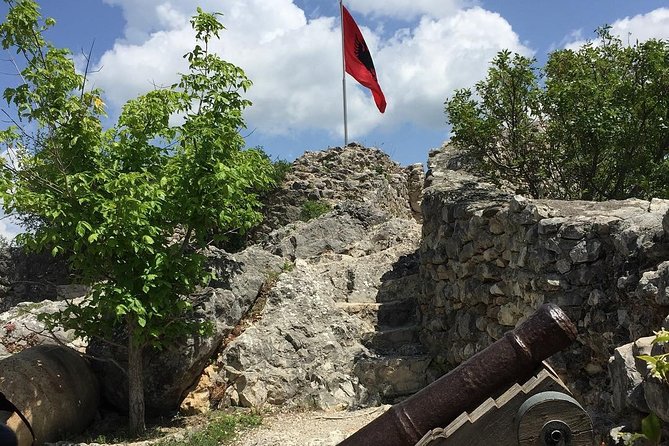
At $806.76 per person, this is not a budget bus excursion. The value depends on how much you would otherwise spend arranging four days of transport, hotels, admissions, and meals across Albania.
The price includes accommodation and some meals, plus an air-conditioned vehicle and several listed admissions. Entry is specifically included for Skenduli House, Butrint, Porto Palermo Castle, and the Durres Amphitheater. Many outdoor stops are free, while other admissions may not be covered.
The strongest value comes from convenience. You do not need to solve the route between Tirana, Berat, Gjirokaster, Saranda, the Riviera, Vlore, and Durres yourself. You also get a guide who can explain the sites and recommend places to eat when a meal is not included.
Ask for a written breakdown of hotel category, meals, admissions, and pickup arrangements. The tour has been booked an average of 39 days in advance, but it has also been organized on short notice. That suggests some flexibility, though availability will still matter.
Who will enjoy this route most
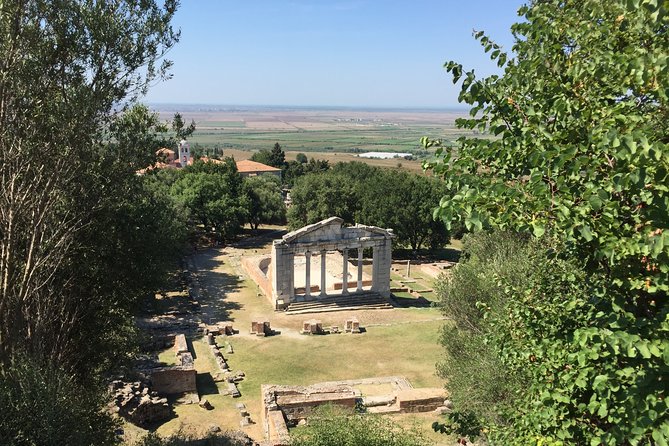
I would recommend this trip to you if you want a broad first look at Albania and prefer having transport and hotels organized. It suits people who value historic towns, archaeology, coastal scenery, and local explanation more than long periods of free time.
It is also a good match for solo visitors and couples who like small groups. A maximum of eight people is far more manageable than a large coach, especially at narrow castle sites and during hotel check-in.
Families may appreciate Qeparo’s sand and shallow water, but the long route and frequent changes of scenery require patience. People with limited mobility should ask about the uphill streets in Berat and Gjirokaster, the castle surfaces, and the steps at Porto Palermo before booking.
You should choose another style of trip if your main aim is lounging on the beach. Qeparo gives you three hours, but the tour is built around movement and sightseeing.
Practical details before you book
The tour starts at 8:00 a.m. Pickup is usually available from Tirana Airport or the port. The guide waits with a company sign, and other pickup arrangements can be made if requested in advance.
Confirmation arrives at booking. The activity is near public transportation, and most people can participate, but the route includes hills, castle paths, and old stone streets.
The tour is offered in English. It can be customized, so make your priorities clear. If you want extra time in Butrint, the National Historical Museum, Berat, or Gjirokaster Castle, ask before the day begins.
Cancellation is flexible up to three full days before the start time for a full refund. Changes or cancellations made later are not accepted or refunded. Cutoff times follow local Albanian time.
Should you book the UNESCO towns and Riviera tour?
Book it if you want Albania’s major southern highlights in one organized loop. The combination of Berat, Gjirokaster, Butrint, Saranda, Qeparo, Porto Palermo, Llogara Pass, Vlore, and Durres is unusually varied for four days.
The strongest reasons to choose it are the small group, included accommodation, air-conditioned transport, and guide Genci’s calm, helpful approach. The main tradeoff is limited time at some sites, especially Tirana, Vlore, and the Durres defenses.
Before committing, ask for the exact hotel and meal details and decide how much beach time you need. If you accept a busy schedule in exchange for seeing a large slice of Albania, this is a well-organized and worthwhile introduction.
FAQ
Where does the tour start?
The tour starts at 8:00 a.m. Pickup is usually available from Tirana Airport or the port. Other pickup locations may be arranged in advance.
How many people can join the tour?
The maximum group size is eight people.
What language is the tour offered in?
The tour is offered in English.
Is accommodation included?
Yes. Accommodation is included, although the supplied details do not specify the hotel names or categories.
Are meals included?
Some meals are included. The exact meals are not specified, so you should confirm the meal schedule before booking.
Which admissions are included?
Admission is listed as included for Skenduli House, Butrint National Park, Porto Palermo Castle, and the Durres Amphitheater. Several outdoor stops have no admission charge.
Can the tour be customized?
Yes. The trip is described as customizable. You should discuss any requested changes with the operator before departure.
What is the cancellation policy?
You can cancel at least three full days before the start time for a full refund. Cancellations or changes made less than three full days before the start time are not accepted or refunded.
Recently added around Tirana
- Apollonia and Berat UNESCO tour from Tirana★ 5.0 · 3 reviews
- Berat 4×4 Off-Road and Vineyard Wine Tasting★ 5.0 · 3 reviews
- Tirana’s Communist Past: A Tasting Tour with Traditional Lunch★ 5.0 · 3 reviews
- Cultural Tour in Tirana including House of Leaves★ 5.0 · 3 reviews
- Apollonia and Ardenica Monastery – full day tour★ 4.5 · 3 reviews
- 3 Hour Pub Crawl Tour in Tirana★ 3.5 · 3 reviews
- Tirana to Ksamil and Saranda Bus★ 4.5 · 3 reviews
- SOTIRA WATERFALL HIKING/TREKKING from Berat by 1001 Albanian Adventures★ 5.0 · 3 reviews
Albanian Riviera Trips, compared.
Blue Cave & Grama Bay Full Day Guided Boat Tour
Read our review →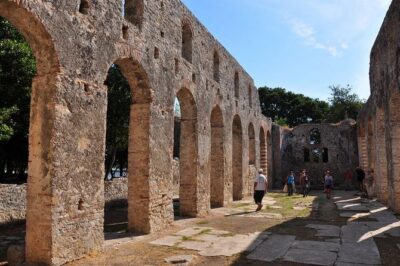
Butrint, Ksamil, Blue Eye, Lekuresi Castle. All-in-one daytrip.
Read our review →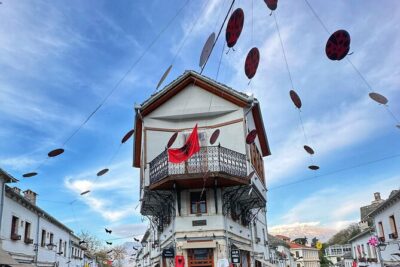
Gjirokastra UNESCO & Ksamil Beach – From Tirana/Durres/Golem
Read our review →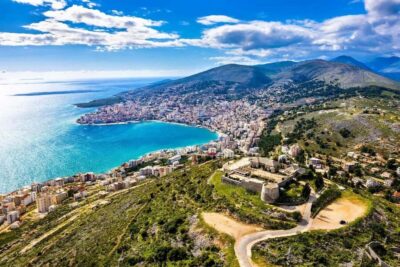
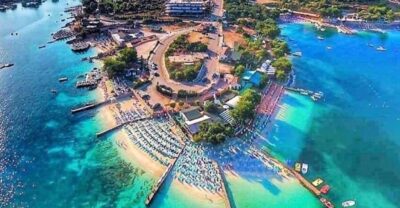
From Durrës or Golem: Ksamil, Saranda and Blue Eye Tour
Read our review →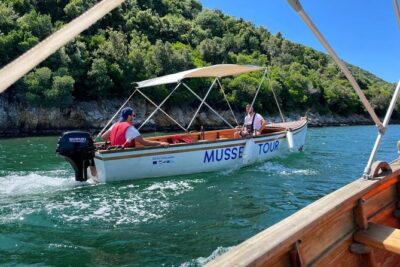
Mussel Sailing Tour with Food and Drink in Albania
Read our review →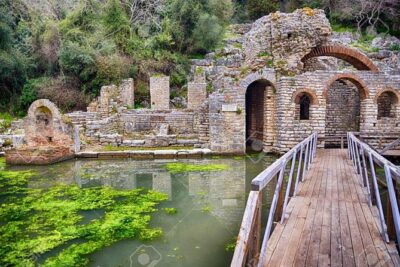
Butrint, Blue Eye, Ksamil and Lekuresi Castle Tour From Saranda
Read our review →Browse the lists this tour appears in